Introduction
Folding container houses are becoming more common in modular housing projects because they solve several practical problems at the same time: transportation volume, factory production, site setup, batch deployment, and project cost control.
However, they should not be understood only as “cheap temporary houses.” Their real value comes from the connection between engineering design and project demand.
A folding container house is designed to be produced in a factory, folded for transport, shipped in a compact form, and unfolded on site under prepared conditions. This product logic makes it useful for worker accommodation, site offices, student dormitories, modular camps, farm support rooms, emergency support housing, and other project-based buildings.
This article explains the engineering and market logic behind folding container houses from a B2B purchasing point of view.
Why Folding Container Houses Exist
Many overseas projects face the same problems:
- long construction schedules
- high local labor cost
- remote project locations
- temporary or semi-permanent housing needs
- limited site construction capacity
- high transportation cost
- pressure to deploy accommodation quickly
- need for repeatable unit design
Folding container houses are designed for these conditions.
They are not intended to replace every type of building. Instead, they are useful when the buyer needs a modular unit that can be shipped efficiently, installed faster under prepared conditions, and used for project-based accommodation or support space.
For buyers still learning the product category, the article about what a folding house is can help explain the basic definition before evaluating project suitability.
Engineering Logic: Compact Transport First
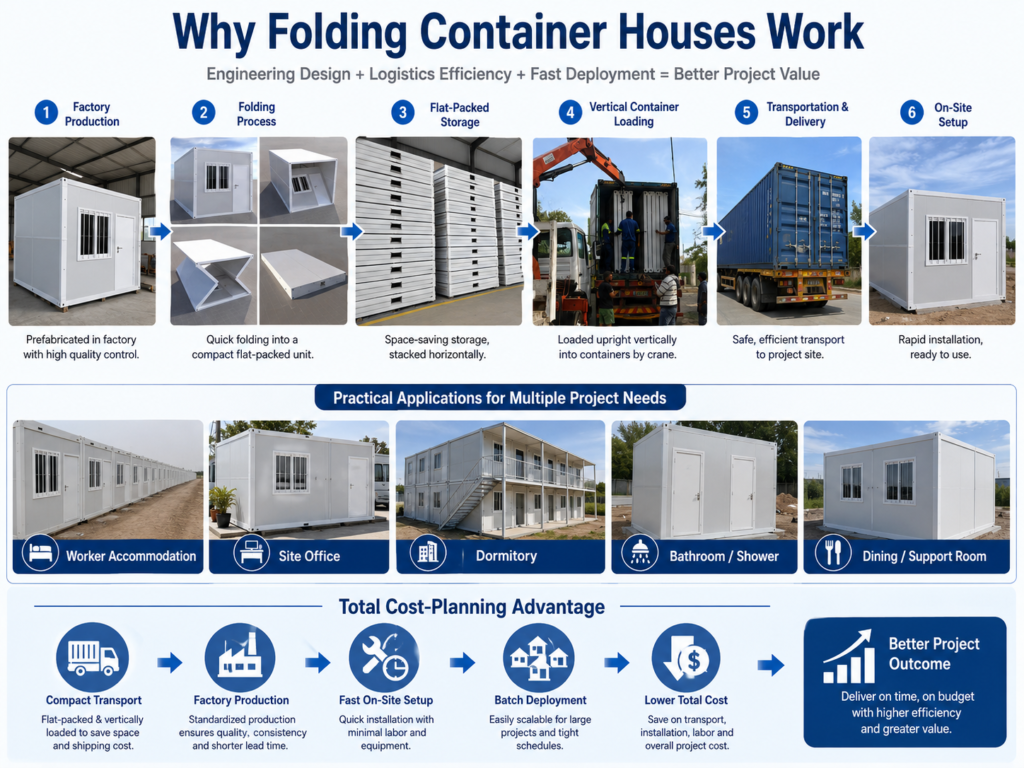
The first engineering logic of a folding container house is compact transportation.
A folding container house is designed to reduce transport volume by folding the structure before shipment.
This allows multiple units to be loaded according to product size, packing method, and container type.
The actual loading result depends on:
- folded size
- product weight
- packing method
- accessories included
- container type
- loading plan
- destination port
- EXW or FOB trade term
Buyers should not assume every folding container house has the same loading quantity or shipping cost.
The correct approach is to ask the supplier for packing size, loading quantity, packing list, and loading photos before confirming the order.
For export planning, buyers can review the container house shipping guide before comparing total project cost.
Engineering Logic: Factory Production
The second logic is factory production.
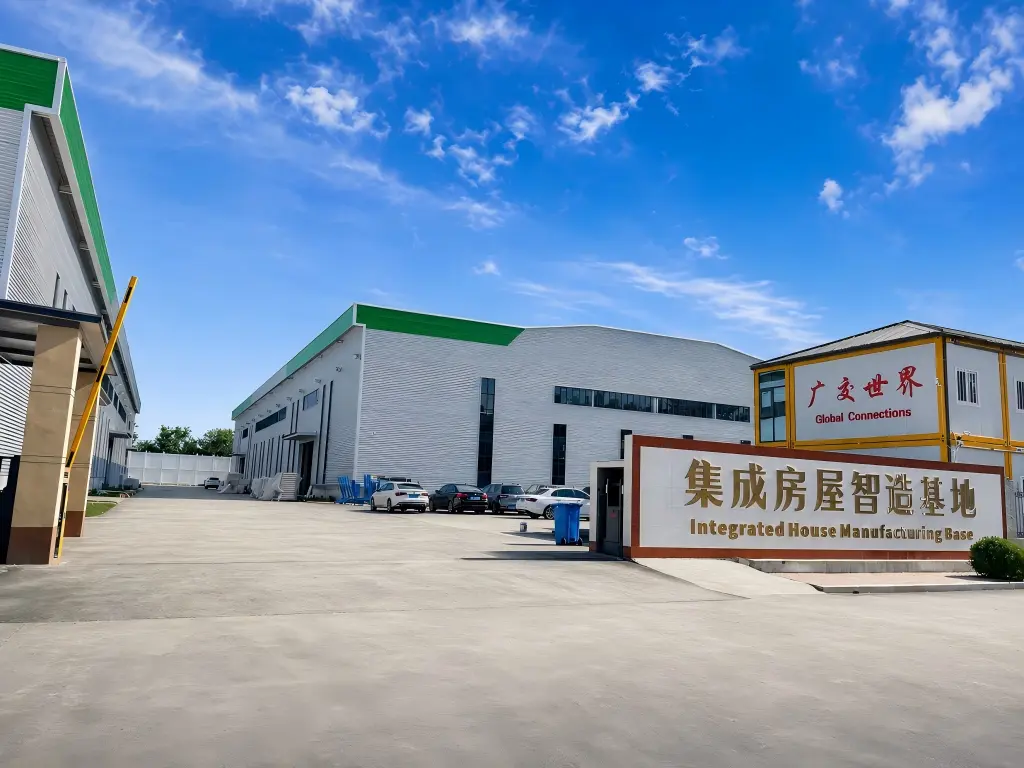
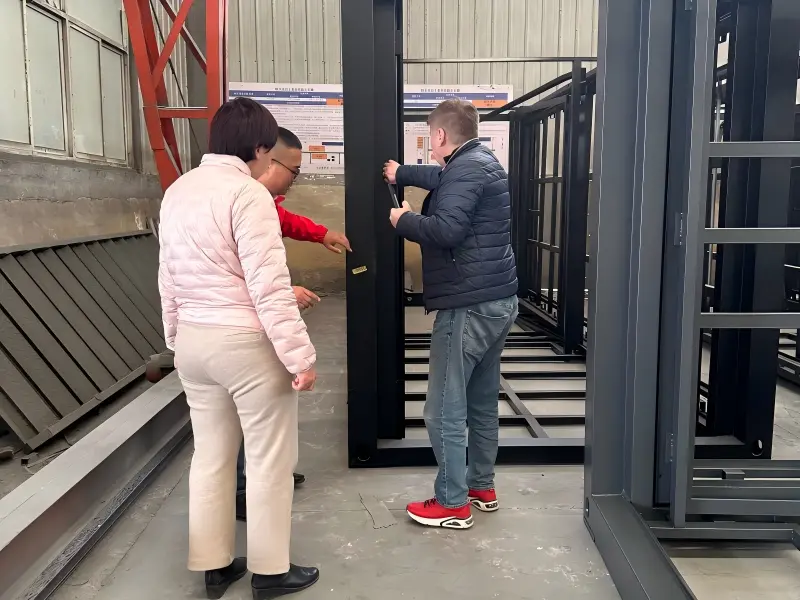
Many parts of a folding container house can be prepared before shipment, such as:
- steel frame
- wall panels
- roof and floor system
- doors and windows
- folding or hinge connections
- sealing areas
- optional electrical preparation
- optional plumbing preparation
- optional bathroom or kitchen configuration
Factory production helps make the product more repeatable and easier to organize for batch orders.
However, factory production does not mean the project is finished automatically after delivery.
The buyer still needs to prepare the foundation, unloading equipment, local workers, utility connection, drainage, and local approval if required.
For site work planning, buyers can review folding container house installation before arranging labor and equipment.
Engineering Logic: Folding Structure and Site Setup
The folding structure is the key difference between folding container houses and many fixed modular units.
The folding system allows the unit to be transported in a compact form and opened on site.
This helps reduce part of the site construction work, but correct installation is still important.
The site team needs to confirm:
- level foundation
- enough working space
- unloading method
- unfolding direction
- fixing points
- bolts and connectors
- roof and wall sealing
- door and window alignment
- electrical and plumbing connection if included
- final inspection
A basic unit may be opened quickly when conditions are ready.
But complete project readiness depends on site preparation, utility connection, number of units, local labor, and inspection.
For more structure details, buyers can review folding container house structure before comparing suppliers.
Market Logic: Project-Based Demand
The market demand for folding container houses mainly comes from project-based housing.
Common scenarios include:
- construction worker accommodation
- mining and energy project camps
- road and bridge projects
- student dormitories
- site offices
- emergency support housing
- farm support buildings
- temporary commercial spaces
- storage or utility rooms
These projects often need repeatable units, controlled production, faster deployment, and practical transport planning.
For a single luxury residence or highly customized permanent home, folding container houses may not always be the best solution.
But for temporary or semi-permanent project accommodation, they can be practical when the configuration matches the project conditions.
Market Logic: Batch Deployment
Folding container houses are often attractive for buyers who need many units at one time.
Batch deployment may help with:
- repeated layout
- easier production planning
- clearer packing and loading plan
- simpler site layout
- easier maintenance management
- more consistent unit configuration
For example, a worker camp or dormitory project may use repeated accommodation units, office units, toilet/shower units, and support rooms.
The benefit is not only the single unit price. It is the ability to organize many units in a more standardized way.
Before placing a batch order, buyers should confirm:
- site layout
- number of users
- room function
- bathroom and shower requirements
- kitchen or dining requirements
- walking paths
- drainage
- electrical distribution
- unloading space
- installation sequence
Cost Logic: More Than Unit Price
Many buyers first ask for the lowest price, but folding container house cost should be evaluated by total project cost.
The real cost may include:
- unit price
- configuration
- wall panels
- bathroom or shower
- electrical and plumbing preparation
- packing and loading
- ocean freight
- customs clearance
- destination port charges
- local delivery
- foundation
- unloading equipment
- installation labor
- utility connection
- maintenance
A cheaper unit may become more expensive later if it excludes key configuration, uses unsuitable materials, or creates installation problems.
For price planning, buyers can review folding container house cost before comparing quotations.
Procurement Logic: Match Product to Project Use
A folding container house should be chosen according to project use, not only by photo or price.
A site office may need:
- simple open space
- enough sockets
- lighting
- ventilation
- basic furniture space
A worker dormitory may need:
- stronger floor use
- better ventilation
- durable doors and locks
- suitable wall panels
- easier cleaning
- repeated room layout
A toilet or shower unit may need:
- waterproof floor
- drainage
- plumbing route
- ventilation
- maintenance access
A temporary camp may need:
- accommodation units
- office units
- toilet/shower units
- kitchen or dining support
- site layout planning
Different uses need different configurations. The lowest standard unit is not always suitable for every project.
Logistics Logic: EXW and FOB Responsibility
For overseas buyers, trade terms must be understood clearly.
Sinopala currently mainly provides EXW and FOB quotations.
Under EXW terms, the buyer or buyer’s agent usually arranges pickup from the factory and handles export, ocean freight, customs clearance, destination port charges, local delivery, and site unloading.
Under FOB terms, the supplier usually delivers the goods to the agreed port in China according to the FOB arrangement. The buyer or buyer’s shipping agent usually handles ocean freight, destination port charges, customs clearance, local delivery, and site unloading.
This responsibility boundary affects total project cost and schedule.
Before ordering, buyers should confirm whether they already have a shipping agent and which trade term is preferred.
Quality Logic: Standardization Does Not Mean Same Quality
Folding container houses may look similar in photos, but quality can differ greatly.
Buyers should compare:
- steel frame design
- wall panel type
- panel thickness
- anti-rust treatment
- hinge and connection system
- roof and floor structure
- door and window quality
- sealing method
- packing protection
- included accessories
- installation guidance
- after-sales support
A reliable supplier should help buyers confirm specifications, not only provide a low price.
For supplier evaluation, buyers can review how to choose a reliable container house manufacturer before placing an order.
Risk Logic: What Buyers Often Miss
Many project problems happen before installation because details were not confirmed during quotation.
Common missed details include:
- unclear size
- unclear wall panel type
- no packing dimensions
- no loading quantity confirmation
- no installation guide
- no foundation plan
- no unloading equipment arrangement
- no electrical or plumbing standard confirmation
- unclear bathroom or kitchen scope
- assuming shipping is included
- ignoring local compliance
These mistakes can lead to extra cost, delays, unsuitable configuration, or installation problems.
Many of these issues are similar to common mistakes when buying container houses from China.
Folding Container Houses and Modular Construction Trends
Folding container houses are part of a broader shift toward modular and factory-produced buildings.
This trend is driven by:
- demand for faster project delivery
- shortage of local construction labor in some markets
- need for temporary and relocatable buildings
- growth of remote infrastructure projects
- demand for scalable project accommodation
- need for more predictable production and delivery planning
However, this does not mean folding container houses are suitable for every building market.
Their value is strongest when transport efficiency, repeated unit design, and project deployment speed are important.
What Buyers Should Confirm Before Ordering
Before purchasing folding container houses, buyers should confirm:
- intended use
- project country or destination port
- required size
- estimated quantity
- number of users
- expected project duration
- layout requirements
- wall panel and insulation requirements
- bathroom, shower, kitchen, office, bedroom, or dormitory needs
- electrical and plumbing requirements
- folded size
- packing method
- loading quantity
- installation manual or video
- foundation and site access condition
- unloading equipment availability
- preferred trade term: EXW or FOB
- whether a shipping agent is arranged
- local approval or compliance requirements if applicable
With this information, the supplier can recommend a more suitable configuration and avoid a quotation based only on assumptions.
Conclusion
The engineering and market logic behind folding container houses is simple: they are designed to connect factory production, compact transport, faster site setup under prepared conditions, and project-based housing demand.
Their value does not come only from being portable or affordable. It comes from the way structure, logistics, installation, and procurement planning work together.
For B2B buyers, the right decision should be based on product configuration, packing and loading details, EXW or FOB responsibility, site preparation, local installation, and total project cost.
A folding container house can be a practical solution when the project conditions match the product design.
Need Help Evaluating Folding Container Houses for Your Project?
If you are planning a folding container house project, Sinopala can help review your project requirements before quotation.
To recommend a suitable configuration, please share:
- intended use
- project country or destination port
- required size
- estimated quantity
- number of users
- expected project duration
- layout requirements
- bathroom, shower, kitchen, office, bedroom, or dormitory needs
- wall panel and insulation requirements
- preferred trade term: EXW or FOB
- whether you already have a shipping agent
- site access and unloading conditions
- foundation and utility connection plan
Contact Sinopala:
WhatsApp: +86 150 1103 0786
Email: info@sinopala.com
Website: www.sinopala.com