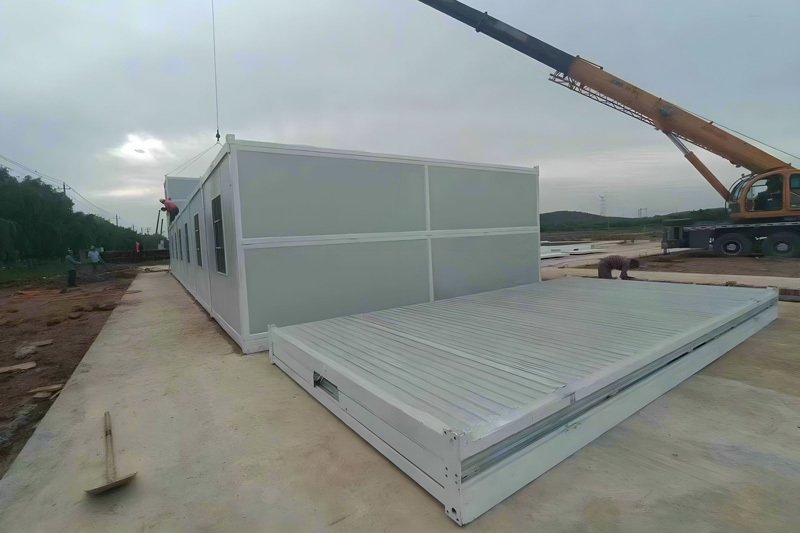
As modular construction continues to expand globally, the folding container house has evolved from a simple portable shelter into a highly engineered structural system. Behind its compact transportation design lies a combination of steel framework mechanics, load distribution planning, and industrialized production processes.
Understanding the structural logic of a folding container house is essential for developers, contractors, and distributors evaluating modular building solutions.
Core Structural Framework
At the heart of a folding container house is its reinforced steel frame system. Unlike modified shipping containers, folding units are purpose-built with structural transformation in mind.
Main Frame Structure
The base and roof frames are fabricated using galvanized steel beams designed to support vertical loads and maintain rigidity after expansion. These frames serve as the primary load-bearing components.
Sidewall Folding Sections
The wall panels are connected through engineered hinge mechanisms. When folded, they reduce overall volume for shipping. When expanded, locking systems secure them into a stable structural position.
The transformation process is mechanical, not temporary—once fixed, the structure functions as a rigid building unit.
Load-Bearing and Stability Design
A properly designed folding container house must manage:
- Vertical load (roof and additional structural weight)
- Lateral load (wind resistance)
- Transportation stress
- Repeated deployment forces
Structural reinforcement plates and locking joints are strategically positioned to ensure that unfolding does not compromise long-term durability.
Wind resistance levels can be engineered according to regional standards, particularly for coastal or high-wind areas.
Wall and Insulation System
Most folding container houses use sandwich panel wall systems, consisting of:
- External steel sheet layer
- Insulation core (EPS, rock wool, or PU)
- Interior protective panel
This layered structure provides:
- Thermal insulation
- Fire resistance (depending on material choice)
- Acoustic control
- Moisture protection
Insulation thickness can be adjusted depending on climate requirements.
Roof and Waterproofing Design
Roof panels are typically designed with:
- Structural reinforcement beams
- Waterproof membrane integration
- Drainage channel planning
Proper sealing at hinge connection points is critical to prevent leakage. Industrial-grade sealing materials are used to maintain weather resistance after multiple folding cycles.
Electrical and Plumbing Integration
One key advantage of folding container houses is factory integration.
Before shipment, manufacturers can pre-install:
- Electrical wiring conduits
- Lighting systems
- Switch and socket panels
- Plumbing lines and drainage pipes
This significantly reduces on-site installation time and minimizes technical errors during field assembly.
Transportation Optimization Engineering
The folding mechanism is not only structural—it is logistical.
Because the structure collapses inward:
- Multiple units can be loaded into one standard shipping container
- Ocean freight costs are reduced
- Inland transport becomes more efficient
This design directly impacts total project cost, especially in export-oriented markets.
Structural Lifespan Considerations
Durability depends on:
- Steel thickness and galvanization quality
- Hinge reinforcement design
- Environmental exposure conditions
- Maintenance practices
With proper anti-corrosion treatment and correct installation, folding container houses can serve in long-term or semi-permanent applications.
Folding Container House vs Modified Shipping Container
It is important to distinguish between:
Modified Shipping Container
- Originally designed for cargo transport
- Limited structural adaptability
- Heavier transport volume
Purpose-Built Folding Container House
- Engineered for expansion
- Optimized for modular deployment
- Designed for scalable installation
The structural intent differs significantly.
Conclusion
A folding container house is not simply a portable box—it is a carefully engineered modular system that integrates structural mechanics, insulation technology, logistics efficiency, and industrial manufacturing.
For global construction projects requiring speed, cost control, and scalable housing solutions, understanding this structural framework is key to making informed procurement decisions.
As modular construction continues to advance, engineering precision will remain the defining factor in long-term performance and reliability.