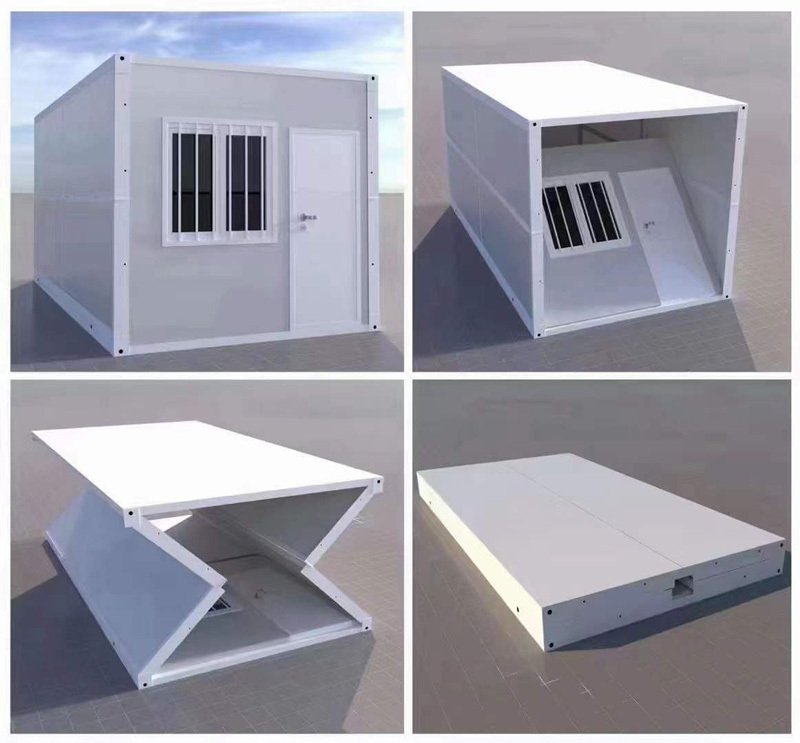
As modern modular housing becomes more popular around the world, folding houses are gaining attention for their portability, quick installation, and cost efficiency. However, many buyers and project developers still ask an important question: Are folding houses safe?
Safety is a critical factor in construction. Whether used for temporary accommodation, construction sites, disaster relief housing, or commercial projects, folding houses must meet structural and durability requirements.
In this article, we will explore how folding houses are designed for safety, including their steel structure, wind resistance, material strength, and real-world applications.
Learn more about folding house structure and design.
What Makes Folding Houses Structurally Safe?
The safety of a folding house mainly depends on its structural framework and engineering design.
Most modern folding houses use a galvanized steel frame combined with reinforced hinge systems that allow the building to fold and unfold without compromising stability.
Key structural components include:
- High-strength steel frame
- Reinforced hinges and locking systems
- Structural support beams
- Anti-corrosion coatings
These components ensure the structure remains stable after repeated transportation and installation.
Compared with traditional temporary shelters, folding houses provide significantly higher structural reliability.
Wind Resistance and Environmental Performance
One major safety concern for modular structures is their ability to withstand strong wind conditions.
Well-designed folding houses can typically resist wind levels equivalent to 8–10 on the Beaufort scale, depending on the structural configuration and installation method.
Wind resistance is achieved through:
- Steel structural frames
- Secure ground anchoring systems
- Reinforced wall panels
- Roof load distribution design
When properly installed, folding houses can perform reliably in many climates, including coastal and high-wind regions.
Fire Resistance and Insulation Materials
Another important safety factor is fire resistance.
Modern folding houses often use sandwich panels with rock wool or polyurethane insulation, which provide both thermal insulation and improved fire protection.
Common wall materials include:
- EPS sandwich panels
- Rock wool sandwich panels
- PU insulated panels
Among these options, rock wool panels offer the highest fire resistance, making them ideal for projects that require strict safety standards.
Durability and Lifespan
Despite their ability to fold, these houses are designed for long-term durability.
With proper materials and maintenance, a folding house can last 10 to 20 years or even longer.
Durability depends on several factors:
- Steel frame thickness
- Anti-corrosion treatment
- Panel material quality
- Installation conditions
High-quality manufacturing and professional installation play an important role in ensuring structural longevity.
Real-World Applications of Folding Houses
Folding houses are widely used across many industries because they combine mobility, speed, and structural stability.
Typical applications include:
- Construction worker accommodation
- Disaster relief housing
- Temporary office spaces
- Remote project camps
- Tourism cabins and modular resorts
In many projects, folding houses are preferred because they can be transported easily and deployed quickly without traditional construction processes.
Conclusion
Folding houses are designed with safety in mind. Their steel structural framework, reinforced hinges, and engineered panel systems provide reliable performance in various environments.
When manufactured with quality materials and installed correctly, folding houses offer a safe, durable, and efficient housing solution for modern modular construction needs.
As the demand for flexible housing solutions continues to grow, folding houses are becoming an increasingly practical option for projects around the world.