Introduction
For overseas buyers, container house shipping should be planned together with the product type, packing size, loading quantity, destination port, and quotation terms. Shipping is not only a freight cost issue. It also affects total project budget, delivery schedule, unloading preparation, and buyer responsibility.
Sinopala currently mainly provides EXW and FOB quotations. For most overseas projects, the buyer or the buyer’s shipping agent usually arranges ocean freight, customs clearance, import tax, local transportation, and final delivery. Sinopala can provide packing size, loading quantity, loading photos, and FOB quotation support from a China port when needed.
This container house shipping guide explains how container houses are packed, loaded, shipped, and delivered, and what buyers should confirm before arranging freight.
How Container Houses Are Packed
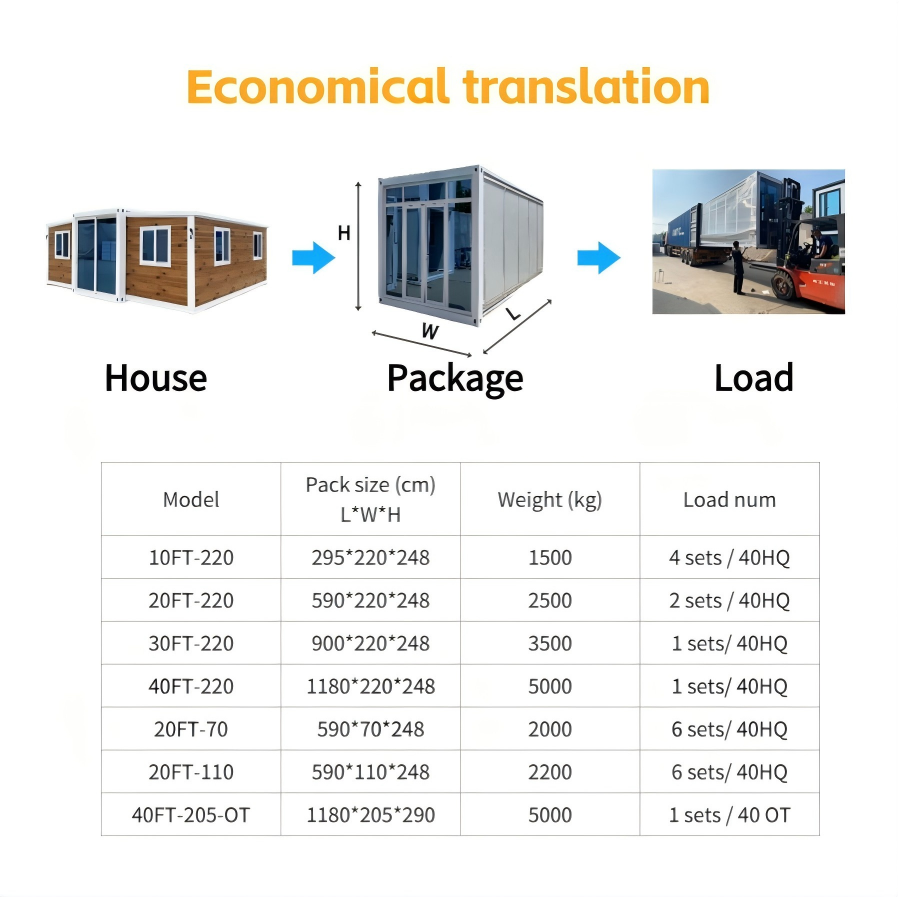
Container houses are packed according to product type, structure, folded size, accessories, and loading plan. The packing method directly affects loading quantity, shipping cost, and unloading preparation.
Folding Container Houses
Folding container houses are shipped in a folded form to improve loading efficiency.
Buyers should confirm:
- folded size
- number of units per container
- packing method
- accessory packing
- loading photos or loading plan
This type is often suitable for large-quantity temporary housing, worker accommodation, camps, and projects that require fast deployment.
Expandable Container Houses
Expandable container houses are usually shipped in a folded or semi-folded state, depending on the model and configuration.
Buyers should confirm:
- expanded size and folded size
- quantity per container
- whether accessories are packed inside or separately
- whether bathroom or kitchen configuration affects loading
- loading method and protection during transport
The final loading quantity should always be confirmed according to the actual model, size, configuration, and packing plan.
Container Loading Efficiency
Loading efficiency is one of the most important factors in container house shipping cost. A better loading plan can reduce the average freight cost per unit, especially for bulk orders.
Loading quantity usually depends on:
- product type
- 10ft, 20ft, 30ft, or 40ft size
- folded size
- interior configuration
- bathroom or kitchen options
- packing method
- container type
- export loading plan
Folding container houses usually have higher loading efficiency for bulk temporary housing projects. Expandable container houses provide more usable space after installation, but the loading quantity depends strongly on model size and configuration.
If you are comparing product types, our folding container house advantages guide can help you understand why folding units are often more efficient for bulk loading.
For budget planning, you can also read our expandable container house price guide before comparing product and freight cost together.
Shipping Methods and Quotation Terms
For most container house orders, full container loading is usually more practical than shared container shipping because container houses are large modular products with specific packing and loading requirements.
Buyers should confirm:
- whether the order needs one full container
- whether multiple containers are required
- whether mixed loading is possible
- whether the quotation is EXW or FOB
- which China port is used for FOB quotation
- whether the buyer already has a freight forwarder
Under EXW terms, the buyer or buyer’s agent usually arranges pickup from the factory and handles export/shipping arrangements. Under FOB terms, Sinopala can quote based on delivery to a China port and support the loading/export process according to the agreed port terms.
Ocean freight, customs clearance, import tax, inland delivery, foundation work, and local installation are usually arranged by the buyer or buyer’s local agent.
Shipping Cost Factors
Container house shipping costs vary depending on several factors. Buyers should calculate shipping together with product cost instead of looking at the unit price alone.
Main factors include:
- destination port
- shipping route
- container type
- product type and folded size
- loading quantity per container
- order quantity
- shipping season
- FOB port if required
- local port charges
- customs clearance and import tax
- inland transportation after arrival
The buyer or buyer’s shipping agent should confirm ocean freight, customs clearance, import duty, local delivery, unloading, and final site transportation according to the destination country.
Delivery Time
Shipping time depends on destination port, shipping route, vessel schedule, port congestion, customs process, and local delivery arrangement.
Buyers should not plan the project only based on ocean transit time. A realistic schedule should include:
- production time
- packing and loading time
- export process
- ocean freight time
- customs clearance
- local delivery
- unloading and installation preparation
Actual delivery time should be confirmed with the shipping agent before shipment.
Unloading at Destination
After the container arrives at the destination port or project site, the buyer should prepare unloading equipment and local handling support.
Common unloading methods may include:
- crane lifting
- forklift handling
- truck-mounted crane
- local lifting equipment
Before shipment, buyers should confirm:
- unit weight and packing size
- whether lifting points are available
- site access condition
- required unloading equipment
- local labor or contractor support
Proper unloading preparation helps reduce damage risk and installation delay.
Tips for Reducing Container House Shipping Costs
Buyers can reduce logistics risk and average freight cost by planning earlier.
Useful steps include:
- confirm product type before quotation
- compare loading quantity per container
- avoid changing configuration after loading plan is confirmed
- order suitable quantities for full container loading
- confirm packing size before booking freight
- plan shipment before peak season when possible
- work with a supplier that can provide loading details
- ask the shipping agent to check freight based on real packing information
A lower product price may not reduce total cost if the loading quantity is poor or the shipping responsibility is unclear.
Why Shipping Efficiency Matters
Shipping efficiency directly affects the total cost of a container house project. For overseas buyers, product price, packing method, loading quantity, freight cost, local delivery, and unloading preparation should be considered together.
A good loading plan can help buyers:
- reduce average freight cost per unit
- avoid unnecessary containers
- plan project delivery more accurately
- prepare unloading equipment in advance
- reduce damage risk during transport
For B2B buyers, shipping efficiency is part of the full project cost, not a separate detail.
Conclusion
Container house shipping should be planned before placing an order, not after production is finished. Buyers should confirm product type, packing size, loading quantity, quotation terms, destination port, freight responsibility, customs clearance, local delivery, and unloading preparation.
Sinopala currently mainly supports EXW and FOB quotations. We can provide packing size, loading quantity, loading photos, and FOB quotation support from a China port when required. The buyer or buyer’s shipping agent usually arranges ocean freight, customs clearance, import tax, local transportation, and final delivery.
If you are still preparing your purchase plan, our expandable container house buying guide can help you understand supplier selection, quotation terms, and project preparation.
Get a Container House Shipping Plan
If you need packing and loading information for your container house project, please send us:
product type: expandable container house, folding container house, modular container house, or container house toilet
quantity
required size if applicable
destination port
quotation term: EXW or FOB
whether your shipping agent needs packing size, loading quantity, or loading photos
Sinopala can help check the loading plan and provide the required packing information for your freight arrangement.
WhatsApp: +8615011030786
Email: info@sinopala.com
Website: www.sinopala.com