Introduction
Folding container houses are becoming one of the most popular solutions in modern modular construction. Their unique design allows them to be folded for transport and quickly expanded on-site, offering a combination of efficiency, flexibility, and cost savings.
As more developers and contractors look for faster and more affordable building solutions, folding container houses are gaining attention across various industries.
In this article, we explore the key advantages of folding container houses and why they are widely used in global projects.
1. Fast Installation
One of the biggest advantages of folding container houses is their extremely fast installation time.
Unlike traditional construction, which can take weeks or months, folding container houses can often be installed within 2–4 hours.
Because most components are pre-assembled in the factory, only simple unfolding and fixing are required on site.
This makes them ideal for projects that require rapid deployment.
2. Lower Transportation Costs
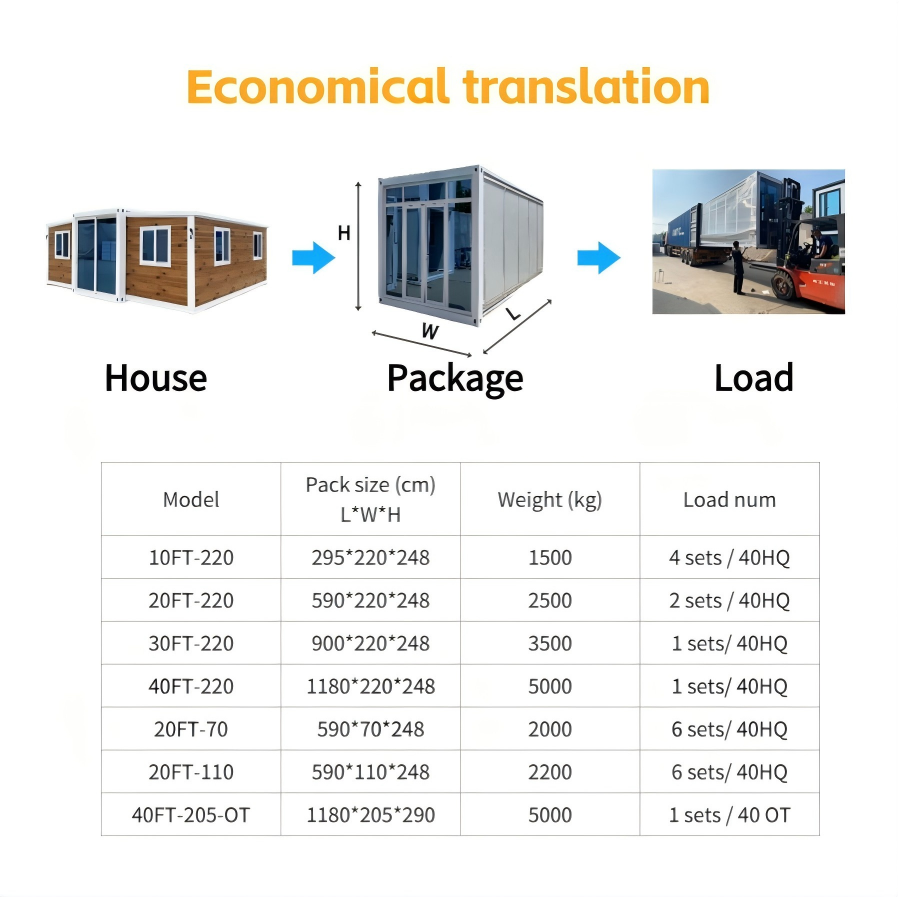
Folding container houses are designed to be compact during transportation.
When folded, multiple units can be loaded into a single shipping container. This significantly reduces:
- shipping costs
- logistics expenses
- handling requirements
For international projects, this advantage can greatly reduce the overall budget.
3. Cost-Effective Solution
Compared with traditional buildings, folding container houses offer a more affordable construction option.
Cost savings come from:
- reduced labor costs
- faster installation
- how to install a folding container house
- factory production efficiency
- lower material waste
These factors make folding container houses a popular choice for large-scale housing projects.
4. Flexible and Modular Design
Folding container houses are designed with flexibility in mind.
They can be used as:
- single standalone units
- combined modular buildings
- expandable housing solutions
Multiple units can be connected to create larger structures such as dormitories, offices, or modular housing communities.
5. Easy Transportation and Relocation
Another major advantage is mobility.
Folding container houses can be:
- easily transported to different locations
- quickly installed and removed
- reused for multiple projects
This makes them especially useful for temporary construction sites and remote projects.
6. Durable Steel Structure
Despite their folding design, these houses are built with strong steel frames.
Key durability features include:
- galvanized steel structure
- reinforced hinges and joints
- weather-resistant materials
With proper maintenance, folding container houses can last for many years.
how long do folding houses last
7. Wide Range of Applications
Folding container houses are used in many different industries.
Common applications include:
- construction site accommodation
- temporary housing
- disaster relief shelters
- site offices
- remote worker camps
Their versatility makes them suitable for both short-term and long-term use.
8. Environmentally Friendly
Folding container houses support sustainable construction practices.
Advantages include:
- reduced construction waste
- efficient material usage
- lower energy consumption during construction
Because they are reusable and modular, they help reduce the environmental impact of building projects.
Conclusion
Folding container houses offer a combination of speed, cost efficiency, flexibility, and durability, making them an ideal solution for modern construction needs.
Their ability to be transported easily, installed quickly, and adapted for various applications makes them a practical choice for developers, contractors, and project managers worldwide.
As modular construction continues to grow, folding container houses will play an increasingly important role in shaping the future of housing.