Introduction
In construction and overseas sourcing, the terms “modular buildings” and “prefabricated buildings” are often used together. Many buyers also use them as if they mean exactly the same thing.
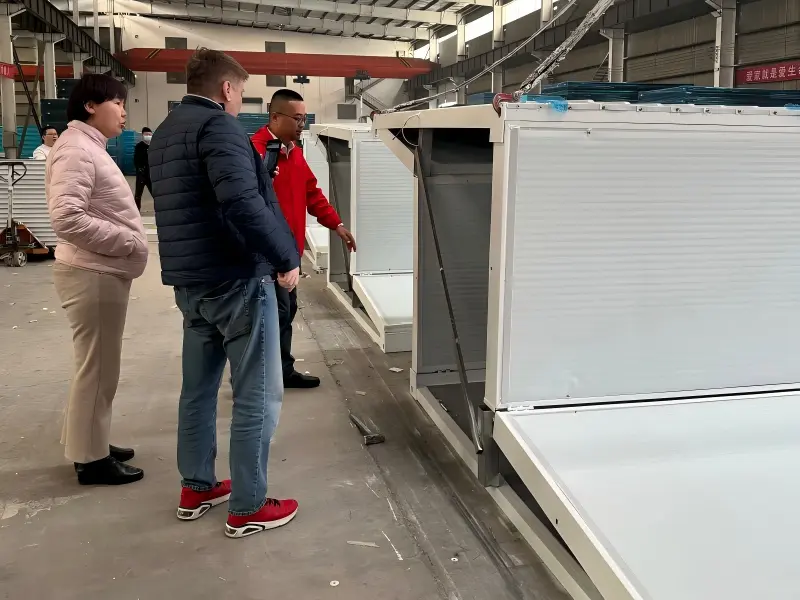
For buyers comparing a modular container house with a prefabricated building, the key question is how much work is completed in the factory and how much work must still be handled on site.
In practice, they are related, but they are not always the same.
A prefabricated building is a broad concept. It means that some building components are produced in a factory before being delivered to the site. These components may include wall panels, steel frames, roof parts, floors, doors, windows, or other building materials.
A modular building is usually a more complete form of prefabrication. Instead of shipping only separate components, modular buildings are supplied as larger building units or modules. More work is completed before shipment, and the site team usually focuses on positioning, connection, installation checks, and utility connection.
For overseas buyers, this difference matters. It affects shipping, local labor, installation risk, site preparation, and the type of project that each system can support.
This guide explains the practical difference between modular and prefabricated buildings from a buyer’s point of view, especially for projects such as workforce accommodation, site offices, temporary facilities, modular container houses, and container-based support buildings.
If you are still comparing container houses with general prefab buildings, you can also read our detailed guide on Container House vs Prefab Buildings: Which One Is Better in 2026?
What Are Modular Buildings?
Modular buildings are made from factory-produced modules. These modules are designed to be transported to the project site and installed as part of a complete building system.
In many modular projects, the steel structure, wall panels, floor, roof, doors, windows, and some internal systems can be prepared before shipment. Depending on the product type, some electrical routes, plumbing preparation, bathroom areas, or interior parts may also be completed or partially completed in the factory.
Container houses are a common example of modular building products. For example, 10ft, 20ft, 30ft, and 40ft container house units can be used for accommodation, site offices, toilet units, shower rooms, kitchens, dormitories, or camp support facilities.
The main feature of modular buildings is that they reduce some of the uncertainty of on-site construction. The buyer still needs foundation, unloading equipment, local workers, utility connection, and site access, but less work may need to be built from zero on site.
What Are Prefabricated Buildings?
Prefabricated buildings are built from components produced in advance. The supplier ships these components to the project site, and the local team assembles them on site.
A prefab building may include:
- steel frames
- wall panels
- roof panels
- floor systems
- doors and windows
- fasteners and accessories
- insulation materials
- finishing materials
Compared with modular buildings, prefab buildings usually require more site assembly. The buyer or local contractor needs to manage installation sequence, labor, tools, waterproofing, sealing, utility connection, and final finishing work.
Prefab buildings can be useful for large fixed projects, especially when the buyer has local contractors, enough site time, and a permanent building plan.
The key point is this:
prefabricated buildings are not necessarily complete modules. They may be component-based systems that require more local installation work.
Modular vs Prefabricated Buildings: The Main Difference
The difference is mainly about how much work is completed before the materials arrive on site.
Modular buildings are usually delivered as larger units or modules. Prefabricated buildings may be delivered as separate frames, panels, and parts.
For buyers, this affects four practical areas:
- factory preparation level
- site labor requirement
- installation management
- shipping and unloading planning
A modular building is often easier to manage when the project needs repeatable units, such as worker rooms, site offices, toilets, showers, or camp accommodation.
A prefabricated building may be more suitable when the project needs a larger fixed layout, special architectural design, or local construction flexibility.
Basic Comparison
Delivery form:
Modular buildings are usually supplied as larger factory-prepared units or modules. Prefabricated buildings are usually supplied as separate components, frames, panels, and accessories.
Site work:
Modular buildings usually reduce some site assembly work. Prefabricated buildings usually require more local assembly and finishing.
Common project planning method:
Modular buildings are often planned by unit type, such as 10ft, 20ft, 30ft, or 40ft units. Prefabricated buildings are often planned by total building area, structural layout, and local construction design.
Installation risk:
Modular buildings depend more on product design, packing, unloading, and unit connection. Prefabricated buildings depend more on local assembly quality, site workers, and installation management.
Typical use:
Modular buildings are often used for accommodation units, site offices, worker camps, toilets, showers, and temporary facilities. Prefabricated buildings are often used for larger fixed buildings, schools, offices, and permanent structures.
Cost Structure: What Buyers Should Compare
It is not enough to compare only the material price.
For modular buildings, buyers should check:
- product type
- unit size
- quantity
- layout
- wall panel material
- insulation requirement
- bathroom, toilet, shower, or kitchen configuration
- electrical and plumbing preparation
- packing method
- loading plan
- destination port
- foundation and unloading conditions
For prefabricated buildings, buyers should also calculate:
- steel frame cost
- wall and roof panel cost
- local assembly labor
- tools and equipment
- waterproofing and sealing
- local contractor cost
- site storage
- finishing work
- installation supervision
This is why a prefab system may look cheaper at the material stage but still require more site work later. Modular buildings may have a higher factory-prepared level, but the buyer still needs to check shipping, unloading, foundation, and local connection cost.
For buyers who are comparing quotations, it is also worth checking the hidden cost factors that are often missed in container house projects, such as unloading, foundation, local labor, and utility connection.
Before quoting a modular container house project, Sinopala usually needs buyers to confirm the intended use, size, quantity, layout, bathroom or kitchen requirements, destination port, and preferred trade term such as EXW or FOB.
Installation and Site Work
Installation is one of the most important differences between modular and prefabricated buildings.
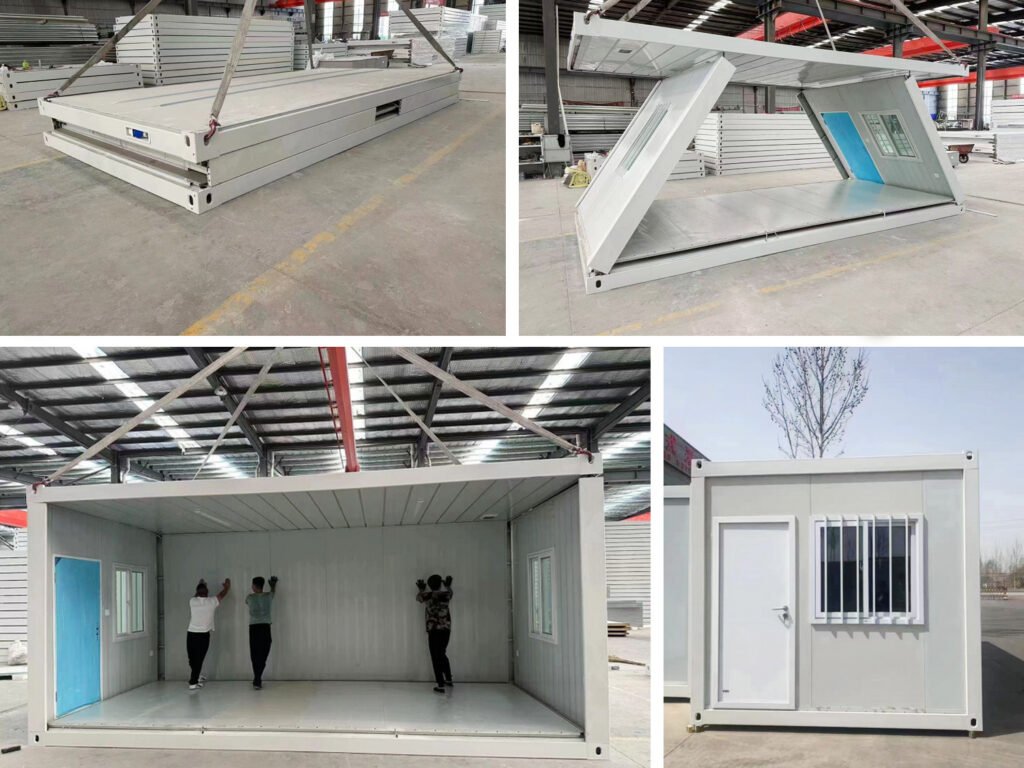
For modular buildings, more work is usually completed before shipment. The site team may mainly handle unloading, positioning, connection, sealing checks, expansion or unfolding if applicable, and utility connection.
For prefabricated buildings, more work happens on site. Local workers may need to assemble the frame, install wall panels, connect the roof, handle waterproofing, complete interior finishing, and manage electrical or plumbing work.
Before choosing either option, buyers should check:
- whether the foundation is ready
- whether trucks can access the site
- whether a crane or forklift is available
- whether there is enough lifting space
- whether local labor is available
- whether water, drainage, and electrical connection are planned
- whether the supplier can provide drawings and installation guidance
For projects with bathrooms, toilets, showers, or kitchens, the drainage and plumbing plan should be confirmed before production, not after delivery.
These site preparation details are also closely related to container house installation cost, especially when foundation, lifting equipment, local workers, water supply, drainage, and electrical connection are not planned early.
Quality Control and Project Risk
Modular buildings can give the supplier more control over factory preparation. This can help reduce some uncertainty from weather, local labor shortage, or poor site coordination.
However, modular buildings still require careful checking. Buyers should confirm the steel structure, wall panel material, roof waterproofing, door and window sealing, bathroom waterproofing, anti-rust treatment, packing method, and loading photos before shipment.
Prefabricated buildings also benefit from factory-made components, but the final result depends heavily on local installation. Even if the panels and frames are produced correctly, poor site assembly can cause sealing problems, alignment problems, roof leakage, or finishing issues.
For both systems, quality control should include:
- product drawings
- material specifications
- packing list
- installation instructions
- production photos if available
- loading photos before shipment
- clear responsibility under EXW or FOB terms
Flexibility and Customization
Prefabricated buildings usually offer more flexibility for large fixed structures because the building can be designed around local site conditions and architectural requirements.
Modular buildings are more suitable when the buyer wants repeatable units, faster project organization, and more factory-prepared work.
For example, a camp project may use repeated 20ft or 40ft units for dormitories, offices, toilets, showers, and kitchens. This type of project does not always need complex architectural design, but it does need practical layout, shipping efficiency, and easier site management.
A public building, large school, or permanent office project may need more customized structure and local construction planning. In that case, a prefab system may be more suitable.
The better choice depends on whether the buyer values repeatable modular units or larger design flexibility.
Where Container Houses Fit In
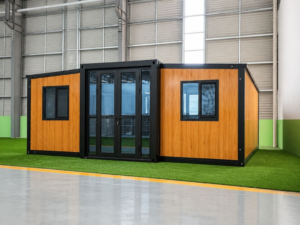
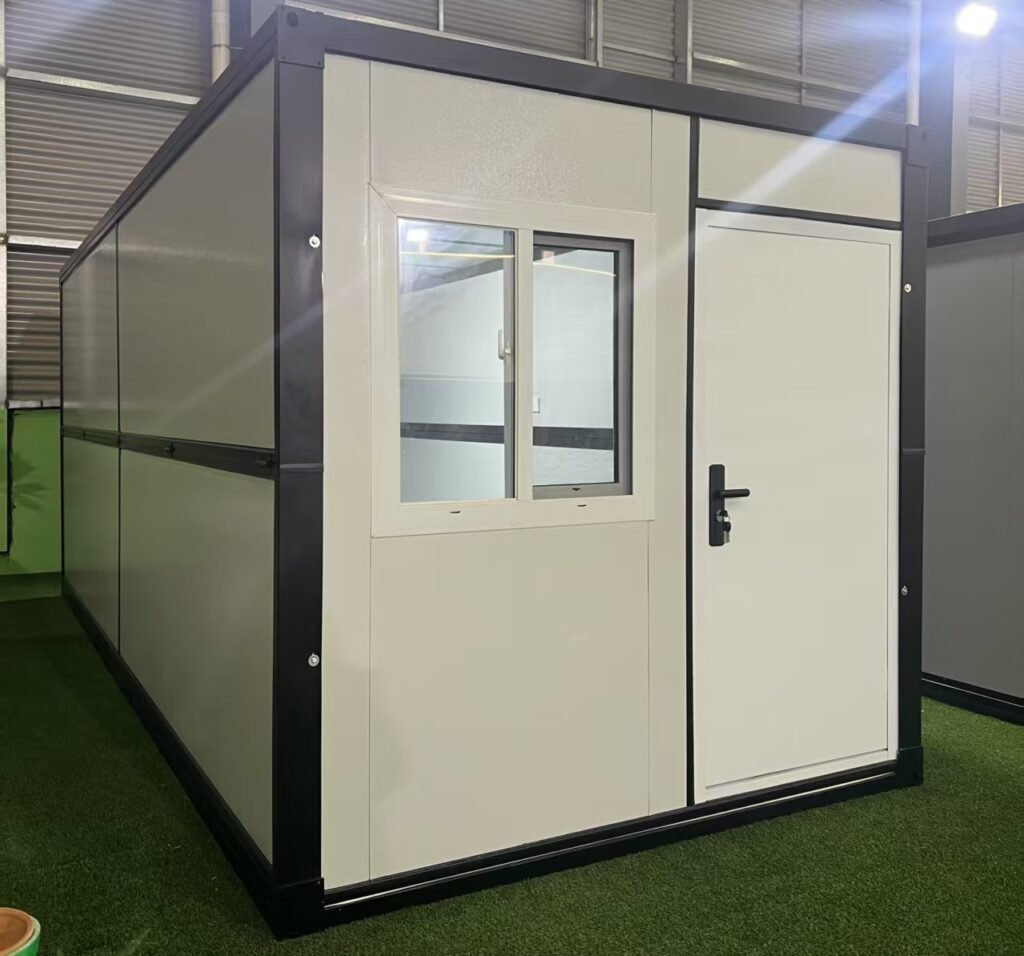
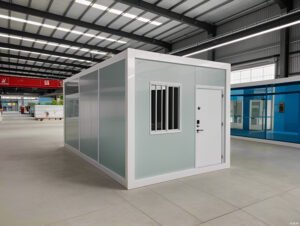
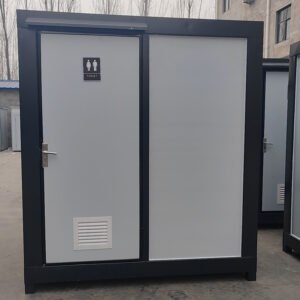
Container houses are one practical category within modular construction.
They are not the only type of modular building, but they are widely used because they can be planned by standard sizes and practical functions.
Common container house options include 10ft small units, 20ft accommodation or office units, 30ft customized layouts, and 40ft larger accommodation or multi-room layouts.
For product types, buyers may compare expandable container houses, folding container houses, prefabricated container house solutions, and container house toilets according to the project use, layout, site condition, and installation plan.
For overseas B2B projects, container houses are often used when buyers need accommodation, offices, camp facilities, temporary commercial spaces, toilets, showers, or support buildings that can be shipped and installed with clearer project planning.
Best Use Cases for Modular Buildings
Modular buildings are often suitable for:
- workforce accommodation
- mining camps
- construction site offices
- temporary dormitories
- portable toilets and showers
- emergency support facilities
- remote project housing
- repeatable accommodation units
- container-based camp layouts
These projects usually care about practical execution:
- Can the units be shipped efficiently?
- Can they be unloaded at the site?
- Can the layout include bedrooms, offices, bathrooms, toilets, showers, or kitchens?
- Can the supplier provide layout drawings, packing information, and loading photos?
- Can the site team complete installation with available labor and equipment?
Best Use Cases for Prefabricated Buildings
Prefabricated buildings are often suitable for:
- larger fixed offices
- schools
- public facilities
- permanent housing
- commercial buildings
- architectural projects
- projects with more local construction resources
These projects usually need more local assembly and more site coordination, but they may provide more flexibility for larger fixed layouts.
Prefab buildings are a practical option when the buyer has a reliable local contractor, enough installation time, and clear local building requirements.
Shipping and Export Considerations
For overseas projects, shipping should be checked early.
If the buyer is importing from China, the shipping plan should be reviewed together with packing method, loading quantity, destination port, and EXW or FOB quotation terms.
Modular buildings may need more careful planning for unit size, packing dimensions, container loading, lifting, and unloading.
Prefabricated buildings may be easier to divide into smaller components, but buyers must manage the packing list and installation sequence carefully. Missing parts or unclear installation order can cause delays on site.
Before shipment, buyers should ask for:
- layout drawings
- product specifications
- packing dimensions
- loading quantity
- packing list
- loading photos
- installation drawings or guidance
- EXW or FOB quotation terms
Sinopala currently mainly provides EXW and FOB quotations. Under these terms, ocean freight, customs clearance, destination port charges, and local delivery are usually arranged by the buyer or the buyer’s shipping agent.
Common Buyer Mistakes
Many buyers choose the wrong system because they focus only on the visible product.
Common mistakes include:
- treating modular and prefabricated buildings as exactly the same
- comparing only material price
- ignoring local labor cost
- not checking unloading and lifting conditions
- forgetting water, drainage, and electrical connection
- not confirming bathroom, toilet, shower, or kitchen configuration
- assuming the supplier handles customs clearance or local delivery
- not asking for packing list and loading photos before shipment
- choosing a design that is difficult to install with local labor
These details should be confirmed before production starts. Once the goods are ready or already shipped, changes become more difficult and more expensive.
Many of these problems are also common sourcing mistakes when buyers purchase container houses from China without checking drawings, specifications, packing details, and supplier responsibilities in advance.
Which One Should You Choose?
Choose modular buildings when:
- the project needs repeatable units
- the site is remote
- local labor is limited or expensive
- the buyer needs accommodation, offices, toilets, showers, or camp facilities
- faster site organization is important
- the buyer wants more work completed before shipment
- the building may need to be relocated later
Choose prefabricated buildings when:
- the project is fixed and long-term
- the buyer needs a larger customized layout
- local contractors are available
- the site has enough construction time
- the project requires more architectural flexibility
- local regulations require a specific building method
There is no single correct answer for every project. The right choice depends on use purpose, location, local labor, project duration, shipping plan, and installation responsibility.
Conclusion
Modular and prefabricated buildings are closely related, but they should not be treated as the same solution.
Modular buildings usually provide more factory-prepared units and are often suitable for accommodation, offices, camps, toilets, showers, and project-based facilities.
Prefabricated buildings are usually more component-based and may be better for larger fixed projects with enough local labor, construction time, and design requirements.
For overseas buyers, the most important step is to compare the full project conditions before ordering: size, layout, quantity, site access, foundation, unloading equipment, local labor, utility connection, shipping term, and destination port.
Need Help Choosing a Modular Container House Solution?
If you are planning an overseas modular building or container house project, Sinopala can help review the basic project requirements before quotation.
To recommend a suitable option, please share:
- intended use
- project location or destination port
- required size: 10ft, 20ft, 30ft, or 40ft
- estimated quantity
- layout requirements
- bathroom, kitchen, office, dormitory, toilet, or shower needs
- expected project duration
- preferred trade term: EXW or FOB
- whether you already have a shipping agent
Contact Sinopala:
WhatsApp: +86 150 1103 0786
Email: info@sinopala.com
Website: www.sinopala.com