Introduction
The demand for flexible and transportable buildings is increasing in many overseas projects. Construction companies, mining projects, farms, schools, emergency support teams, and temporary facility operators often need buildings that can be produced in a factory, shipped in batches, installed under prepared site conditions, and used for different project stages.
Folding houses have become part of this modular housing trend because they combine compact transportation, factory-prepared production, and practical on-site use.
For SINOPALA, the folding house trend is not only about a new product style. It reflects a real change in how overseas buyers plan worker accommodation, site offices, dormitories, temporary camps, emergency support units, and modular project facilities.
Why Folding Houses Are Getting More Attention
Many buyers are looking for building solutions that are easier to transport, faster to organize on site, and more flexible than fully local construction.
This does not mean folding houses can replace every type of building. Traditional construction is still suitable for many permanent and complex projects.
However, folding houses can be useful when buyers need:
Temporary or semi-permanent accommodation.
Batch delivery for project sites.
Repeatable room layouts.
Reduced on-site construction work.
Flexible relocation or reuse in some project conditions.
Factory-prepared units with clearer configuration control.
For project buyers, the trend is not about “future housing” in a general sense. It is about choosing a building system that fits real project needs, budgets, site conditions, and delivery schedules.
The Project Demand Behind the Folding House Trend
The strongest demand for folding houses usually comes from B2B and project-based users.
These buyers often need practical space for workers, offices, dormitories, toilets, showers, kitchens, and support rooms. They care about the full project process, not only the appearance of the house.
Common demand drivers include:
Remote project sites where local construction is difficult.
Construction or mining projects that need temporary accommodation.
Farms or industrial sites that need seasonal worker rooms.
Schools or training centers that need dormitory units.
Emergency support situations where fast site organization is important.
Projects where units may need to be moved, stored, or reused later.
In these situations, folding houses are attractive because they can be planned as modular units instead of one-time local construction.
How SINOPALA Responds to This Trend
SINOPALA supports the folding house trend by focusing on practical export project needs.
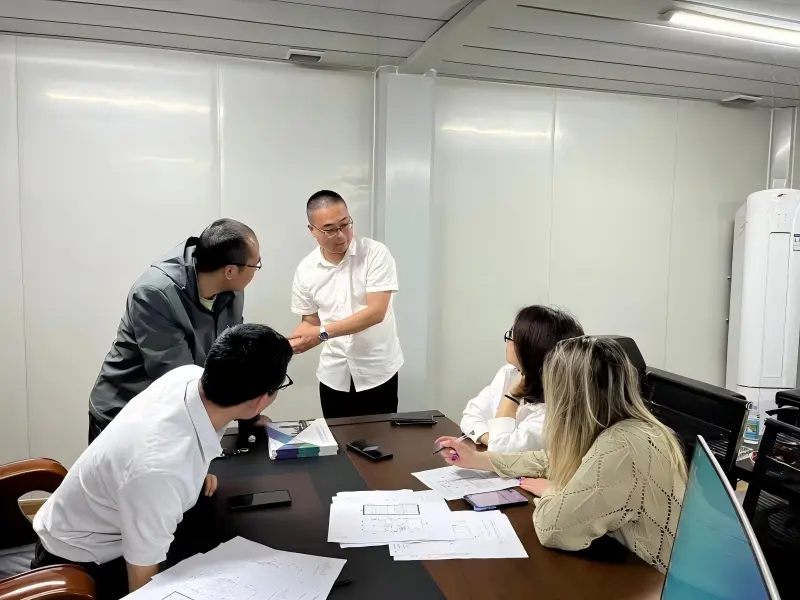
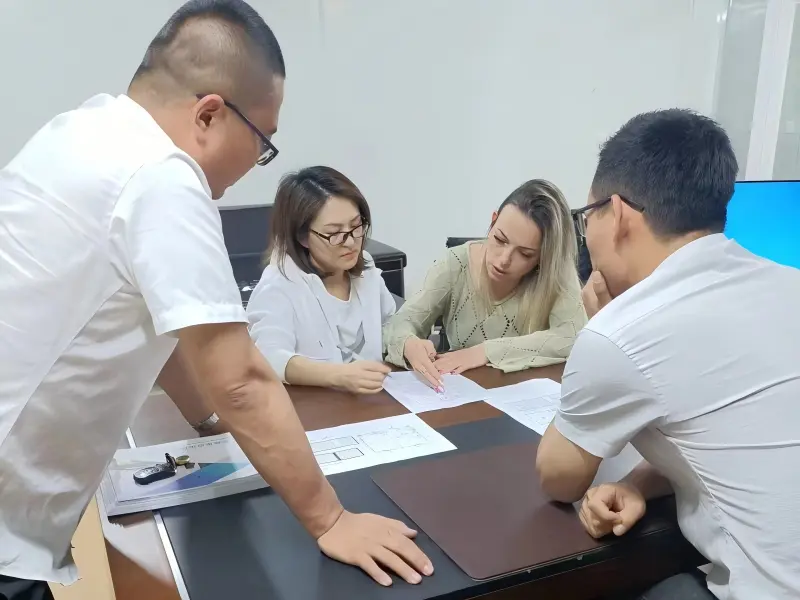
Instead of offering only one standard product, we usually discuss the buyer’s project information first. This includes quantity, intended use, layout, wall panel requirements, bathroom or shower needs, electrical standards, destination port, and preferred EXW or FOB term.
Based on this information, SINOPALA can help buyers check:
Whether a folding house is suitable for the project.
What configuration is more practical.
Whether the unit needs toilet, shower, kitchen, office, or dormitory functions.
How the folded size affects the loading plan.
What the buyer needs to prepare locally.
Whether another product type, such as an expandable container house or modular container house, may be more suitable.
This practical confirmation process is more important than simply following a market trend.
Factory-Prepared Modular Housing
One reason folding houses are becoming more popular is that more work can be prepared before shipment.
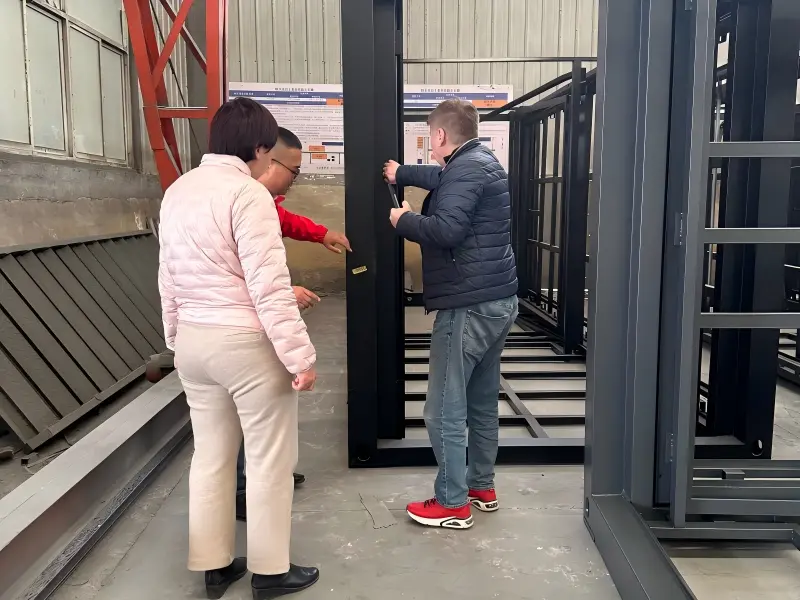
Factory-prepared production can help improve consistency in structure, panels, doors, windows, internal preparation, and packing. It also helps buyers plan repeated project layouts more easily.
For overseas buyers, this is especially useful because every change after shipment can become more difficult and more expensive. Confirming the configuration before production is therefore an important part of the project.
SINOPALA usually checks product type, size, layout, wall panel material, insulation, doors, windows, electrical preparation, plumbing needs, destination port, and loading plan before confirming an order.
Compact Transportation and Loading Planning
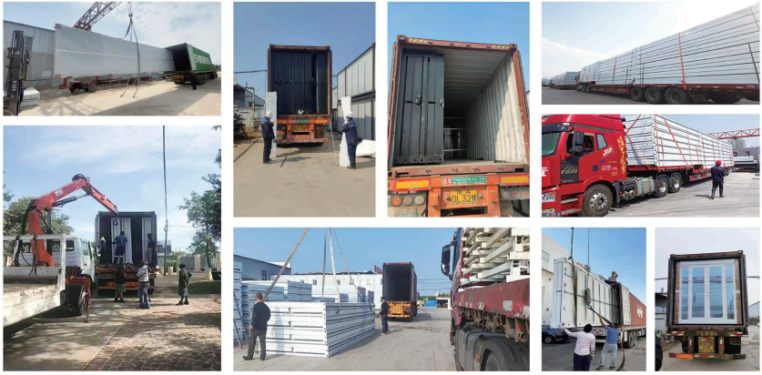
The folded design is one of the main reasons buyers consider folding houses.
When folded, the unit can reduce transport volume compared with some larger prefabricated building systems. This can help with container loading and bulk shipment planning.
However, the actual loading result depends on the unit size, folded size, packing method, configuration, and whether the unit includes toilet, shower, or other built-in functions.
Before placing an order, buyers should confirm:
Folded size.
Packing method.
Container type.
Suggested loading quantity.
Loading direction.
Whether wet-area units affect loading.
Destination port.
Whether the buyer’s shipping agent needs packing information before booking.
For export projects, loading planning should be checked together with the quotation, not after production.
EXW and FOB Trade Terms in Overseas Projects
Trade terms are an important part of overseas folding house projects.
SINOPALA currently mainly provides EXW and FOB quotations.
Under EXW, the buyer or the buyer’s shipping agent usually arranges pickup from the factory, export handling, ocean freight, customs clearance, destination port charges, inland delivery, unloading, foundation, local installation, and utility connection.
Under FOB, SINOPALA usually supports delivery to the agreed Chinese port and export-related handling according to the confirmed order. The buyer or the buyer’s shipping agent usually arranges ocean freight, customs clearance, destination charges, local delivery, unloading, installation, and utility connection.
This is why overseas buyers should not compare quotations only by unit price. They should compare the full quotation scope, loading plan, destination port, and local project cost.
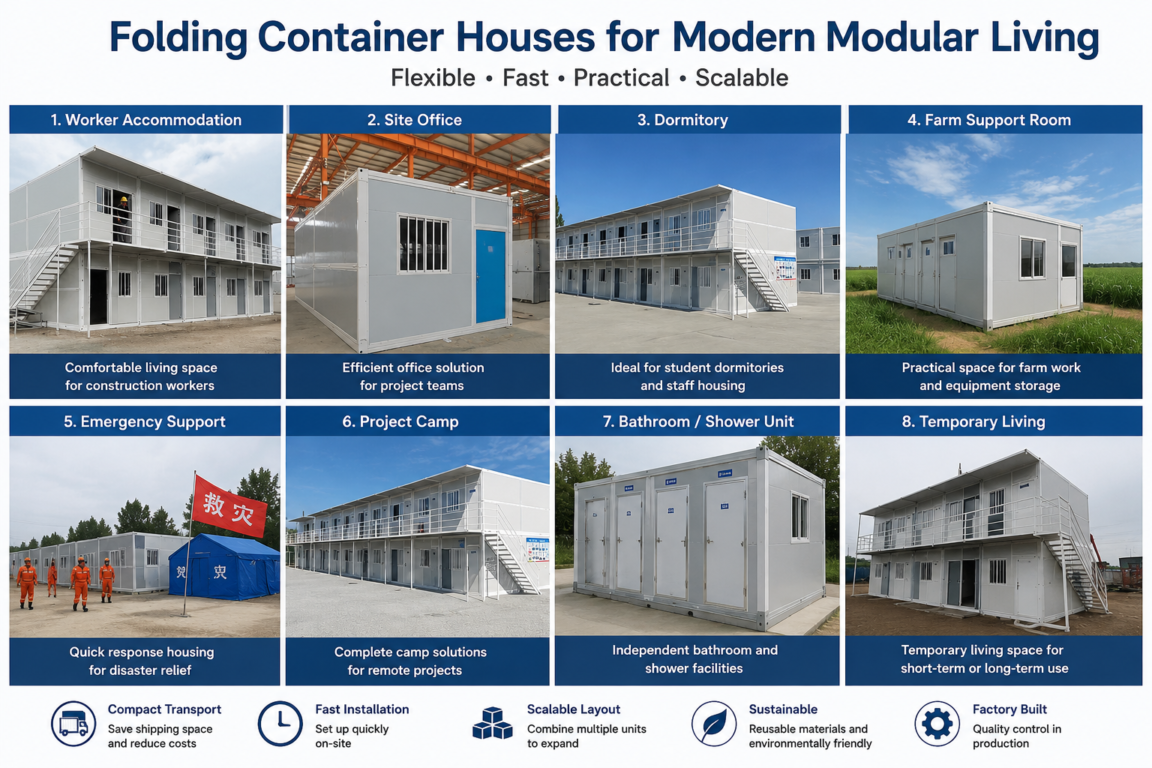
Applications Driving the Folding House Market
Folding houses are used in many project-based applications.
Common applications include:
Worker accommodation.
Construction site dormitories.
Temporary site offices.
Mining and energy project camps.
Farm support rooms.
Student dormitories.
Emergency support units.
Toilet and shower support units.
Temporary project camps.
These applications show why folding houses are part of the modular housing trend. Buyers need buildings that are practical, transportable, and easier to organize across different project stages.
Folding houses can also be used in some residential-style applications, but buyers should confirm local regulations, foundation requirements, insulation needs, utility connection, and long-term maintenance before making a decision.
Trend Does Not Mean One Product Fits All
A common mistake is assuming that folding houses are suitable for every project because they are popular.
In reality, product selection should depend on the project.
A folding house may be suitable when compact transportation, batch delivery, and temporary or semi-permanent use are important.
An expandable container house may be more suitable when the buyer needs a wider interior space and a different opening structure.
A modular container house may be better for certain fixed layouts, offices, camps, or combined facilities.
A container house toilet may be needed as a support unit for worker camps, emergency sites, or temporary public facilities.
The right solution depends on intended use, quantity, site layout, local regulations, shipping plan, installation conditions, and budget.
What Buyers Should Check Before Following the Trend
For buyers who want to compare suppliers before placing an order, choosing a reliable folding house manufacturer is an important step in turning a market trend into a real project plan.
Before buying folding houses, buyers should slow down and confirm the practical details.
Important questions include:
How many units are needed?
What is the intended use?
How many people will use the units?
Is the project temporary, semi-permanent, or long-term?
Does the unit need toilet, shower, kitchen, or office functions?
What wall panel and insulation level are required?
What electrical standard and voltage are needed?
Does the project need plumbing and drainage?
What is the destination port?
Does the buyer need EXW or FOB quotation?
Does the buyer have a shipping agent?
Is the site ready for unloading, foundation, installation, and utility connection?
These questions help turn a general trend into a real project plan.
SINOPALA’s Role in Modular Housing Projects
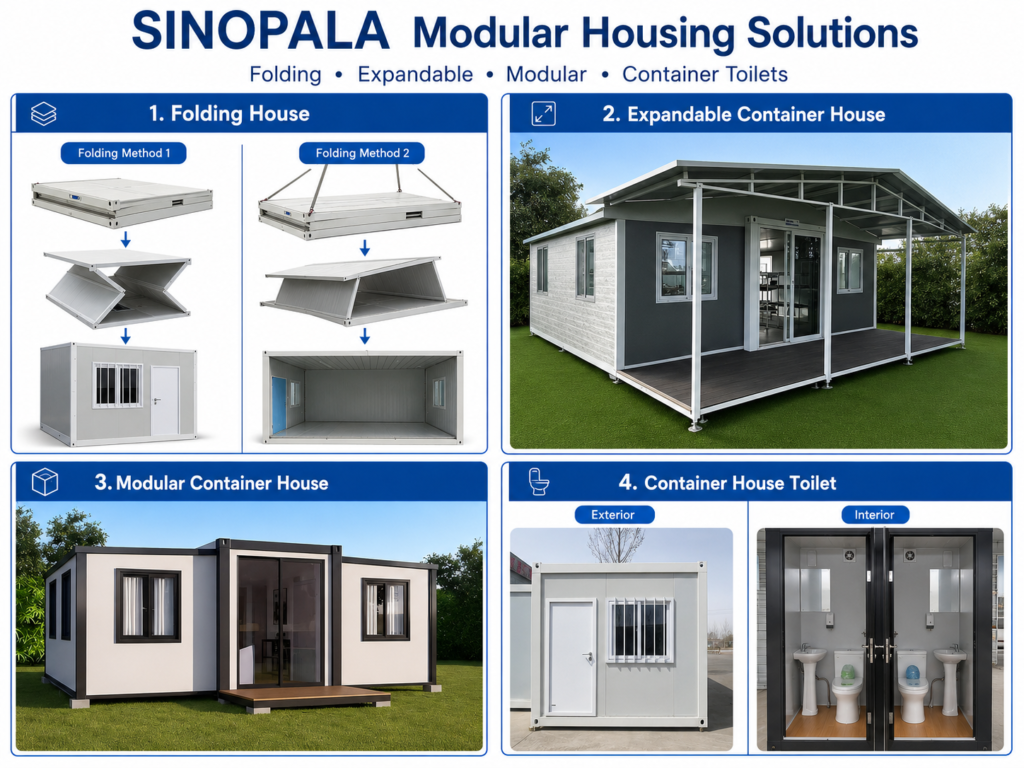
SINOPALA’s role is to support buyers with practical modular housing options, not to force one product type for every project.
For folding house projects, we help buyers confirm configuration, layout, quantity, loading plan, and trade term before production.
For broader modular housing projects, we can also help compare folding houses with expandable container houses, modular container houses, and container house toilets according to the intended use.
This approach is important because overseas projects often involve more than one building type. A worker camp may need accommodation units, toilets, showers, offices, storage rooms, and kitchen or dining support.
A good modular housing plan should consider the whole project, not only a single folding house unit.
The Future of Folding Houses in Modular Construction
Folding houses will likely continue to be used in modular construction because many projects need flexible, transportable, and factory-prepared building units.
The future of folding houses should be understood in a practical way. It is not only about modern appearance or marketing claims. It is about better structure design, clearer configuration options, improved insulation choices, safer electrical and plumbing preparation, more reliable packing methods, and more transparent project communication.
For overseas buyers, the real value is choosing a supplier who can explain the product clearly, confirm details before production, provide loading information, and help buyers understand what must be prepared locally.
That is how folding houses can play a practical role in the future of modular housing.
Conclusion
The folding house trend reflects a wider demand for flexible, transportable, and factory-prepared modular buildings.
For project buyers, folding houses can be useful for worker accommodation, site offices, dormitories, temporary camps, farm support rooms, emergency support units, and other project-based facilities.
SINOPALA supports this trend by helping overseas buyers confirm suitable product types, configurations, loading plans, EXW or FOB terms, and project requirements before production.
If you are planning a folding house or modular housing project, please send your quantity, intended use, layout requirements, destination port, preferred trade term, and site conditions.
SINOPALA will help check the suitable modular housing solution based on your project details.
Contact SINOPALA:
WhatsApp: +86 150 1103 0786
Email: info@sinopala.com
Website: www.sinopala.com