Introduction
Folding container houses are designed for compact transportation and faster site setup compared with many traditional building methods.
Because the main structure is factory-produced before shipment, a folding container house can reduce part of the on-site construction work. However, this does not mean the whole project is finished automatically after delivery.
For buyers still comparing product types, folding container houses are often chosen for compact transport, temporary project use, and faster site setup under prepared conditions.
A proper installation still requires foundation preparation, unloading equipment, local workers, tools, positioning, unfolding, fixing, sealing checks, utility connection, and final inspection.
This guide explains how to install a folding container house from a practical project point of view.
Before Installation: Confirm the Site Conditions
Before the folding container house arrives, buyers should confirm whether the site is ready.
Important checks include:
- truck access
- unloading space
- crane or forklift availability
- level ground
- foundation position
- drainage plan
- electrical connection point
- water supply if needed
- sewage or drainage connection if bathroom is included
- local labor arrangement
- tools and accessories
- installation manual or video
- local approval requirements if applicable
If the site is not ready, the unit may arrive on time but still cannot be installed properly.
For overseas projects, the buyer or local contractor usually needs to prepare the site, foundation, unloading equipment, utility connection, and local approval according to project conditions.
Step 1: Prepare the Foundation
A stable and level foundation is the first requirement for installing a folding container house.
Common foundation options may include:
- concrete slab
- concrete blocks
- concrete piers
- steel base frame
- other foundation methods designed by the local site team
The right foundation depends on soil condition, project duration, local climate, unit size, drainage, and local construction requirements.
Before installation, buyers should check:
- whether the ground is level
- whether the foundation points match the unit base
- whether water can drain away from the house
- whether the foundation can support the unit safely
- whether the site has enough space for unfolding
- whether nearby walls, trees, wires, or buildings block installation
Uneven ground may affect door alignment, wall panel connection, roof sealing, and daily use.
Buyers who need to estimate local site work, labor, foundation, unloading, and utility connection can also review container house installation cost before confirming the total project budget.
Step 2: Arrange Delivery and Unloading
Folding container houses are usually transported in a compact folded form.
Before delivery, buyers should confirm:
- packing dimensions
- loading quantity
- gross weight if needed
- destination port
- EXW or FOB trade term
- local delivery route
- unloading equipment
- site access condition
Unloading may require:
- crane
- forklift
- truck-mounted crane
- lifting straps or lifting points
- trained local workers
The unit should be unloaded carefully and placed on the prepared foundation or temporary support area.
Buyers should avoid unloading on soft, uneven, or narrow ground without proper equipment.
For overseas orders, buyers should also review the container house shipping guide before comparing packing, loading, destination port, EXW / FOB responsibility, and local delivery arrangements.
Step 3: Position the Unit Correctly
After unloading, the folded unit should be positioned according to the site layout drawing.
Before unfolding, check:
- front direction
- door position
- window position
- distance from other units
- space for roof and wall movement
- access path
- drainage direction
- utility connection points
- maintenance space
If multiple units are installed together, the buyer should confirm spacing, walking paths, drainage, electrical routes, water supply, and fire or safety access according to local requirements.
Good positioning before unfolding can reduce later adjustment work.
Step 4: Unfold the Main Structure
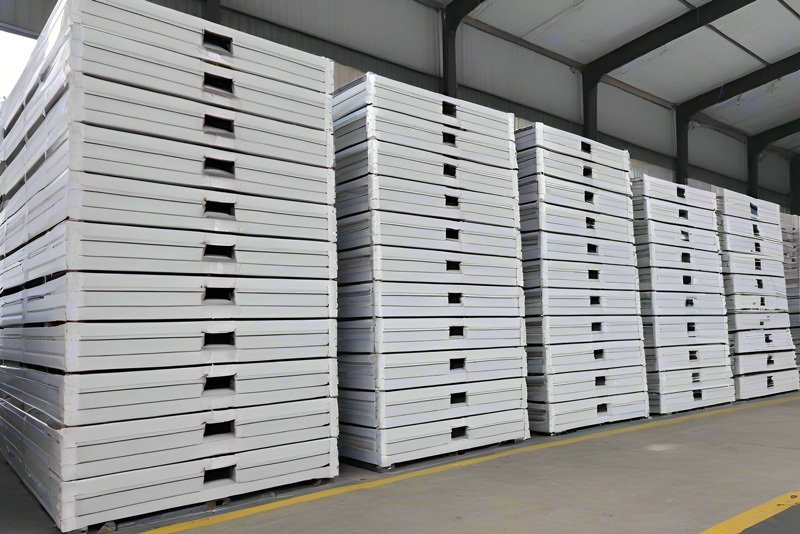
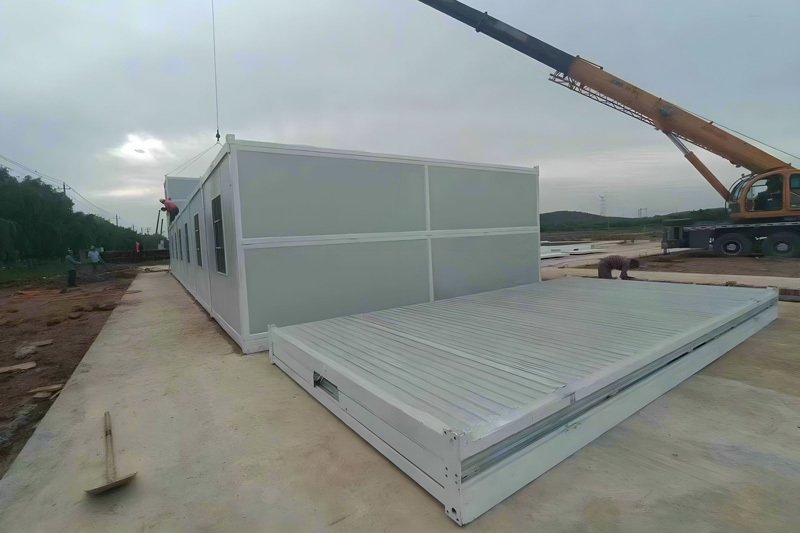
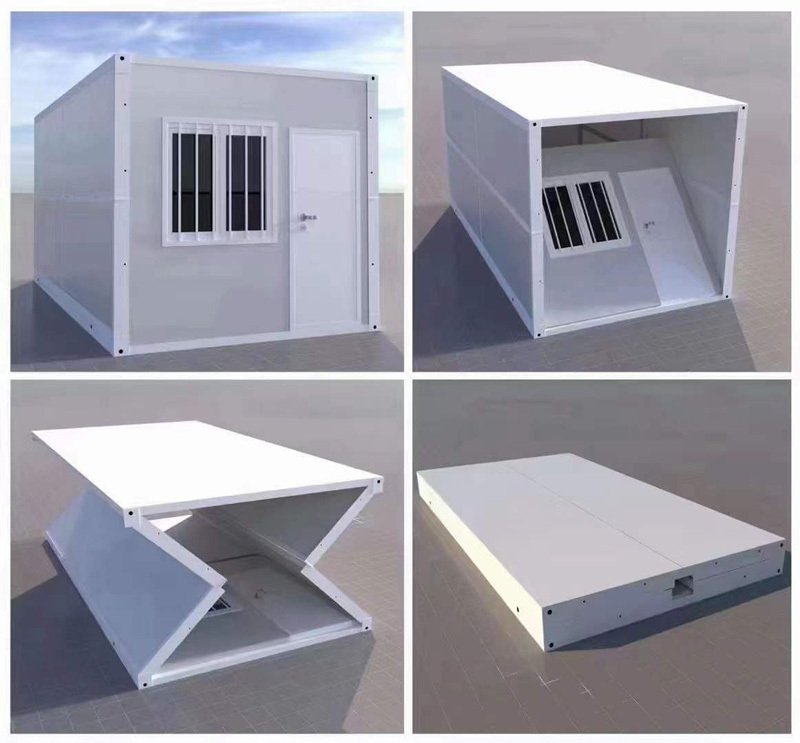
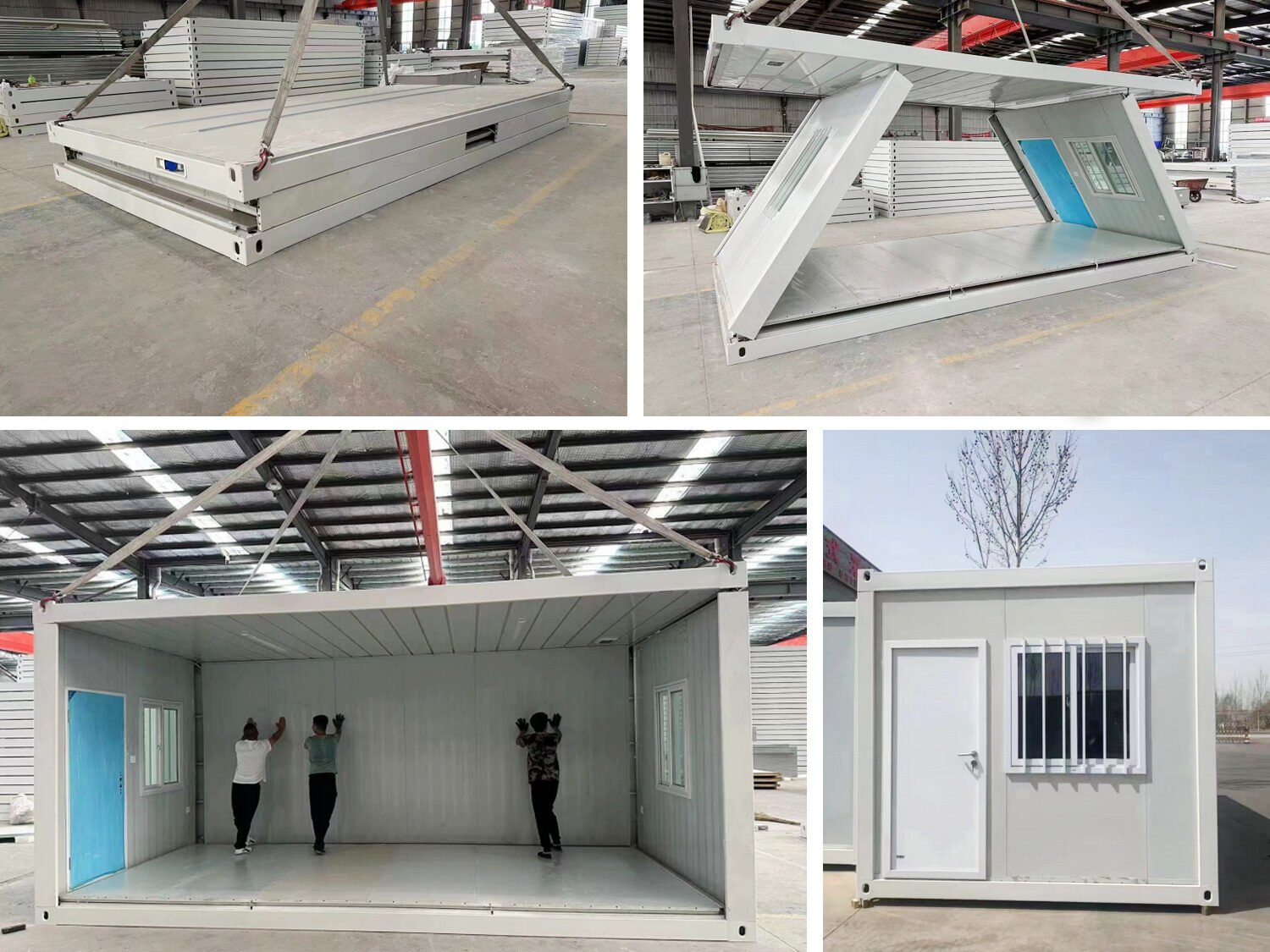
The main installation step is unfolding the structure.
Depending on the model, the process may include:
- lifting or opening the roof structure
- unfolding side walls
- positioning wall panels
- aligning frame connections
- fixing structural parts
- checking hinges or connection points
This step should follow the supplier’s installation manual or video.
Workers should not force the structure if panels, frames, or hinges do not align correctly. Misalignment may mean the ground is uneven, the unit is not positioned correctly, or some connection part needs adjustment.
For buyers who want to understand the frame, hinges, panels, and folding mechanism in more detail, the folding container house structure guide can be reviewed before ordering.
Step 5: Fix the Frame and Wall Connections
After the structure is unfolded, the frame and wall connections need to be fixed.
This may include:
- tightening bolts
- securing wall panels
- checking roof and wall joints
- fixing base connections
- checking door and window alignment
- confirming that panels close properly
- checking waterproof sealing areas
For windy, rainy, coastal, or long-term use environments, anchoring, sealing, and anti-rust checks are especially important.
The exact anchoring method should follow product requirements and local site conditions.
For safety-related checks, buyers can also review whether container houses are safe before confirming structural, foundation, sealing, and installation requirements.
Step 6: Check Roof, Wall, Door, and Window Sealing
After the house is fixed, sealing checks should be done before daily use.
Important areas include:
- roof joints
- corner connections
- wall panel joints
- door frame
- window frame
- base frame
- bathroom wall and floor area if included
- drainage points
If the unit includes bathroom or kitchen, buyers should pay extra attention to waterproofing, drainage outlet, ventilation, and maintenance access.
A small sealing issue can become a bigger maintenance problem if it is ignored after installation.
Step 7: Connect Electricity, Water, and Drainage
Many folding container houses may include basic electrical routes or reserved connection points, depending on the order configuration.
However, final utility connection usually needs to be completed by the buyer’s local team or qualified local contractors.
Utility work may include:
- power supply connection
- lighting check
- socket check
- air-conditioning preparation
- grounding or protection if required locally
- water inlet connection
- drainage outlet connection
- toilet connection
- shower connection
- kitchen sink connection
- sewage or wastewater connection
Electrical and plumbing work should follow local regulations and safety requirements.
The factory can prepare certain routes or reserved points based on the order, but final connection and approval usually depend on the local site team.
Step 8: Complete Interior Setup
After the main structure and utilities are checked, the interior can be arranged.
Depending on the configuration, this may include:
- bed or bunk bed setup
- cabinets
- desk or office furniture
- lighting accessories
- kitchen cabinets
- bathroom fixtures
- curtains or blinds
- air-conditioning installation
- cleaning and final inspection
Interior setup time depends on the configuration. A simple office unit is different from a living unit with bathroom, kitchen, furniture, and appliances.
Buyers should confirm what is included in the factory quotation and what needs to be installed locally.
Step 9: Final Inspection Before Use
Before the folding container house is used, a final inspection should be completed.
Check:
- whether the unit is level
- whether doors and windows open smoothly
- whether bolts and connectors are fixed
- whether roof and wall joints are sealed
- whether the floor is stable
- whether electrical points work properly
- whether water inlet and drainage work
- whether bathroom waterproofing is acceptable
- whether air-conditioning or ventilation is ready
- whether all accessories are installed
- whether the site is clean and safe
For project camps or multiple units, buyers should also check walking paths, drainage, lighting, safety access, and maintenance access.
How Long Does Installation Take?
A standard folding container house may be opened and basically positioned within a few hours when:
- the foundation is ready
- unloading equipment is available
- local workers are familiar with the steps
- tools and accessories are prepared
- the site has enough working space
- the unit has a simple configuration
However, the full project may take longer when the unit includes bathroom, kitchen, utility connection, multiple units, site leveling, drainage work, local approval, or additional interior installation.
Buyers should separate two concepts:
- basic unit unfolding
- complete project readiness
The first may be fast under prepared conditions.
The second depends on site work, local labor, utilities, and inspection.
Common Installation Mistakes
Common mistakes include:
- not preparing the foundation before delivery
- unloading without proper equipment
- placing the unit on uneven ground
- not leaving enough unfolding space
- ignoring drainage
- forcing panels when the structure is not aligned
- not checking bolts and connectors
- not checking roof and wall sealing
- connecting utilities without qualified local workers
- assuming the unit is fully ready immediately after unfolding
- not keeping installation photos and records
These mistakes can lead to water leakage, door misalignment, unstable positioning, utility problems, or extra local costs.
Many installation problems also come from unclear quotations, missing specifications, or poor supplier communication, which are similar to common mistakes when buying container houses from China.
What Buyers Should Confirm Before Shipment
Before the folding container house is shipped, buyers should confirm:
- product model
- quantity
- folded size
- gross weight if needed
- packing method
- loading quantity
- installation manual or video
- foundation suggestion
- accessories included
- tools needed
- unloading method
- site access condition
- local labor arrangement
- electrical and plumbing requirements
- bathroom or kitchen configuration
- EXW or FOB trade term
- whether a shipping agent is arranged
This helps reduce installation delays after the goods arrive.
Conclusion
Installing a folding container house is usually faster than many traditional construction methods because the structure is factory-produced and transported in a compact form.
However, proper installation still depends on foundation preparation, unloading equipment, site access, unfolding space, local workers, sealing checks, utility connection, and final inspection.
For overseas buyers, the safest approach is to prepare the site before delivery, follow the supplier’s installation guide, arrange qualified local workers for electrical and plumbing work, and confirm all details before shipment.
A folding container house can be a practical solution when the product configuration and site conditions are properly matched.
Need Help Planning Folding Container House Installation?
If you are planning a folding container house project, Sinopala can help review your installation requirements before quotation.
To recommend a suitable configuration, please share:
- intended use
- project country or destination port
- required size
- estimated quantity
- number of users
- layout requirements
- bathroom, kitchen, office, bedroom, toilet, or shower needs
- site access condition
- foundation preparation status
- unloading equipment availability
- local labor arrangement
- electrical and plumbing requirements
- preferred trade term: EXW or FOB
- whether you already have a shipping agent
Contact Sinopala:
WhatsApp: +86 150 1103 0786
Email: info@sinopala.com
Website: www.sinopala.com