Introduction
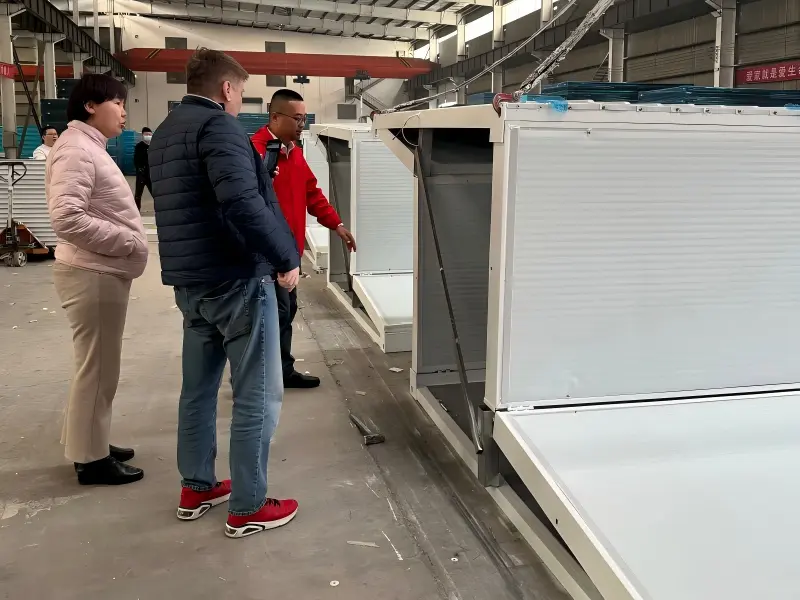
One of the main reasons buyers choose container houses is speed. Compared with traditional construction, many container house projects can reduce on-site building work because major components are prepared in the factory before delivery.
However, “building a container house” does not only mean opening or installing the unit on site.
For overseas buyers, the full timeline may include requirement confirmation, layout design, quotation, production, inspection, packing, loading, sea freight, customs clearance, local delivery, foundation preparation, unloading, installation, utility connection, and final checking.
A single standard folding or expandable container house may be set up quickly when the site is ready. But the full project timeline depends on product type, size, quantity, customization, shipping route, local approval, foundation, utilities, and site conditions.
This guide explains the full container house build timeline from a practical B2B purchasing point of view.
Step 1: Requirement Confirmation
Before production starts, the buyer and supplier need to confirm the basic project requirements.
This stage usually includes:
- intended use
- project country or destination port
- product type
- required size: 10ft, 20ft, 30ft, or 40ft
- quantity
- number of users
- layout requirement
- bathroom, toilet, shower, kitchen, office, or dormitory needs
- wall panel and insulation requirements
- electrical and plumbing requirements
- EXW or FOB trade term
- shipping agent status
- site access and unloading conditions
For a standard product inquiry, this may be confirmed relatively quickly. For customized layouts, camp projects, accommodation units, or bathroom/kitchen configurations, this stage may take longer because the supplier needs clearer information before giving a realistic quotation.
Buyers comparing budget should also review the expandable container house price guide because price, configuration, production time, and shipping plan are closely connected.
Step 2: Layout and Configuration Confirmation
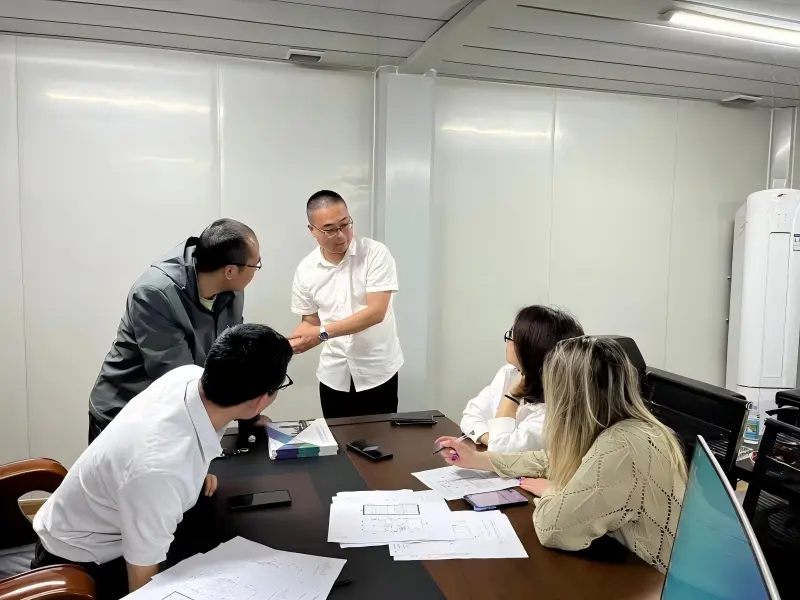
After the basic requirements are clear, the next step is layout and configuration confirmation.
This stage may include:
- floor plan confirmation
- room layout
- door and window position
- bathroom position
- kitchen layout
- electrical socket locations
- lighting positions
- plumbing route
- drainage outlet
- wall panel type
- interior finish
- furniture or appliance options if required
For a simple standard unit, layout confirmation may be fast. For a customized accommodation unit, office-living unit, dormitory layout, or camp project, buyers should allow more time to check drawings and configuration details.
The most important point is to confirm these details before production. Changing bathroom, kitchen, electrical, or window positions after production may cause extra cost, delay, or rework.
For expandable layouts, buyers can review expandable container house floor plans before confirming the final design.
Step 3: Quotation and Order Confirmation
Once the layout and configuration are clear, the supplier can prepare a more accurate quotation.
A complete quotation should clarify:
- product type
- size
- quantity
- configuration
- included items
- optional items
- packing method
- EXW or FOB term
- payment terms
- estimated production time
- shipping-related information if available
Buyers should avoid comparing quotations only by the lowest unit price. A cheap quotation may exclude bathroom, kitchen, furniture, wall panel upgrades, packing details, loading photos, installation guidance, shipping, local delivery, foundation, or utility connection.
Order confirmation time depends on communication speed, buyer approval, payment arrangement, and whether the layout is standard or customized.
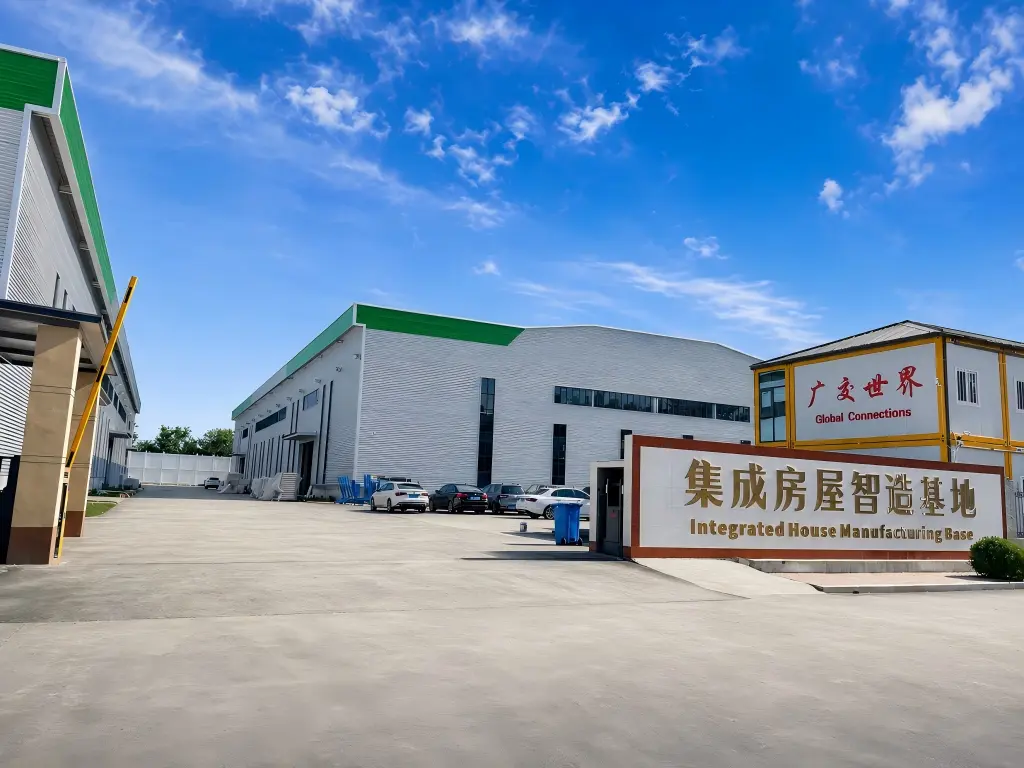
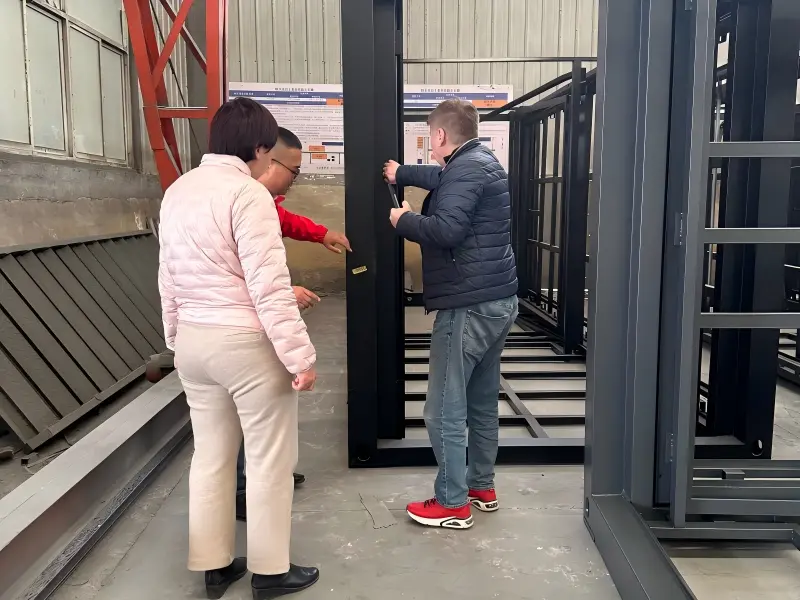
Step 4: Factory Production
After the order is confirmed, production begins.
Factory production may include:
- steel frame preparation
- wall panel installation
- roof and floor preparation
- door and window installation
- bathroom or kitchen preparation if included
- electrical route preparation
- interior configuration
- folding or expanding mechanism preparation
- quality checking before packing
Production time depends on product type, order quantity, configuration complexity, factory schedule, and material availability.
As a general reference, some standard container house orders may take around 7–15 days for production. Larger quantities, customized layouts, special wall panels, bathroom/kitchen upgrades, or project-based orders may take longer.
Factory production helps reduce some on-site construction work, but it does not eliminate the need for foundation, unloading, installation, and utility connection at the destination.
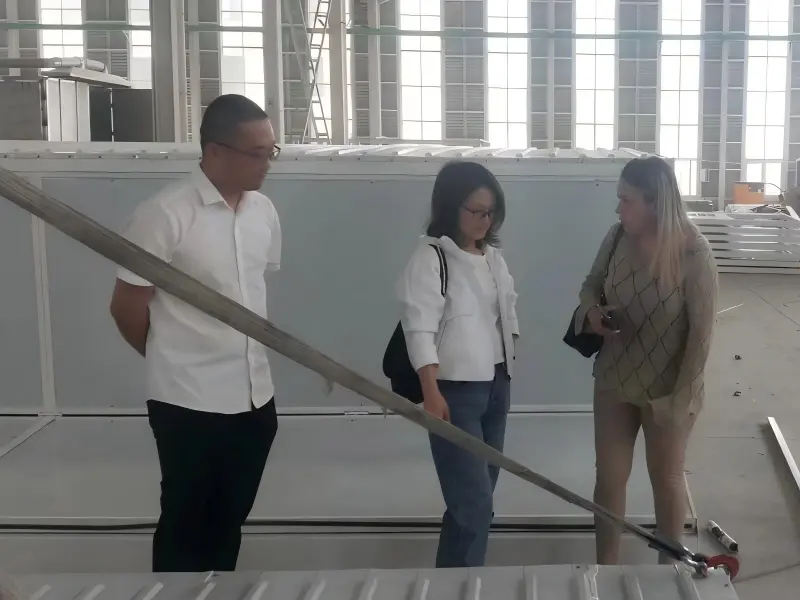
Step 5: Inspection, Packing, and Loading
After production, the supplier usually prepares the units for packing and shipment.
This stage may include:
- final product checking
- packing confirmation
- loading plan
- packing list
- loading photos
- container loading
- export document preparation
- coordination with shipping agent if required
For overseas buyers, this stage is important because packing and loading affect shipping cost, unloading preparation, and project scheduling.
Buyers should ask for packing dimensions, loading quantity, packing list, and loading photos before shipment.
This stage may take a few days depending on order quantity, loading schedule, port arrangement, and shipping agent coordination.
Step 6: International Shipping
Shipping time depends heavily on destination country, shipping route, vessel schedule, port congestion, and whether the buyer already has a shipping agent.
As a general reference:
- domestic transport in China may take a few days depending on factory and port location
- international sea freight may take around 10–30 days or longer depending on destination
- remote destinations or less common routes may take more time
Sinopala currently mainly provides EXW and FOB quotations.
Under EXW terms, the buyer or buyer’s agent usually arranges pickup from the factory and handles export, shipping, customs clearance, destination port charges, local delivery, and site unloading.
Under FOB terms, the supplier usually delivers the goods to the agreed port in China according to the FOB arrangement, while the buyer or buyer’s shipping agent usually handles ocean freight, destination port charges, customs clearance, local delivery, and site unloading.
Buyers should review the container house shipping guide before confirming the delivery schedule.
Step 7: Customs Clearance and Local Delivery
After the container arrives at the destination port, the buyer or buyer’s agent usually needs to handle customs clearance, destination port charges, local trucking, and delivery to the project site.
This stage may depend on:
- destination country
- customs process
- import documents
- port handling speed
- local trucking availability
- road access
- project site distance from port
- unloading equipment availability
This step is often underestimated by first-time buyers. Even if the product arrives at the port on time, local delivery and unloading can still delay the project if they are not arranged in advance.
Buyers should confirm who is responsible for customs clearance, local delivery, and unloading before the goods leave China.
Step 8: Site Preparation and Foundation
Site preparation can happen while the goods are being produced or shipped. This is usually the best way to save time.
Site preparation may include:
- ground leveling
- drainage planning
- foundation preparation
- access road checking
- unloading space preparation
- crane or forklift arrangement
- water supply planning
- electrical connection planning
- sewage or drainage connection
- local approval if required
Common foundation options may include concrete slab, concrete blocks, strip foundation, steel base frame, or other local engineer-approved solutions.
Site preparation may take one or several days for a small project. For larger accommodation camps, multiple units, bathroom/kitchen units, or sites with poor ground conditions, it may take longer.
Foundation should not be ignored. Poor foundation preparation can affect door and window alignment, drainage, stability, waterproofing, and service life.
Step 9: Unloading and Positioning
When the container house arrives at the site, buyers need to unload and position the units.
This stage requires planning for:
- truck access
- crane or forklift availability
- unloading area
- worker safety
- lifting points
- foundation position
- unit direction
- spacing between units
- access for future maintenance
For folding or expandable container houses, the buyer should also confirm enough clearance for opening, unfolding, or positioning.
If the project includes multiple units, unloading and placement should follow the site layout plan. Random placement can create problems with drainage, electrical connection, walking routes, and future maintenance.
Step 10: Installation and Setup
The installation time depends on product type, site readiness, number of units, workers, equipment, and configuration.
As a general reference, a standard folding or expandable container house may be opened and basically positioned within around 2–4 hours when the foundation is ready, unloading equipment is available, and workers are familiar with the installation steps.
However, this does not mean the whole project is completed within 2–4 hours.
Full setup may also include:
- unloading
- positioning
- unfolding or expanding
- leveling
- fixing
- sealing checks
- roof and wall checking
- door and window adjustment
- electrical connection
- water supply connection
- drainage connection
- bathroom or kitchen setup
- inspection and cleaning
For multiple units, camp projects, dormitories, offices, toilets, showers, or connected layouts, buyers should allow more time.
Buyers can review how to install a folding container house when planning folding house setup and local labor requirements.
Step 11: Utility Connection and Final Checking
A container house is not ready for use until utilities and final checks are completed.
This stage may include:
- electrical connection
- lighting check
- socket check
- air-conditioning preparation
- water inlet connection
- drainage connection
- toilet and shower testing
- kitchen sink testing
- leakage check
- door and window adjustment
- ventilation check
- safety inspection
- cleaning
For living, rental, dormitory, office, bathroom, toilet, or shower use, utility connection is a critical step.
Local electrical and plumbing work may need to be handled by qualified local contractors according to local rules.
Example Timeline for a Standard Order
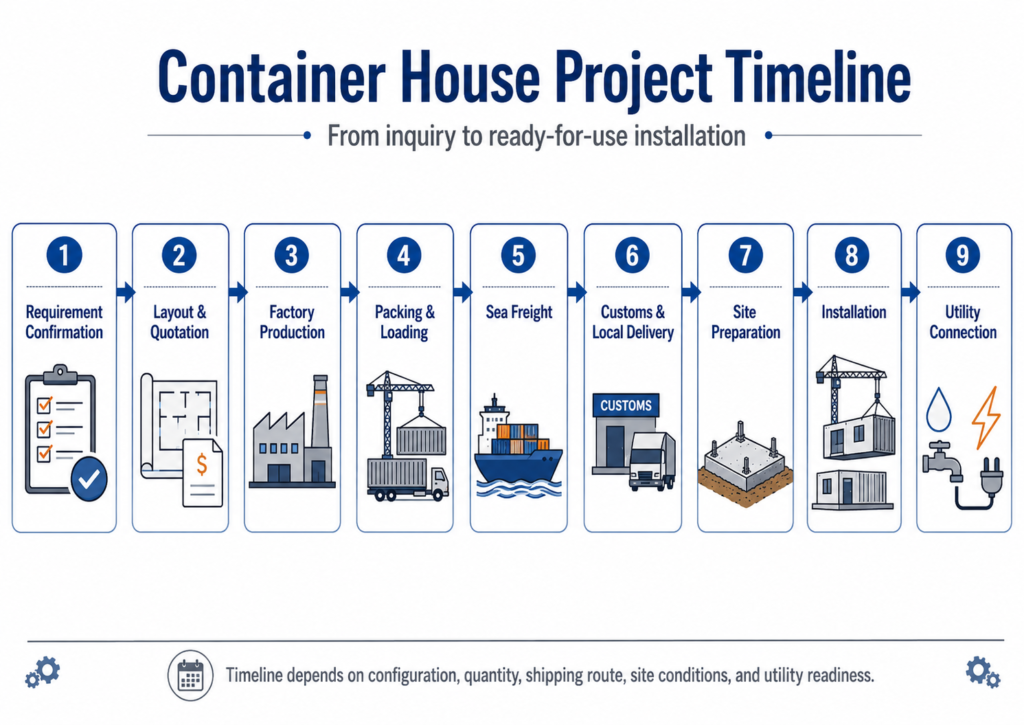
A typical small standard order may follow this general timeline:
- requirement confirmation: 1–3 days
- layout and quotation confirmation: 1–5 days
- factory production: around 7–15 days
- inspection, packing, and loading: 1–3 days
- sea freight: around 10–30 days depending on destination
- customs clearance and local delivery: depends on destination and agent arrangement
- site preparation: can be done during production or shipping
- installation and setup: from a few hours for simple units to longer for multiple units or utility-connected projects
This is only a general reference. The actual timeline depends on product configuration, quantity, shipping route, local delivery, foundation, installation conditions, and project complexity.
Why Container Houses Can Be Faster Than Traditional Construction
Container houses can reduce project time because more work is completed before the unit reaches the site.
Main reasons include:
- factory-prepared structure
- modular production
- repeatable layouts
- less on-site building work
- controlled production environment
- easier planning for multiple similar units
- faster site setup when foundation and equipment are ready
However, buyers should still plan the full process carefully. Shipping, customs clearance, local delivery, foundation, utilities, and installation can still affect the final timeline.
What Can Delay a Container House Project?
Common delays include:
- unclear layout requirements
- late changes to bathroom or kitchen design
- incomplete quotation information
- slow payment confirmation
- material or configuration changes
- shipping agent not arranged
- destination port not confirmed
- customs clearance issues
- local delivery not arranged
- foundation not ready
- no crane or forklift on site
- water or electrical connection not prepared
- local approval not checked
Most delays can be reduced when the buyer confirms project details early and prepares the site while the units are being produced or shipped.
How Buyers Can Shorten the Timeline
Buyers can shorten the project timeline by:
- confirming intended use early
- choosing a suitable standard layout when possible
- confirming bathroom, kitchen, and electrical details before production
- preparing the destination port and shipping agent early
- arranging foundation work before delivery
- preparing crane or forklift before arrival
- confirming local delivery route
- preparing electrical, water, and drainage connection
- checking local regulations in advance
- avoiding late design changes
The faster the buyer confirms information, the easier it is for the supplier to produce, pack, and ship the order smoothly.
Conclusion
A container house can be set up much faster than many traditional buildings, but buyers should understand the full timeline.
The full process may include requirement confirmation, layout design, quotation, production, packing, shipping, customs clearance, local delivery, site preparation, unloading, installation, utility connection, and final checking.
For a standard unit, production and installation can be relatively fast. For larger projects, customized layouts, bathrooms, kitchens, remote sites, or multiple units, buyers should plan more time.
The best way to control the schedule is to confirm product type, layout, quantity, destination port, EXW or FOB trade term, shipping agent, foundation, unloading equipment, and utility connection before production starts.
Need Help Planning Your Container House Timeline?
If you are planning a container house project, Sinopala can help review the basic timeline before quotation.
To estimate the schedule more accurately, please share:
- intended use
- project country or destination port
- required product type
- size: 10ft, 20ft, 30ft, or 40ft
- estimated quantity
- layout requirements
- bathroom, toilet, shower, kitchen, office, or dormitory needs
- preferred trade term: EXW or FOB
- whether you already have a shipping agent
- site access and unloading conditions
- whether foundation and utilities are ready
Contact Sinopala:
WhatsApp: +86 150 1103 0786
Email: info@sinopala.com
Website: www.sinopala.com