Introduction
At Sinopala, many buyers first compare 20ft and 40ft expandable container house floor plans before asking for a quotation. The floor plan affects not only the appearance of the house, but also the number of rooms, bathroom position, kitchen layout, furniture placement, plumbing route, electrical points, installation work, and final project cost.
A 20ft expandable container house is commonly used for compact living, site offices, rental units, temporary accommodation, farm housing, or small project housing. A 40ft expandable container house usually gives more flexibility for bedrooms, living area, bathroom, kitchen, storage, and office-living layouts.
For overseas buyers, a good floor plan should not only look good in a rendering. It should be practical to produce, ship, unfold, install, connect, maintain, and use on the real project site.
For overseas orders, buyers should also review the container house shipping guide because floor plan, size, quantity, and packing method may affect the final loading and delivery plan.
This guide explains common expandable container house floor plans and practical layout ideas from a B2B purchasing and production-planning point of view.
What Is an Expandable Container House Floor Plan?
An expandable container house floor plan is the internal layout of the unit after it is unfolded. It shows how the space is divided into different functional areas such as bedroom, living room, bathroom, kitchen, office area, storage, doors, windows, and walking space.
Because expandable container houses open out from a compact transport form, the layout must consider both the opened interior space and the folded transport structure.
Before choosing a layout, buyers should confirm:
- required size: 20ft, 40ft, or other available size
- intended use
- number of users
- number of rooms
- bathroom requirement
- kitchen or kitchenette requirement
- furniture layout
- door and window position
- electrical points
- plumbing and drainage route
- destination port
- installation site condition
Before choosing a final layout, buyers can also review the expandable container house size guide to understand size options and space planning.
Why Floor Plan Planning Matters Before Production
Floor plan planning should happen before production, not after the unit arrives on site.
This is because the floor plan affects:
- wall panel layout
- door and window position
- bathroom waterproofing
- kitchen plumbing
- electrical socket locations
- lighting position
- air-conditioning preparation
- furniture size
- opening direction
- site clearance
- installation work
- packing and transport planning
If the buyer changes the bathroom, kitchen, window, or door position after production, it may cause additional cost, rework, or installation problems.
For project buyers, the best approach is to confirm the layout drawing, configuration details, and quotation scope before placing the order.
20ft Expandable Container House Floor Plan Ideas
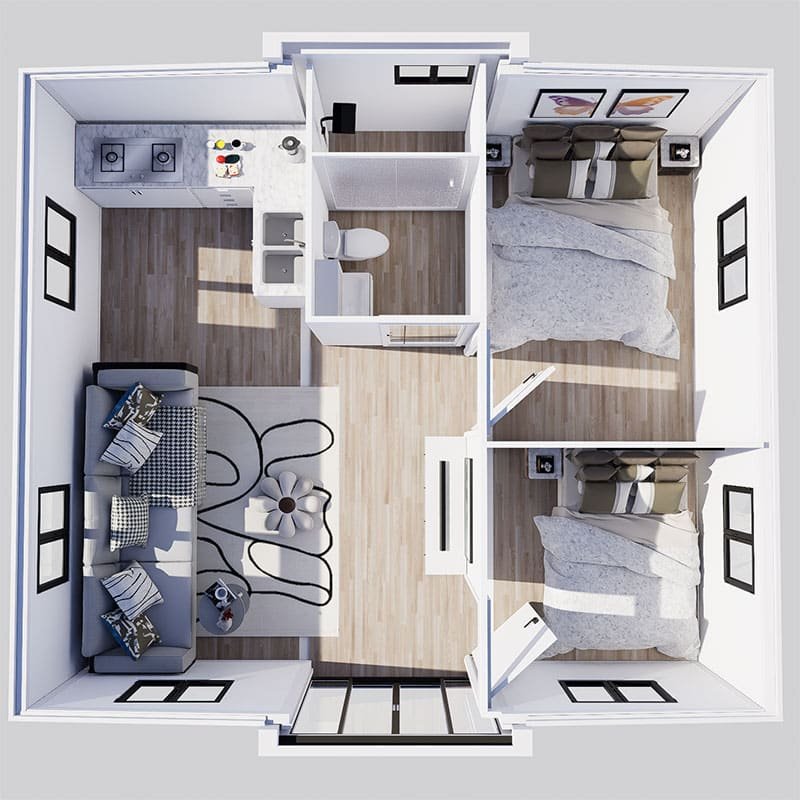
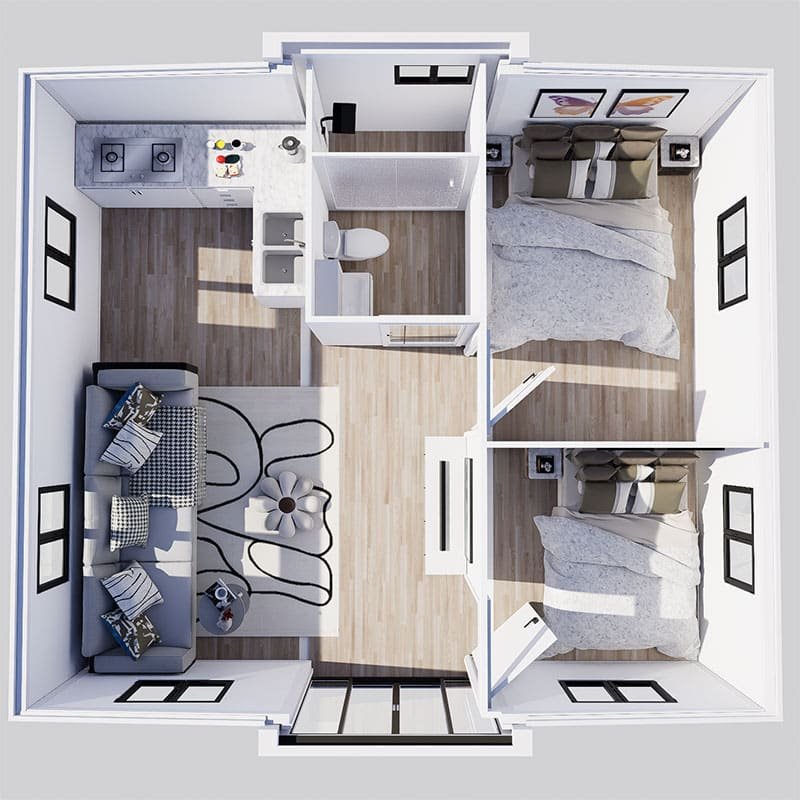
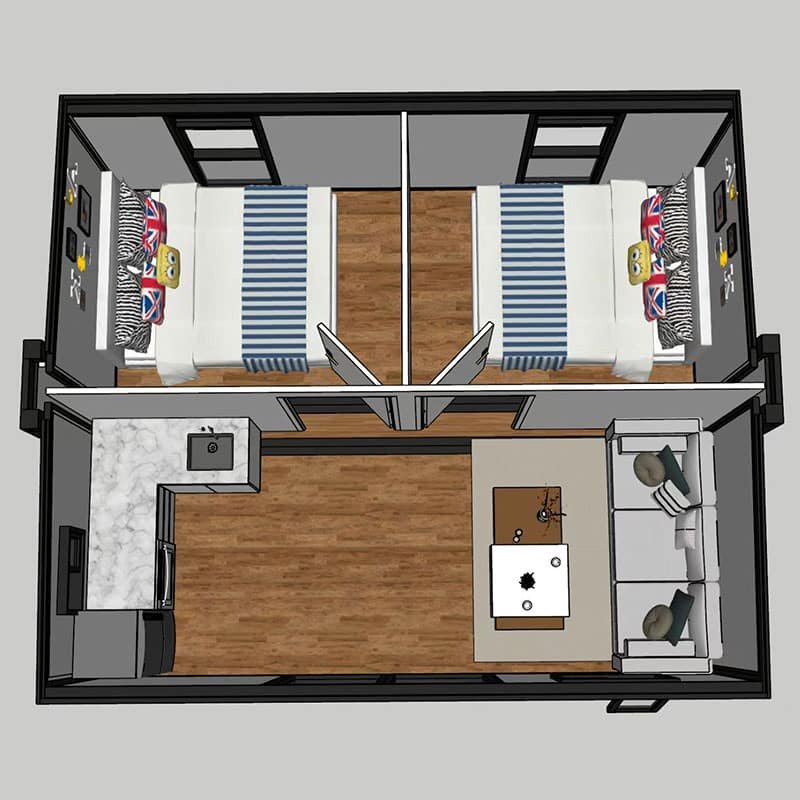
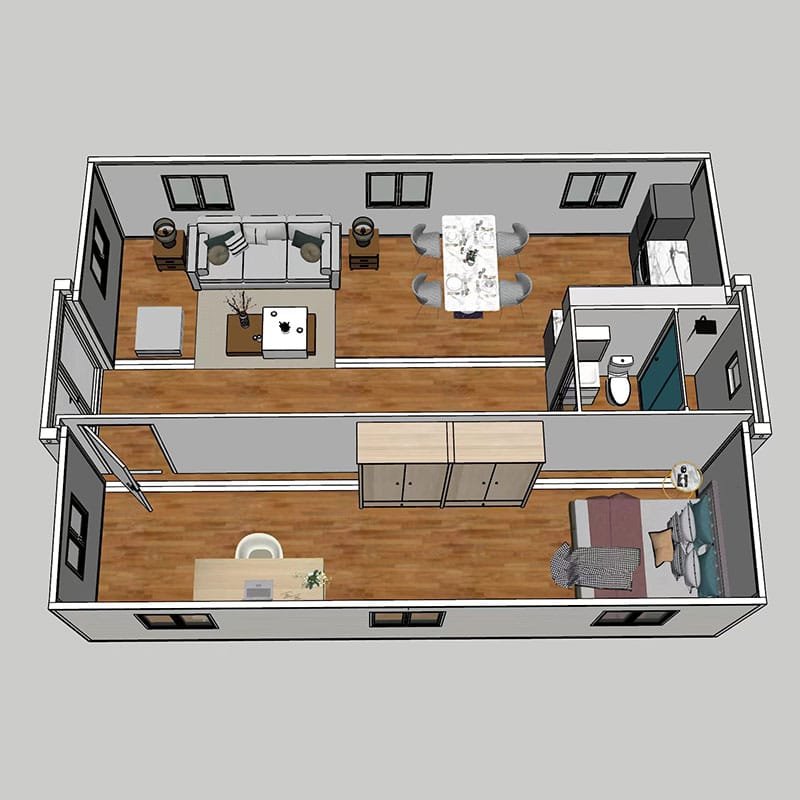
A 20ft expandable container house is often selected when the buyer needs a compact but functional unit.
Common 20ft layout options include:
- open studio layout
- one-bedroom layout
- small office layout
- office with restroom
- rental accommodation unit
- temporary worker accommodation
- compact living unit with bathroom and kitchenette
For 20ft layouts, the key is to avoid over-dividing the space. Too many partitions can reduce walking space and make the unit feel crowded.
A practical 20ft layout usually focuses on one clear function: living, office, temporary accommodation, or bathroom-supported use.
Buyers should confirm whether the unit needs a full bathroom, kitchenette, wardrobe, sofa, desk, bed, air-conditioning position, and storage before production.
40ft Expandable Container House Floor Plan Ideas
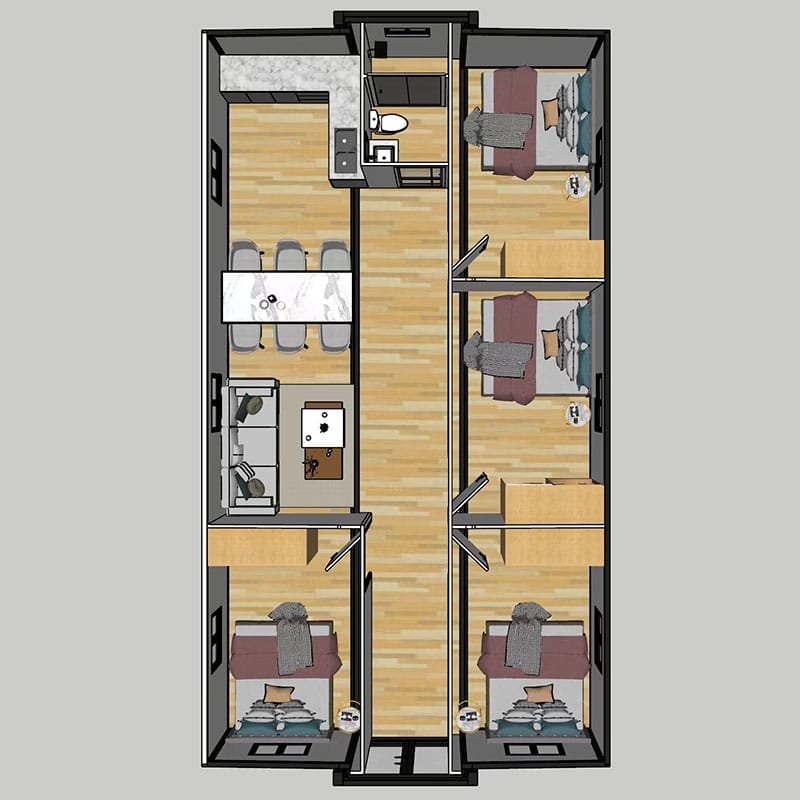
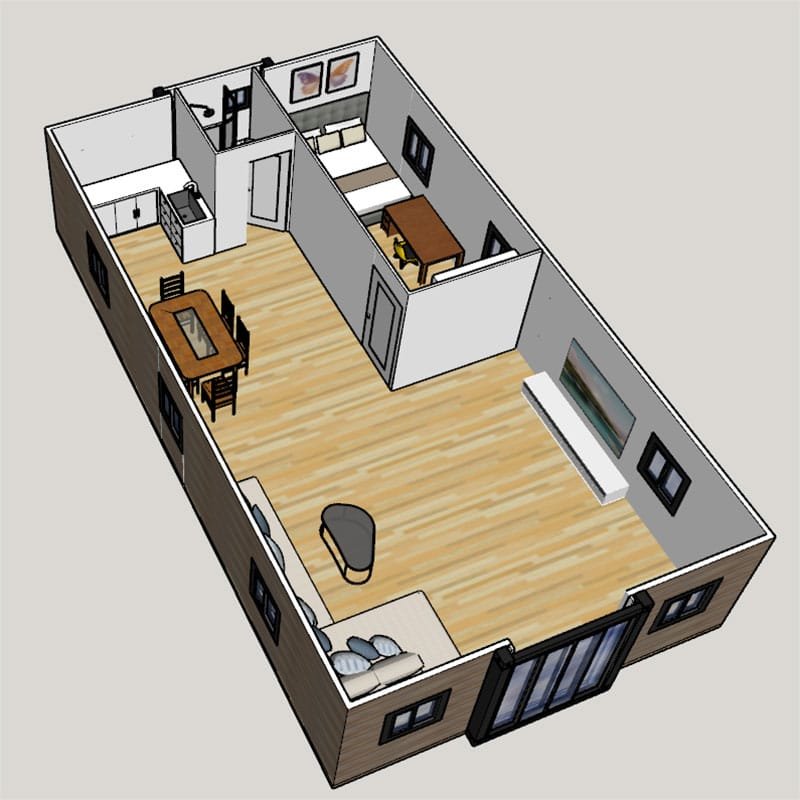
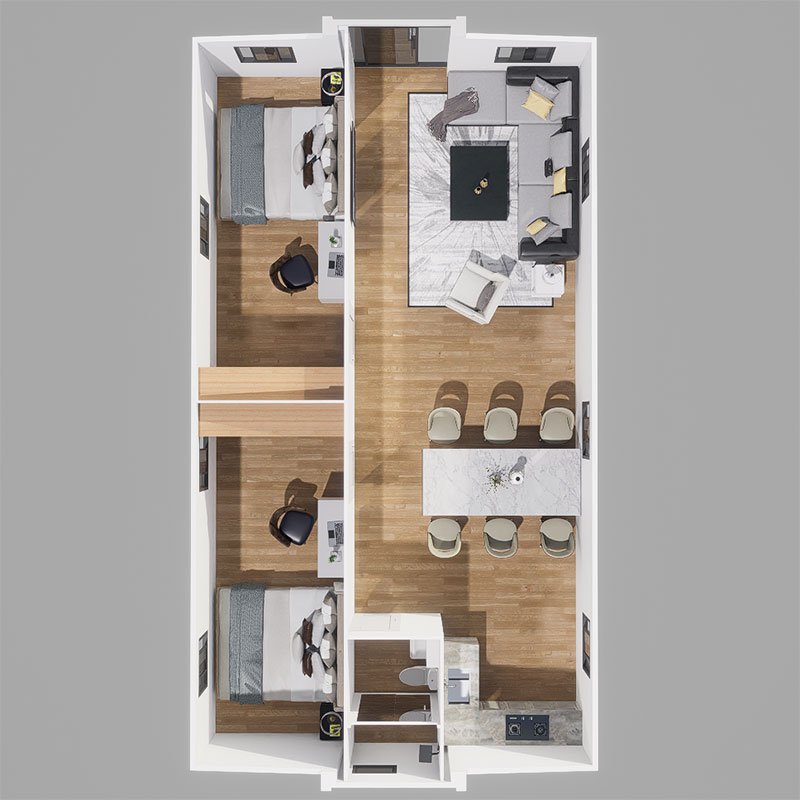
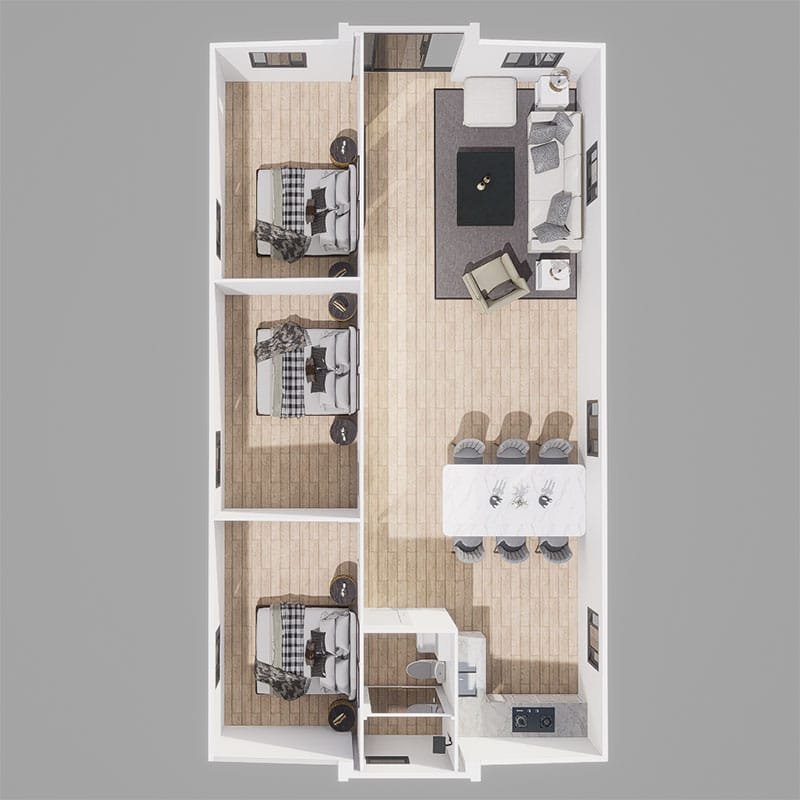
A 40ft expandable container house offers more layout flexibility than a 20ft unit.
Common 40ft layout options include:
- one-bedroom with larger living area
- two-bedroom layout
- two-bedroom with kitchen and bathroom
- office-living layout
- rental accommodation layout
- family-style layout where locally permitted
- site management office with rest area
- dormitory-style layout with shared facilities
Because 40ft units provide more usable space after unfolding, buyers can plan more complete living or office functions. However, larger space also means more planning work.
Buyers should confirm:
- bedroom number
- living area size
- bathroom position
- kitchen location
- window arrangement
- door opening direction
- electrical route
- water inlet and drainage outlet
- furniture placement
- foundation and unfolding clearance
A 40ft layout should not be chosen only because it is larger. It should match the number of users, project duration, site conditions, and transport plan.
If you are still deciding which size is better for your project, read our 20ft vs 40ft expandable container house comparison.
Studio Layout
A studio layout uses one open space for sleeping, living, and sometimes working.
It may include:
- open living and sleeping area
- compact bathroom
- optional kitchenette
- simple storage
- desk or dining table
- large window if suitable
This layout is often suitable for:
- single-user accommodation
- temporary housing
- site office with rest area
- rental unit
- farm housing
- remote project accommodation
For B2B buyers, the studio layout is usually easier to quote and produce when the bathroom, kitchen, furniture, electrical points, and wall panel configuration are confirmed in advance.
The main advantage is simplicity. The main limitation is privacy.
One-Bedroom Layout
A one-bedroom expandable container house provides more privacy than a studio layout.
A common layout may include:
- separate bedroom
- living area
- bathroom
- kitchenette
- storage space
- entrance area
- windows for ventilation and light
This layout is useful for rental units, office-living units, temporary accommodation, farm housing, and small project housing.
Buyers should check whether the bedroom has enough walking space around the bed, whether the bathroom is close to the plumbing route, and whether the kitchen position allows safe ventilation and electrical planning.
For long-term or repeated use, storage and maintenance access should also be considered.
Two-Bedroom Layout
A two-bedroom layout is commonly requested for 40ft expandable container houses or larger customized layouts.
It may include:
- two separate bedrooms
- shared living area
- bathroom
- kitchen or kitchenette
- storage
- entrance space
- windows for each room where possible
This layout can be suitable for small families, shared accommodation, rental projects, worker housing, and project staff housing.
However, buyers should not only count the number of rooms. They should also check whether each room has enough usable space, ventilation, lighting, privacy, and access to the bathroom.
If the bathroom and kitchen are included, plumbing and drainage should be confirmed before production.
Office Layout
Expandable container houses can also be used as site offices, temporary business offices, or project management spaces.
A practical office layout may include:
- open work area
- meeting table
- manager room
- storage cabinet
- restroom if required
- air-conditioning position
- lighting and socket layout
- optional rest area
For construction sites, mining projects, farms, and temporary business operations, office layout should focus on work efficiency, ventilation, heat control, and easy maintenance.
Buyers should confirm how many people will work in the office, whether a meeting area is needed, and whether the office requires a toilet, pantry, or private room.
Dormitory Layout
Dormitory layouts are often used for worker accommodation, construction sites, mining camps, farm projects, and remote project housing.
A dormitory layout may include:
- multiple beds
- storage lockers
- shared walking space
- ventilation
- lighting
- air-conditioning position
- optional bathroom or nearby toilet/shower units
For worker accommodation, the floor plan should not only maximize bed quantity. Buyers should also consider comfort, safety, ventilation, storage, cleaning, and maintenance.
If many dormitory units are used together, the buyer should plan the full camp layout, including toilets, showers, kitchen or dining areas, office units, drainage, access roads, and maintenance space.
For projects that need separate wet-area support, container house toilets can be planned together with dormitory and accommodation units.
Bathroom and Kitchen Placement
Bathroom and kitchen placement is one of the most important parts of expandable container house floor planning.
Bathrooms affect:
- drainage outlet
- water inlet
- waterproof flooring
- wall panel protection
- ventilation
- toilet position
- shower position
- maintenance access
Kitchens affect:
- sink position
- cabinet layout
- countertop length
- electrical sockets
- water inlet
- drainage
- ventilation or exhaust
- appliance space
- wall protection
These areas should be confirmed before production because they affect structure, utilities, interior finish, installation, and future maintenance.
For buyers who need a complete living layout, the container house interior design plan should be reviewed together with the floor plan.
Door and Window Planning
Door and window positions affect light, ventilation, furniture placement, privacy, and site access.
Before confirming the layout, buyers should check:
- main entrance position
- bedroom door direction
- bathroom door direction
- window size
- window quantity
- window opening method
- furniture blocking risk
- privacy requirements
- sunlight direction
- local climate
Large windows can improve natural light, but they may also affect heat gain, wall layout, furniture placement, and privacy. Window design should match the project use and climate, not only appearance.
Plumbing and Electrical Planning
Plumbing and electrical planning should be included in the floor plan discussion.
Buyers should confirm:
- water inlet
- drainage outlet
- bathroom route
- kitchen route
- toilet and shower connection
- electrical standard if required
- socket positions
- lighting positions
- air-conditioning position
- water heater preparation if needed
- site utility connection
If the unit includes bathroom, kitchen, toilet, or shower functions, these details should not be decided after production.
For overseas projects, buyers should also check local electrical and plumbing requirements before confirming the final layout.
Combining Multiple Units for Larger Layouts
Expandable container houses can be used as single units or combined with other modular units for larger projects.
Possible combinations include:
- multiple accommodation units
- office blocks
- dormitory areas
- camp layouts
- rental clusters
- temporary commercial spaces
- project support areas
For larger projects, buyers should think beyond one floor plan. The full site layout may need toilets, showers, kitchens, dining areas, storage rooms, offices, access roads, drainage, electrical distribution, and maintenance space.
For safety and durability concerns, buyers can also review whether container houses are safe before planning larger layouts.
Common Floor Plan Mistakes
Many layout problems happen because buyers focus too much on renderings and not enough on real use.
Common mistakes include:
- choosing a layout only by appearance
- adding too many rooms in a small unit
- ignoring walking space
- placing the bathroom without checking drainage
- placing the kitchen without checking water and power routes
- using large windows without considering heat and privacy
- forgetting storage
- not confirming door swing direction
- not checking furniture size
- ignoring site clearance for unfolding
- not confirming EXW / FOB responsibility and shipping plan
The floor plan should support real use, production, shipping, installation, and maintenance.
What Buyers Should Confirm Before Finalizing a Floor Plan
Before confirming an expandable container house floor plan, buyers should prepare:
- intended use
- project country or destination port
- required size: 20ft, 40ft, or other available size
- quantity
- number of users
- bedroom number
- bathroom requirement
- kitchen or kitchenette requirement
- office or storage needs
- preferred layout
- door and window requirements
- wall panel and insulation requirements
- electrical and plumbing requirements
- expected project duration
- EXW or FOB trade term
- whether a shipping agent is arranged
- site access and unloading conditions
This information helps the supplier provide a more realistic layout suggestion and quotation.
Conclusion
Expandable container house floor plans are important because they affect space use, comfort, production, shipping, installation, plumbing, electrical work, and long-term maintenance.
A good floor plan should match the buyer’s real project use, not just look attractive in a drawing.
For 20ft and 40ft expandable container houses, buyers should consider room function, bathroom and kitchen placement, furniture, doors, windows, site clearance, utility connection, and local installation conditions before confirming the order.
The best layout is the one that can be produced clearly, shipped safely, installed smoothly, and used comfortably on the real project site.
Need Help Planning an Expandable Container House Floor Plan?
If you need a suitable expandable container house floor plan, Sinopala can help review your basic requirements before quotation.
Please share:
- required size: 20ft, 40ft, or other available size
- intended use
- number of rooms
- bathroom, kitchen, office, toilet, or shower requirements
- required quantity
- project country or destination port
- preferred trade term: EXW or FOB
- whether you already have a shipping agent
- site access and unloading conditions
- reference layout or drawing if available
Sinopala will help check the suitable layout, loading plan, and quotation based on your project details.
Contact Sinopala:
WhatsApp: +86 150 1103 0786
Email: info@sinopala.com
Website: www.sinopala.com