Introduction
Container house interior design is not only about choosing colors, furniture, or decoration style. For overseas buyers, a good interior layout should first solve practical problems: how people will live or work inside the unit, how much space is available, where the bathroom and kitchen should be placed, how electrical and plumbing routes are arranged, and whether the design can be produced, shipped, installed, and maintained smoothly.
A container house can be used for accommodation, rental units, site offices, dormitories, farm housing, worker camps, portable toilets, showers, or temporary living facilities. But the interior design for a 20ft office is very different from a 40ft accommodation unit or an expandable container house with bedrooms, kitchen, and bathroom.
This guide explains practical container house interior design ideas from a project and production point of view, not just from a decoration point of view.
Start With the Real Use, Not the Decoration Style
Before choosing a modern, minimalist, industrial, or Scandinavian style, buyers should first define the real use of the container house.
The design should answer these questions:
- Will it be used for living, office, rental, dormitory, or site accommodation?
- How many people will use one unit?
- Is a bathroom required?
- Is a kitchen or kitchenette required?
- Will the unit need air-conditioning?
- Is the project temporary, semi-permanent, or long-term?
- Will the unit be moved later?
- What size is required: 10ft, 20ft, 30ft, or 40ft?
- What destination port and installation site conditions should be considered?
This is why choosing the best container house for your project should come before choosing interior colors or furniture.
Interior Design for 10ft, 20ft, 30ft, and 40ft Container Houses
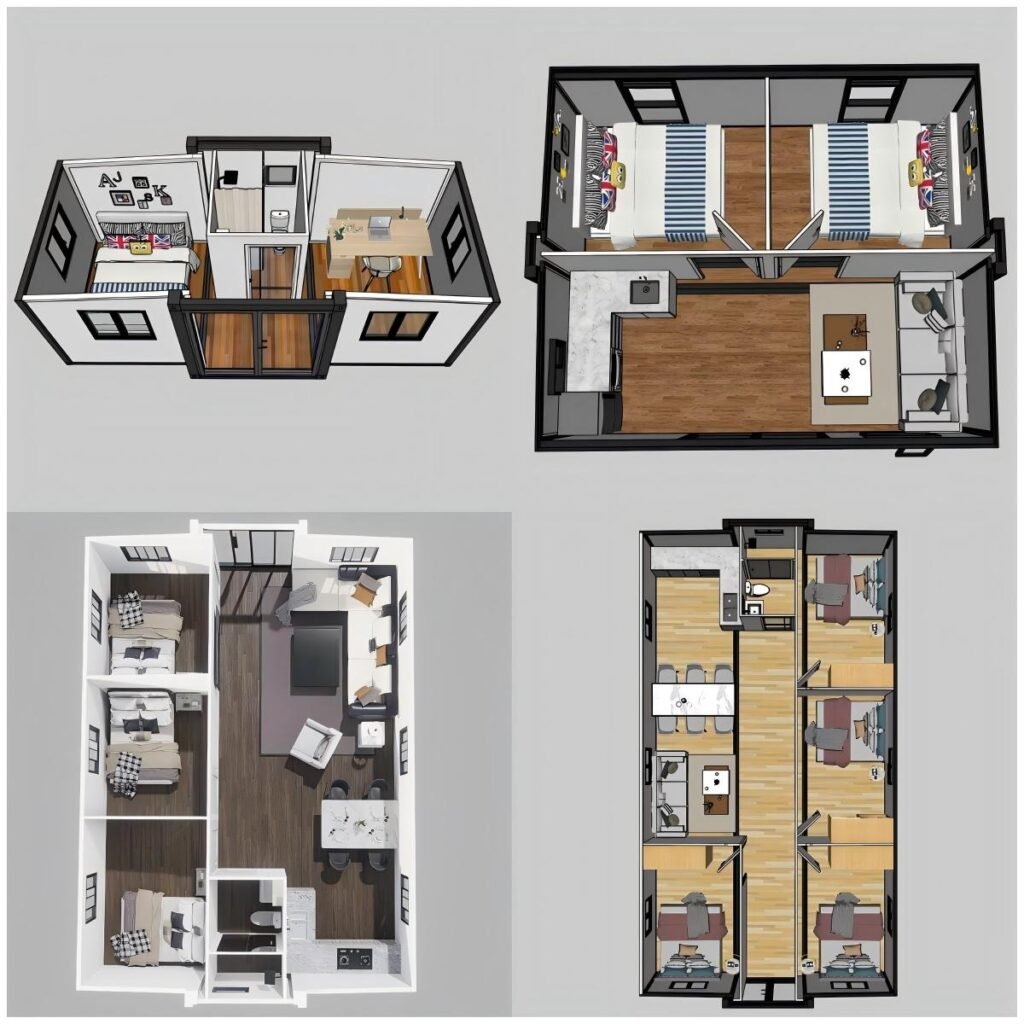
Different sizes need different interior planning.
A 10ft container house is usually suitable for compact functions such as a guard room, small office, kiosk, toilet unit, shower unit, or storage support room. The interior should be simple, with clear walking space and only essential furniture.
A 20ft container house can be used as a small office, dormitory room, compact living unit, toilet block, shower room, or site accommodation. For this size, buyers should avoid too many partitions. An open layout usually works better.
A 30ft or 40ft container house gives more room for bedrooms, living space, bathroom, kitchen, storage, and office functions. These sizes are better when the buyer needs a more complete accommodation layout.
For expandable container houses, the interior can provide more usable space after unfolding, but the layout still needs to be planned around the opening direction, wall position, bathroom location, furniture size, and utility routes.
Open Layout Design for Small Spaces
For most container houses, an open layout is more practical than dividing the space into too many small rooms.
A common layout approach is to combine the living area, dining area, and kitchen area into one open space. Bedrooms, bathrooms, or office areas can then be placed according to the unit size and user needs.
Open layouts help improve:
- walking space
- natural light
- ventilation
- furniture flexibility
- visual comfort
- installation simplicity
For buyers reviewing expandable container house floor plans, it is important to check not only the appearance of the drawing, but also whether the furniture placement, bathroom position, door opening, window position, and walking path are practical.
Bedroom Design Ideas
Bedroom design should focus on comfort, privacy, storage, and available walking space.
For compact units, buyers can consider:
- single beds for dormitory use
- bunk beds for worker accommodation
- built-in wardrobes
- under-bed storage
- wall-mounted shelves
- sliding doors where suitable
- compact bedside lighting
- simple air-conditioning position
For rental or living use, the bedroom should not be planned only by bed size. Buyers should also confirm window position, door swing direction, electrical outlets, lighting, storage space, and whether there is enough space to move around the bed.
If the container house will be used in a hot, cold, humid, or coastal area, insulation and ventilation should be considered together with bedroom layout.
Living Area Design Ideas
The living area should be simple, flexible, and easy to maintain.
For small container houses, bulky sofas and oversized cabinets can make the space difficult to use. More practical choices include:
- compact sofas
- foldable tables
- wall-mounted TV area
- narrow cabinets
- multi-purpose seating
- open shelves
- light-colored interior panels
- simple ceiling lighting
In B2B projects such as rental units, worker housing, or temporary accommodation, the living area should also be easy to clean and durable enough for repeated use.
The goal is not to make the interior look expensive in photos only. The goal is to make the space usable for the actual people who will live or work there.
Kitchen and Kitchenette Planning
Kitchen design should be confirmed early because it affects electrical, plumbing, ventilation, cabinet layout, and wall protection.
For compact container houses, a kitchenette may be enough. For longer-term living or rental use, buyers may need a more complete kitchen with cabinets, sink, countertop, exhaust fan, refrigerator space, and electrical outlets.
Before production, buyers should confirm:
- whether a kitchen is required
- sink position
- water inlet and drainage position
- countertop length
- cabinet layout
- electrical socket location
- ventilation or exhaust plan
- appliance space
- wall protection behind the cooking area
A kitchen should not be added casually after production if the wall panels, floor, drainage, and electrical routes have not been planned.
Bathroom, Toilet, and Shower Design
Bathroom design is one of the most important parts of container house interior planning.
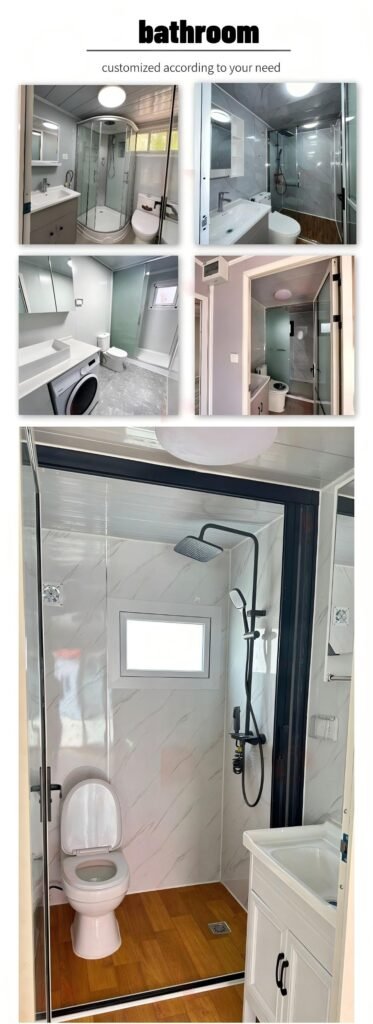
A bathroom affects waterproofing, drainage, plumbing, ventilation, flooring, wall panels, and installation work. If the container house includes a toilet or shower, these details should be confirmed before production.
Buyers should check:
- toilet position
- shower position
- drainage outlet
- water inlet
- waterproof flooring
- wall panel protection
- ventilation fan
- window or exhaust option
- hot water system preparation
- maintenance access
For projects that need separate toilet or shower units, container house toilets can be used as support facilities for camps, construction sites, farms, mining projects, or temporary accommodation areas.
Wet areas should never be treated as simple decoration. They are technical parts of the building and should be confirmed carefully.
Office Interior Design Ideas
For site offices, sales offices, project offices, or temporary workspaces, the design should focus on efficiency.
A practical office layout may include:
- work desks
- meeting table
- storage cabinets
- air-conditioning position
- power outlets
- lighting
- network cable preparation if needed
- door and window placement
- privacy partitions if required
For a small 20ft office, too much furniture can reduce usability. For a larger modular office, multiple units can be combined or arranged into separate meeting, reception, and working areas.
Office interior design should also consider noise, heat, sunlight direction, and daily traffic flow.
Storage Design for Container Houses
Storage is often underestimated in container house design.
Because the space is limited, good storage planning can make the interior feel much more usable.
Practical storage ideas include:
- under-bed storage
- wall-mounted shelves
- built-in wardrobes
- overhead cabinets
- storage benches
- narrow vertical cabinets
- hidden storage under seating
- utility cabinets near the entrance
For accommodation projects, storage should be planned according to the number of users. A dormitory unit for several workers needs a different storage plan from a rental unit or private living unit.
Lighting and Window Planning
Lighting affects both comfort and appearance.
Good container house interior design usually combines natural light and artificial lighting.
Buyers should review:
- window size
- window position
- door position
- sunlight direction
- privacy requirements
- ceiling light layout
- bedside lighting
- kitchen lighting
- bathroom lighting
- exterior lighting if needed
Large windows can improve natural light, but they may also affect heat gain, privacy, wall strength, and furniture placement. The final window design should match the climate, use scenario, and structure of the unit.
Interior Materials and Maintenance
Interior design should also consider durability and maintenance.
For B2B use, such as rental projects, camps, offices, or dormitories, materials should be practical and easy to clean.
Buyers should consider:
- wall panel durability
- floor material
- waterproof areas
- anti-rust details near wet areas
- door and window sealing
- cabinet material
- repair and replacement convenience
A beautiful interior is not enough if it is difficult to maintain after installation. This is why the design should be reviewed together with the container house maintenance plan.
Interior Design for Expandable, Folding, and Modular Container Houses
Different product types need different interior design logic.
Expandable container houses can provide more usable space after unfolding, making them suitable for layouts with bedrooms, living areas, kitchen, and bathroom. Buyers should confirm the unfolding direction, furniture position, interior width, and site space before ordering.
Folding container houses are useful when buyers care about transport efficiency and faster site deployment. The interior should be practical, compact, and easy to repeat across multiple units.
Modular container houses are suitable for camp layouts, offices, dormitories, and project facilities. The design can focus on repeatable rooms, shared toilets, shared showers, office blocks, and support spaces.
Interior design should always match the product structure. A layout that looks good in a rendering may not be suitable for every container house model.
Common Interior Design Mistakes
Many buyers focus too much on beautiful renderings and not enough on technical details.
Common mistakes include:
- choosing furniture before confirming the layout
- adding too many partitions
- ignoring walking space
- placing the bathroom without checking drainage
- not confirming kitchen water and power routes
- using large windows without considering heat and privacy
- forgetting storage space
- ignoring local installation conditions
- not checking wall panel and insulation options
- assuming all designs can be shipped and installed the same way
These are similar to the common mistakes when buying container houses from China: buyers should not judge only by photos, low prices, or decoration style. Drawings, specifications, layout details, packing information, and installation requirements should be confirmed before ordering.
What Buyers Should Confirm Before Production
Before confirming the final interior design, buyers should provide or confirm:
- product type
- size: 10ft, 20ft, 30ft, or 40ft
- quantity
- intended use
- number of users
- bedroom requirement
- bathroom, toilet, shower, or kitchen needs
- office or storage requirements
- wall panel and insulation requirement
- window and door position
- electrical socket and lighting requirements
- plumbing and drainage plan
- destination port
- EXW or FOB trade term
- whether a shipping agent is arranged
- site access and unloading conditions
This information helps the supplier prepare a more realistic quotation and layout recommendation.
Conclusion
Container house interior design should balance appearance, space efficiency, production feasibility, shipping, installation, and long-term use.
A good design is not only attractive. It should also match the product type, unit size, user number, climate, bathroom and kitchen requirements, electrical and plumbing routes, and site installation conditions.
For overseas buyers, the best interior design is the one that can be produced clearly, shipped safely, installed smoothly, and used comfortably in the real project.
Need Help Planning a Container House Interior Layout?
If you are planning a container house for living, office, rental, dormitory, camp, toilet, shower, or project accommodation use, Sinopala can help review your layout requirements before quotation.
To recommend a suitable interior layout, please share:
- intended use
- required size: 10ft, 20ft, 30ft, or 40ft
- quantity
- number of users
- bedroom, office, bathroom, kitchen, toilet, or shower requirements
- preferred layout or reference drawing if available
- project location or destination port
- preferred trade term: EXW or FOB
- whether you already have a shipping agent
Contact Sinopala:
WhatsApp: +86 150 1103 0786
Email: info@sinopala.com
Website: www.sinopala.com