Introduction
Choosing the best container house is not about finding one model that works for every project. The right choice depends on how the unit will be used, how many people will use it, where the project is located, how long the project will run, how the units will be shipped, and what installation conditions are available on site.
A container house used as a worker dormitory is different from a 20ft site office, a 40ft expandable living unit, a portable toilet block, or a modular camp layout. Each project needs a different balance of space, transport efficiency, installation work, comfort, and budget control.
This guide explains how to choose the best container house for your project from a practical B2B purchasing point of view.
Start With the Project Use
Before comparing product types, buyers should first confirm the real use of the container house.
Common project uses include:
- worker accommodation
- construction site office
- mining camp
- temporary dormitory
- farm housing
- rental unit
- emergency support housing
- portable toilet or shower
- remote project accommodation
- temporary sales office
- storage or support room
The best choice depends on the project function. A unit for short-term site office use does not need the same layout as a long-term accommodation unit. A toilet or shower unit needs different plumbing and drainage planning from a basic office unit.
This is why buyers should not only ask “Which container house is best?” The better question is: “Which container house matches my project use, site condition, and shipping plan?”
Main Types of Container Houses
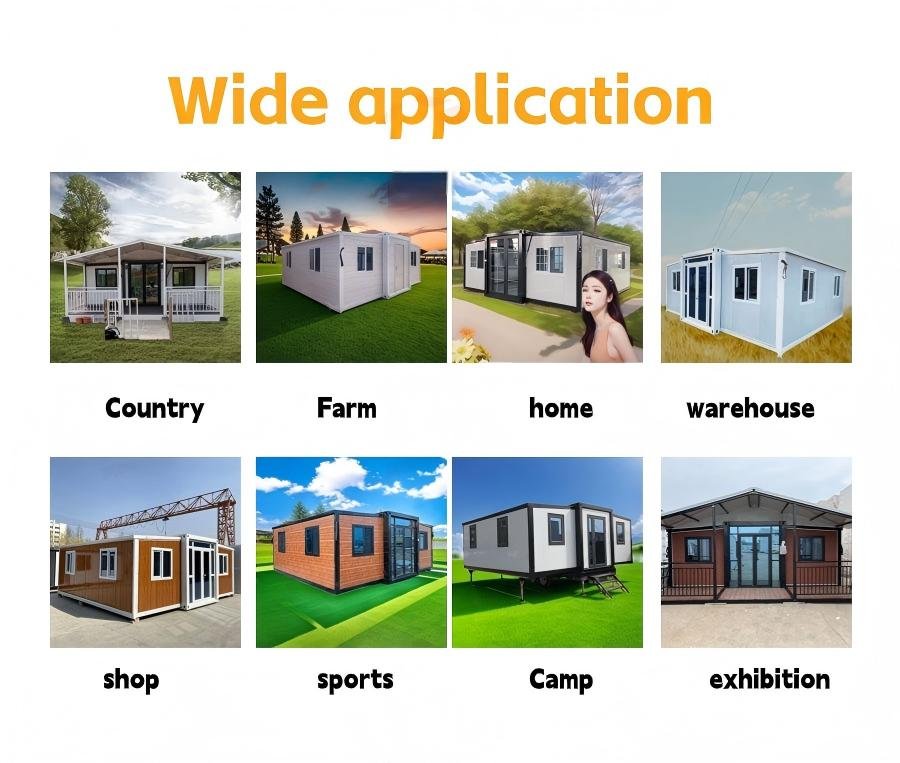
Different container house types solve different project problems.
The most common options include:
- expandable container houses
- folding container houses
- modular container houses
- flat pack container houses
- container house toilets and shower units
Each type has its own advantages and limitations. Buyers should compare them based on project use, quantity, site conditions, transport method, and installation requirements.
Expandable Container Houses
Expandable container houses are designed to provide more usable interior space after unfolding. They are often considered when buyers need bedrooms, living areas, bathrooms, kitchens, offices, or accommodation layouts with more comfort.
They may be suitable for:
- accommodation units
- rental units
- site offices with living functions
- temporary housing
- project accommodation
- family-style layouts where locally permitted
- 20ft or 40ft living and office layouts
The main advantage is interior space. Compared with compact units, expandable models can create a more practical layout after opening.
However, buyers should confirm the unfolding direction, available site space, foundation condition, interior layout, bathroom position, wall panel requirement, and whether the installation site allows enough clearance.
For buyers comparing different layout options, the expandable container house buying guide can help review supplier, layout, quotation, and project-fit factors before order confirmation.
Folding Container Houses
Folding container houses are usually chosen when buyers care about compact transport, fast site deployment, and repeated use across multiple units.
They may be suitable for:
- construction site accommodation
- temporary dormitories
- emergency housing
- worker camps
- project support rooms
- temporary offices
- sites that need multiple similar units
The main advantage is transport and deployment efficiency. Folding designs can reduce transport volume compared with fully assembled units, depending on model, size, and packing method.
But folding container houses are not automatically the best choice for every project. Buyers should confirm the structure, folding mechanism, interior layout, wall panel configuration, installation method, and whether bathroom or kitchen functions are required.
If the project needs simple, repeatable units for temporary use, folding container houses may be a practical option.
Modular Container Houses
Modular container houses are useful when the buyer needs a planned project layout instead of one single unit.
They may be suitable for:
- mining camps
- construction camps
- dormitory blocks
- office blocks
- temporary schools
- project accommodation
- combined living and working areas
- large-scale support facilities
The main advantage is project organization. Multiple units can be arranged into dormitories, offices, toilets, showers, kitchens, storage rooms, and shared spaces.
For larger projects, buyers should prepare a layout plan before ordering. The plan should consider walking routes, drainage, electrical connection, access roads, maintenance space, fire separation if required locally, and future expansion.
Modular container houses are not only about the unit itself. The full camp or project layout is usually more important.
Flat Pack Container Houses
Flat pack container houses are shipped in parts and assembled on site. They can be useful when buyers need flexible transport, stacked packing, or larger modular projects.
They may be suitable for:
- worker dormitories
- site offices
- large project facilities
- repeated unit layouts
- projects with local installation labor available
The advantage is transport flexibility. However, flat pack units usually require more on-site assembly than expandable or folding models.
Buyers should check whether local workers, tools, lifting equipment, and installation guidance are available. If the project site has limited labor or a tight schedule, this should be reviewed carefully before choosing flat pack units.
Container House Toilets and Shower Units
For many projects, accommodation units are not enough. Buyers also need toilets, showers, and washing areas.
Container house toilets and shower units can be used for:
- construction sites
- mining camps
- farm projects
- temporary events
- emergency facilities
- remote accommodation areas
- worker camps
- outdoor project support
These units require more attention to plumbing, drainage, waterproofing, ventilation, floor treatment, and local utility connection.
Before ordering, buyers should confirm toilet quantity, shower quantity, drainage outlet, water inlet, ventilation, maintenance access, and whether the unit will be connected to local sewage or a temporary system.
Choose by Project Scenario
The best container house type depends on the project scenario.
- For a construction site office, a 20ft container office or modular office unit may be enough.
- For worker accommodation, folding container houses or modular container houses may be practical if the project needs repeated rooms.
- For a more complete living layout, expandable container houses may provide more usable interior space.
- For a mining camp, the buyer may need a combination of dormitory units, office units, toilets, showers, kitchen areas, and storage rooms.
- For rental or tourism use, interior design, insulation, window position, bathroom layout, and long-term maintenance become more important.
- For toilets and showers, container house toilet units should be planned separately because wet areas affect plumbing and drainage.
Choose by Size: 10ft, 20ft, 30ft, or 40ft
Size is one of the most important decisions.
- A 10ft unit may be suitable for a guard room, compact office, small toilet unit, shower unit, kiosk, or support room.
- A 20ft unit is commonly used for offices, dormitories, compact living units, bathrooms, toilets, showers, or small accommodation layouts.
- A 30ft unit can provide more flexibility for living, office, or mixed-use layouts.
- A 40ft unit is more suitable when buyers need bedrooms, living space, bathroom, kitchen, office area, or a larger accommodation layout.
Buyers should not choose size only by price. The better method is to check how many people will use the unit, what functions are required, how much walking space is needed, and whether the site has enough space for unloading and installation.
For size comparison, the expandable container house size guide can help buyers review dimensions and layout options before confirming the quotation.
Choose by Transport and Shipping Conditions
Shipping affects the total project plan.
Before choosing a container house type, buyers should confirm:
- product size
- packing method
- loading quantity
- destination port
- whether a shipping agent is arranged
- EXW or FOB quotation term
- unloading method at destination
- local delivery route
- crane or forklift availability
- site access condition
Folding, flat pack, expandable, and modular units may have different packing and loading methods. The best choice depends not only on product cost, but also on freight arrangement, unloading conditions, and installation preparation.
The container house shipping guide should be reviewed when buyers compare different types for overseas projects.
Sinopala currently mainly provides EXW and FOB quotations. Under these terms, ocean freight, customs clearance, destination port charges, local delivery, and site unloading are usually arranged by the buyer or the buyer’s shipping agent.
Choose by Installation Conditions
Installation conditions can decide whether a product is practical for the project.
Buyers should confirm:
- foundation condition
- ground levelness
- truck access
- unloading space
- crane or forklift availability
- local labor
- tools
- electrical connection
- water supply
- drainage
- local contractor support if needed
If the site is remote, has limited labor, or cannot easily access lifting equipment, the buyer should choose a product type that matches those conditions.
A container house that looks suitable in photos may become difficult to install if the site preparation is not ready.
Choose by Interior Function
Interior layout should be confirmed before production.
Buyers should check whether the unit needs:
- bedroom
- bathroom
- toilet
- shower
- kitchen or kitchenette
- office area
- storage
- air-conditioning position
- electrical sockets
- lighting
- furniture
- plumbing and drainage
- ventilation
For living, rental, or accommodation use, the interior design should be reviewed carefully. The container house interior design plan should match the product type, size, user number, climate, wet-area requirements, and installation conditions.
A good layout should not only look good in renderings. It should be practical to produce, ship, install, clean, maintain, and use.
Choose by Project Duration
Project duration also affects product choice.
- For short-term projects, buyers may care more about cost control, fast deployment, and relocation.
- For semi-permanent projects, buyers may need better insulation, stronger layout planning, more comfortable interiors, and more stable site preparation.
- For long-term use, maintenance, waterproofing, anti-rust details, ventilation, bathroom quality, and local approval become more important.
A temporary construction camp and a long-term rental unit should not use the same decision standard.
Comparison Summary
Here is a practical comparison:
| Container House Type | Better For | Main Strength | Key Check Before Ordering |
|---|---|---|---|
| Expandable container house | Accommodation, office-living layouts, rental units | More usable interior space | Site space, unfolding direction, layout, bathroom, foundation |
| Folding container house | Temporary housing, worker camps, repeated units | Compact transport and fast deployment | Structure, installation method, interior limits, quantity |
| Modular container house | Camps, dormitories, offices, project facilities | Project layout and repeatable units | Site plan, utilities, access roads, drainage, combined layout |
| Flat pack container house | Large projects with local assembly capacity | Flexible transport and modular assembly | Local labor, tools, installation guidance, assembly time |
| Container house toilet | Toilets, showers, camp support facilities | Wet-area support for projects | Plumbing, drainage, waterproofing, ventilation, maintenance |
This table should be used as a starting point. The final choice still depends on project details.
Common Mistakes When Choosing a Container House
Many buyers choose the wrong type because they only compare price or appearance.
Common mistakes include:
- choosing by photo instead of project use
- ignoring site installation conditions
- not checking local regulations
- choosing the wrong size
- forgetting bathroom or drainage requirements
- not confirming electrical standards
- ignoring packing and loading details
- assuming all container houses install the same way
- comparing prices without checking specifications
- not clarifying EXW or FOB responsibilities
These issues are similar to the common mistakes when buying container houses from China. Buyers should confirm product type, layout, specifications, packing, trade terms, and installation requirements before placing an order.
What Information Should Buyers Provide?
To recommend the right container house, a supplier usually needs more than one sentence.
Before requesting a quotation, buyers should prepare:
- intended use
- project country or destination port
- quantity
- preferred size: 10ft, 20ft, 30ft, or 40ft
- required product type if known
- number of users
- layout requirements
- bathroom, toilet, shower, or kitchen needs
- office, dormitory, storage, or camp requirements
- climate or insulation concerns
- expected project duration
- EXW or FOB trade term
- whether a shipping agent is arranged
- site access and unloading conditions
With this information, the supplier can recommend a more suitable container house instead of only sending a general price.
Which Container House Is Best?
There is no single best container house for all projects.
- For more usable interior space, an expandable container house may be suitable.
- For temporary housing and repeated deployment, a folding container house may be practical.
- For large camps and project facilities, modular container houses may be better.
- For projects with local assembly capacity, flat pack units may be considered.
- For toilets, showers, and wet-area support, container house toilets should be planned separately.
The best container house is the one that matches the project use, site condition, shipping plan, installation resources, and long-term operation requirements.
Conclusion
Choosing the best container house requires more than comparing price.
Buyers should consider project use, size, layout, quantity, transport method, installation site, local regulations, bathroom and kitchen needs, interior function, and EXW / FOB responsibility.
A suitable container house should be practical to produce, ship, install, use, and maintain.
For overseas B2B buyers, the right decision usually starts with clear project information. Once the use, size, quantity, layout, destination port, and installation conditions are confirmed, the product choice becomes much easier.
Need Help Choosing the Right Container House?
If you are not sure which container house type is suitable for your project, Sinopala can help review your basic requirements before quotation.
To recommend a suitable option, please share:
- intended use
- project country or destination port
- required size: 10ft, 20ft, 30ft, or 40ft
- estimated quantity
- number of users
- layout requirements
- bathroom, toilet, shower, kitchen, office, or dormitory needs
- expected project duration
- preferred trade term: EXW or FOB
- whether you already have a shipping agent
Contact Sinopala:
WhatsApp: +86 150 1103 0786
Email: info@sinopala.com
Website: www.sinopala.com