Introduction
Expandable container houses are widely used in modern modular construction because they can provide more usable interior space after unfolding while still being transported in a compact form.
For overseas B2B buyers, the value of an expandable container house is not only the larger space. The real value depends on whether the unit matches the project use, layout requirement, shipping plan, installation site, bathroom and kitchen needs, local regulations, and EXW / FOB responsibility.
Expandable container houses can be used for accommodation, site offices, worker housing, farm housing, rental units, emergency support housing, temporary commercial spaces, and project-based modular housing.
This guide explains seven common uses of expandable container houses from a practical project purchasing point of view.
What Makes Expandable Container Houses Useful for Different Projects?
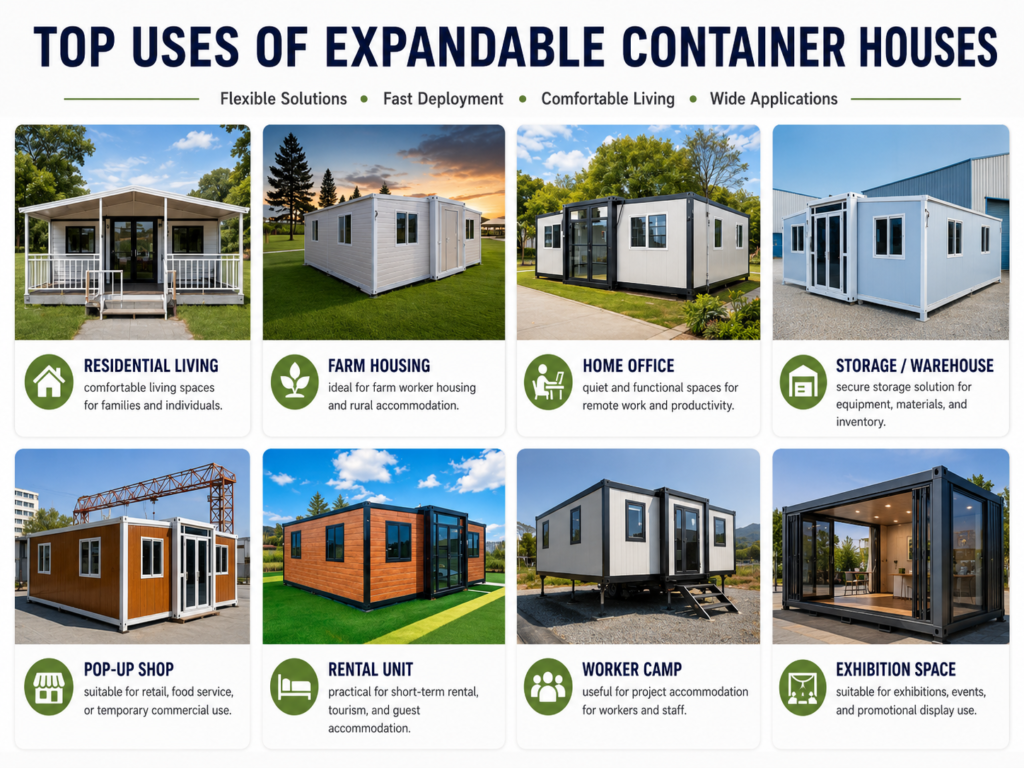
Expandable container houses are different from standard compact units because they can open after delivery and provide more usable interior space.
Depending on the model and configuration, an expandable container house may include:
- bedroom
- living area
- bathroom
- kitchen or kitchenette
- office area
- storage
- doors and windows
- electrical routes
- plumbing and drainage preparation
- interior finish or furniture options
This makes them suitable for projects that need more interior space but still require factory-prepared modular construction.
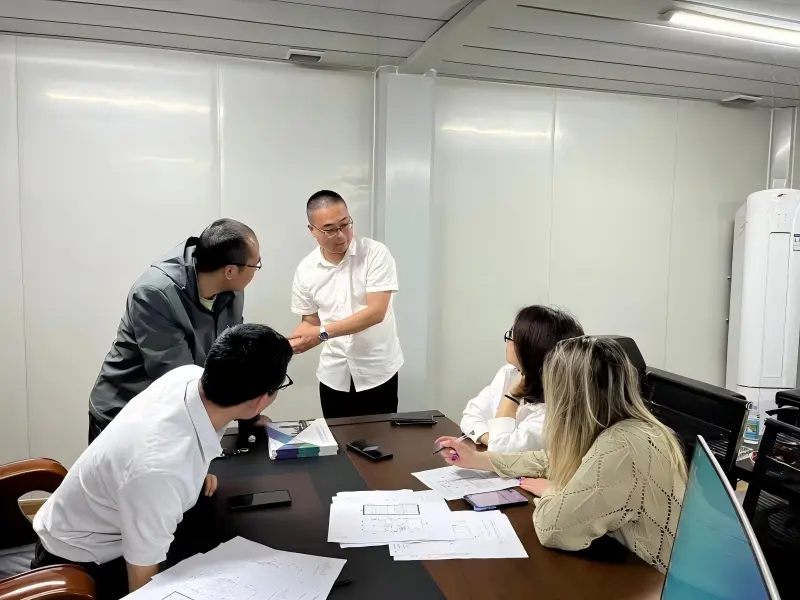
Before choosing a use case, buyers should confirm the required size, layout, number of users, bathroom and kitchen needs, destination port, installation site condition, and whether the project is temporary, semi-permanent, or long-term.
For size planning, buyers can review the expandable container house size guide before confirming the final model.
Use 1: Construction Site Accommodation
Construction companies often need temporary accommodation for workers, supervisors, and project staff.
Expandable container houses can be used as site accommodation when the project needs faster deployment, flexible layout, and more interior space than a basic compact unit.
They may be suitable for:
- worker living units
- supervisor accommodation
- temporary dormitories
- office-living units
- project support rooms
For construction site use, buyers should confirm:
- number of users per unit
- bed layout
- storage requirements
- ventilation
- air-conditioning position
- bathroom or shared toilet plan
- site access
- unloading equipment
- foundation condition
- water and electrical connection
If many workers will live on site, the buyer should not only order house units. The full site layout should also include toilets, showers, kitchen or dining areas, drainage, access roads, and maintenance space.
Use 2: Site Offices and Project Management Rooms
Expandable container houses can also be used as temporary site offices for construction, engineering, mining, energy, farm, and infrastructure projects.
A site office layout may include:
- open work area
- meeting table
- manager room
- document storage
- restroom if required
- air-conditioning position
- power sockets
- lighting
- windows and doors
- optional rest area
For office use, the layout should focus on work efficiency, ventilation, heat control, lighting, and daily comfort.
A 20ft expandable container house may be enough for a small project office or office-living unit. A 40ft unit may be better when the buyer needs a meeting area, separate office, storage, or restroom.
For layout planning, buyers can review expandable container house floor plans before confirming the final design.
Use 3: Worker Camps and Remote Project Housing
Expandable container houses are often considered for worker camps and remote project housing.
Common project types include:
- mining camps
- oil and gas support facilities
- road and bridge projects
- farm projects
- energy projects
- remote infrastructure sites
For these projects, the main challenge is not only the house itself. Buyers also need to plan transport, unloading, foundation, utilities, water supply, drainage, electricity, maintenance, and worker living conditions.
Expandable container houses can provide more usable interior space for accommodation, but larger camps may also need modular container houses, toilets, showers, kitchens, offices, storage rooms, and medical or security rooms.
For remote sites, buyers should confirm road access, crane or forklift availability, local labor, spare parts, and installation support before ordering.
Use 4: Farm Housing and Rural Accommodation
Expandable container houses can be used for farm housing, rural offices, equipment support rooms, and temporary accommodation for agricultural projects.
They may be suitable for:
- farm worker accommodation
- rural office space
- seasonal housing
- guard rooms
- storage support
- temporary living units
Farm and rural sites often have different challenges from urban projects. Buyers should pay attention to ground condition, truck access, water supply, drainage, electrical power, insulation, ventilation, and maintenance.
If the site is far from the city or port, local delivery and unloading should be checked early.
The container house shipping guide should be reviewed when buyers compare transport plans, destination ports, and local delivery responsibilities.
Use 5: Emergency and Temporary Housing
Expandable container houses may be used for emergency support and temporary relocation projects when fast shelter is needed.
They can provide temporary living space after disasters, during project relocation, or for short-term accommodation needs.
However, emergency use still requires planning. A unit cannot function properly without:
- accessible site
- unloading equipment
- stable foundation
- water supply
- electrical connection
- toilet and shower support
- drainage
- local approval if required
- basic maintenance arrangement
Buyers should avoid assuming that emergency housing only means fast delivery. The full support system must be planned together with the units.
Use 6: Rental Units and Tourism Accommodation
Expandable container houses are also used in rental and tourism projects, depending on local approval and market demand.
Possible applications include:
- short-stay rental units
- small cabins
- glamping accommodation
- farm stay units
- temporary guest rooms
- resort support rooms
For rental or tourism use, appearance and comfort matter, but the technical details are still important.
Buyers should confirm:
- insulation
- ventilation
- bathroom layout
- kitchen or kitchenette requirement
- window position
- privacy
- interior finish
- furniture
- drainage
- maintenance
- local rental or occupancy rules
For this type of use, buyers should review the container house interior design plan before finalizing the order.
A good rental unit should not only look attractive in photos. It should also be practical to clean, maintain, repair, and operate over time.
Use 7: Temporary Commercial and Support Spaces
Expandable container houses can also serve as temporary commercial or support spaces.
Possible uses include:
- temporary sales offices
- pop-up shops
- project reception rooms
- security rooms
- training rooms
- staff rest areas
- storage and support spaces
- exhibition or event support rooms
These applications are often temporary or semi-permanent. Buyers usually care about quick setup, flexible layout, appearance, electrical connection, and whether the unit can be moved later.
Before ordering, buyers should confirm whether the space needs public access, air-conditioning, display area, restroom, signage, lighting, fire safety, and local business approval.
Why Expandable Container Houses Fit These Uses
Expandable container houses are suitable for many projects because they combine factory preparation with larger usable interior space after unfolding.
Main advantages include:
- more usable interior area than compact units
- factory-prepared structure
- flexible layout options
- possible bathroom and kitchen configuration
- suitable for 20ft and 40ft layouts
- useful for temporary and semi-permanent projects
- easier project organization for repeated units
- export-friendly packing depending on model and quantity
However, buyers should not treat expandable container houses as a universal solution.
The final suitability depends on product configuration, site condition, local regulations, foundation, unloading, installation, utility connection, and maintenance.
What Buyers Should Confirm for Each Application
Before choosing an expandable container house for any application, buyers should confirm:
- intended use
- project country or destination port
- required size: 20ft, 40ft, or other available size
- estimated quantity
- number of users
- bedroom requirement
- bathroom, kitchen, office, toilet, or shower needs
- wall panel and insulation requirements
- interior finish requirements
- expected project duration
- EXW or FOB trade term
- whether a shipping agent is arranged
- site access and unloading conditions
- foundation and utility connection plan
- local approval requirements if known
This information helps the supplier recommend a more suitable model instead of only sending a general price.
Common Mistakes When Choosing by Application
Many buyers choose the wrong container house because they only look at product photos or price.
Common mistakes include:
- choosing a residential layout for a worker camp
- ignoring toilet and shower support
- not checking local regulations
- forgetting foundation requirements
- not planning drainage
- choosing too small a unit
- adding bathroom or kitchen too late
- not checking unloading equipment
- assuming all layouts can be shipped the same way
- comparing only unit price instead of total project cost
These issues are similar to common mistakes when buying container houses from China. Buyers should confirm layout, specifications, packing, shipping responsibility, installation, and local site conditions before placing an order.
Conclusion
Expandable container houses can be used in many modern construction projects, including construction site accommodation, site offices, worker camps, farm housing, emergency housing, rental units, tourism accommodation, and temporary commercial spaces.
Their main value is not only flexible space. The real value comes from matching the right layout, size, configuration, shipping plan, installation condition, and project use.
For overseas B2B buyers, the best approach is to start with the intended application, then confirm size, quantity, layout, bathroom and kitchen needs, EXW or FOB term, shipping agent, site access, foundation, and utility connection.
An expandable container house can be a practical solution when the project conditions match the product configuration.
Need Help Choosing the Right Use for Expandable Container Houses?
If you are planning an expandable container house project, Sinopala can help review your requirements before quotation.
To recommend a suitable layout and configuration, please share:
- intended use
- project country or destination port
- required size: 20ft, 40ft, or other available size
- estimated quantity
- number of users
- layout requirements
- bathroom, kitchen, office, bedroom, toilet, or shower needs
- wall panel and insulation requirements
- preferred trade term: EXW or FOB
- whether you already have a shipping agent
- site access and unloading conditions
- foundation and utility connection plan
Contact Sinopala:
WhatsApp: +86 150 1103 0786
Email: info@sinopala.com
Website: www.sinopala.com