Introduction
Choosing a reliable container house manufacturer is one of the most important steps for overseas buyers planning a modular housing project.
A low price may look attractive at the beginning, but the real risk often appears later: unclear drawings, different material specifications, missing accessories, weak packing, poor loading records, no installation guidance, or unclear EXW / FOB responsibility.
For B2B buyers, a reliable manufacturer should not only produce the house units. The manufacturer should also help confirm product type, layout, configuration, packing, shipping arrangement, installation requirements, and after-sales documents before the order is finalized.
This guide explains how to evaluate a container house manufacturer from a practical export purchasing point of view.
Start with the Product Type You Need
Before choosing a manufacturer, buyers should first confirm what type of container house they need.
Common product types include:
- expandable container houses
- folding container houses
- modular container houses
- flat pack container houses
- container house toilets and shower units
- site offices
- worker accommodation units
- camp facilities
Different products require different structures, packing methods, installation steps, and site preparation.
For example, an expandable container house may be suitable when the buyer needs more interior space after unfolding. A folding container house may be suitable for compact transport and temporary project use. Modular container houses may be better for camps, offices, dormitories, and support facilities.
A reliable manufacturer should ask about the project use before recommending a model.
Check Whether the Manufacturer Understands B2B Project Requirements
A good container house manufacturer should not only ask, “How many units do you need?”
For an overseas project, the manufacturer should help confirm:
- intended use
- project country or destination port
- required size: 10ft, 20ft, 30ft, 40ft, or other available size
- estimated quantity
- number of users
- layout requirement
- bathroom, kitchen, office, toilet, or shower needs
- wall panel and insulation requirements
- electrical and plumbing requirements
- EXW or FOB trade term
- whether a shipping agent is arranged
- site access and unloading conditions
- foundation and utility connection plan
If a supplier gives a price without asking these questions, the quotation may not match the real project.
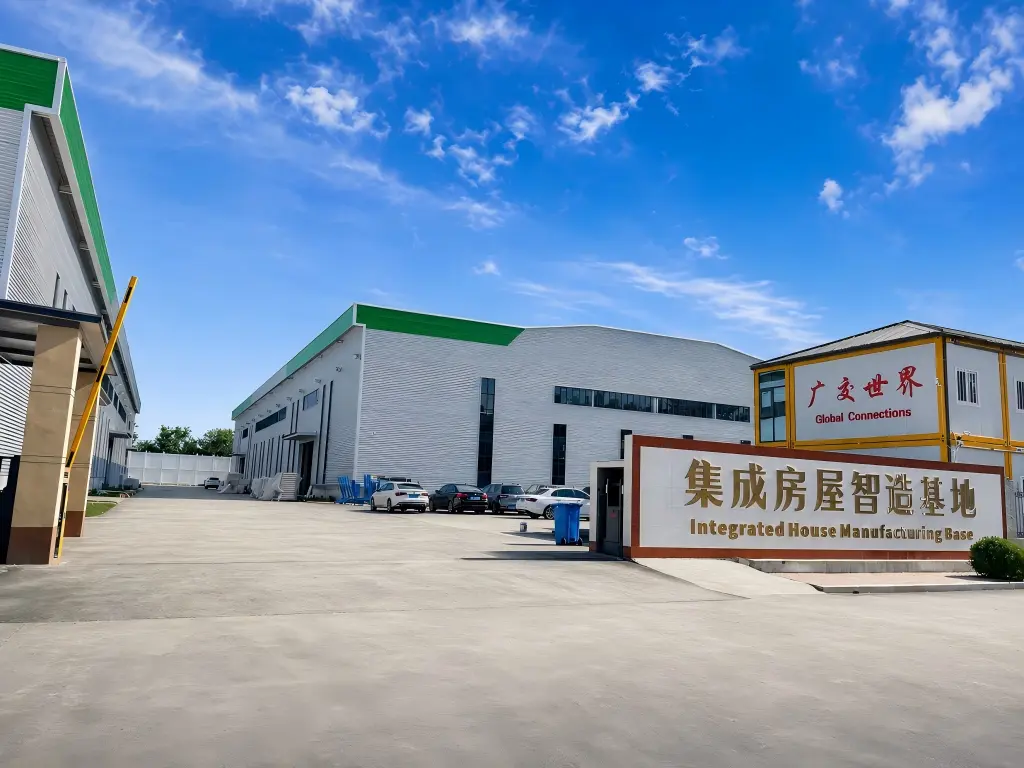
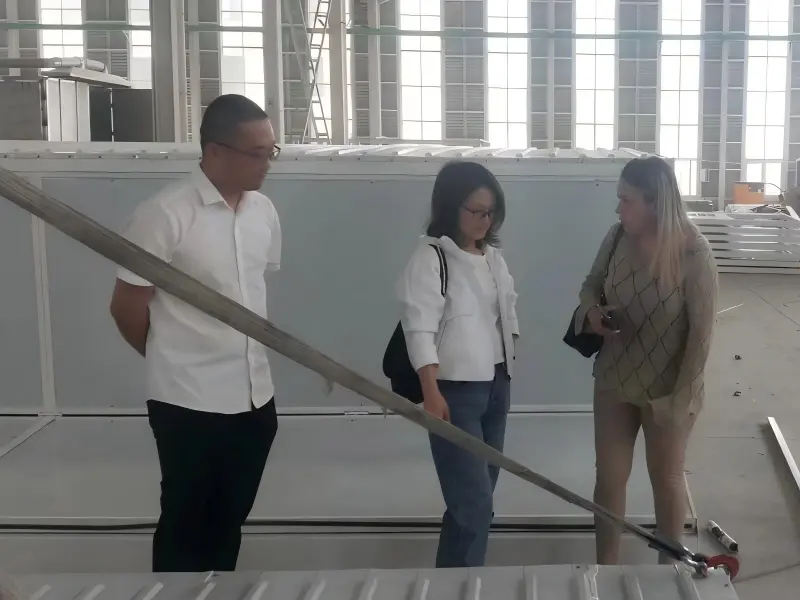
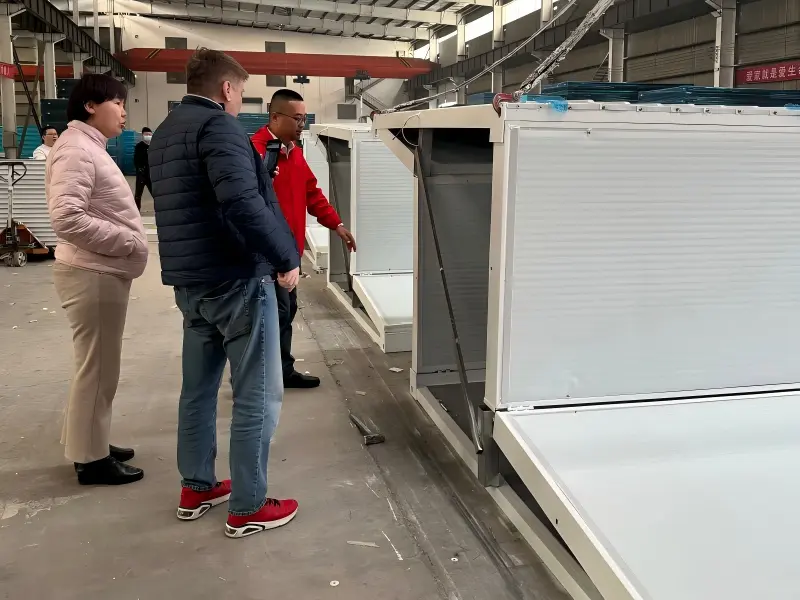
Review Factory Capability, Not Only Sales Promises
Many suppliers can send attractive photos and low prices. Buyers should check whether the company can actually support production and order execution.
Useful factory information may include:
- factory photos or videos
- production workshop overview
- production line information
- product categories
- monthly production ability if available
- quality control process
- packing area
- loading records
- export experience
- sample project photos if available
However, buyers should be careful with exaggerated claims. A reliable manufacturer should be able to provide realistic information, not only marketing slogans.
For larger orders, production schedule and delivery time should be confirmed before payment.
Check Drawings and Configuration Details
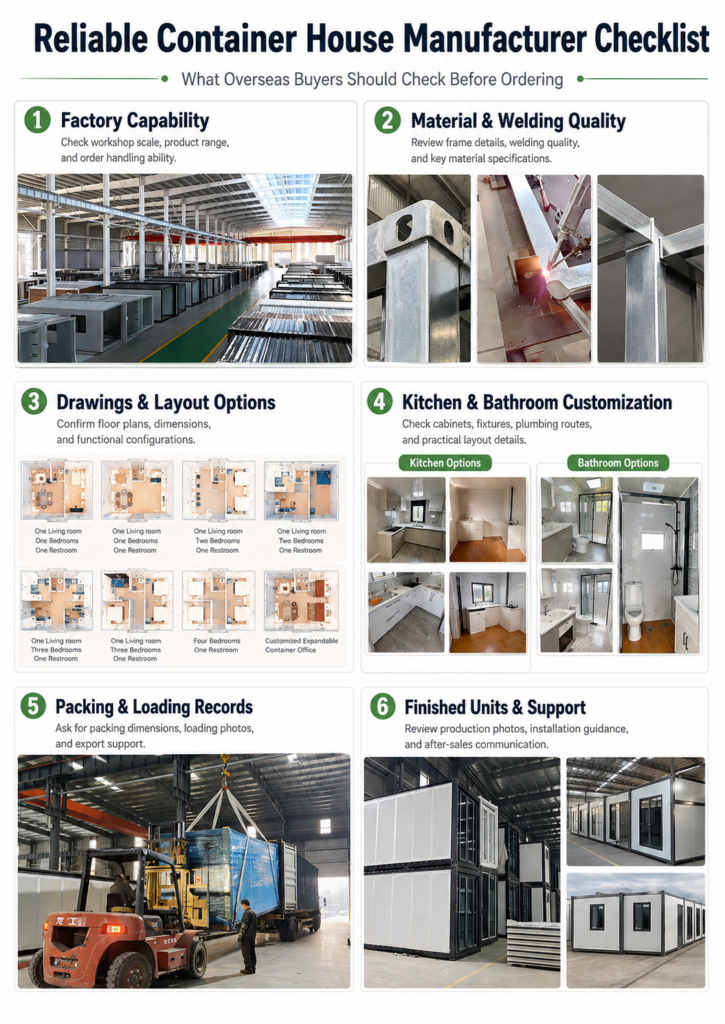
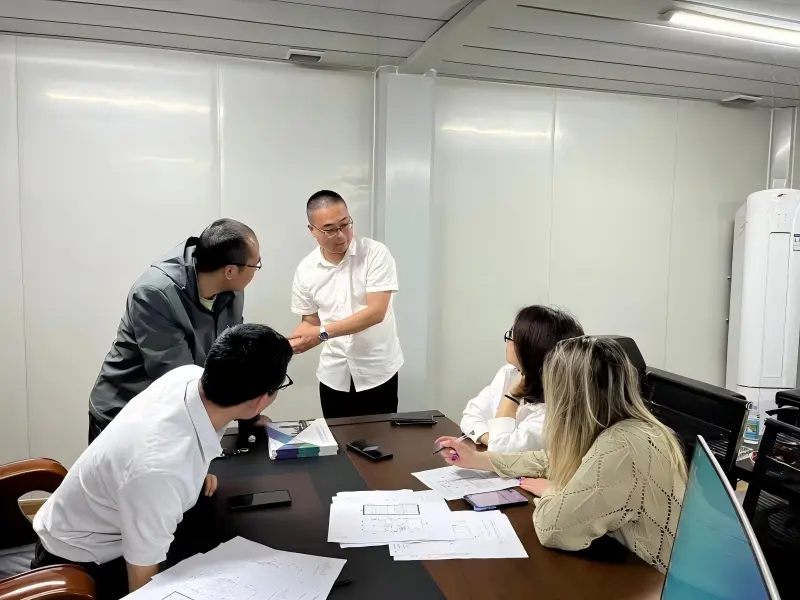
Drawings and configuration details are more important than product photos.
Before ordering, buyers should ask for:
- layout drawing
- external dimensions
- internal layout
- door and window position
- bathroom position if included
- kitchen position if included
- electrical point layout
- plumbing and drainage position
- wall panel specification
- floor and roof description
- packing information
- installation guidance
A photo can show appearance, but it cannot fully show material, structure, panel thickness, connection details, waterproofing, or hidden configuration.
For expandable models, buyers should also confirm the opened size, packed size, unfolding clearance, and site space required for installation.
For size planning, buyers can review the expandable container house size guide before confirming the model.
Compare Material Specifications Carefully
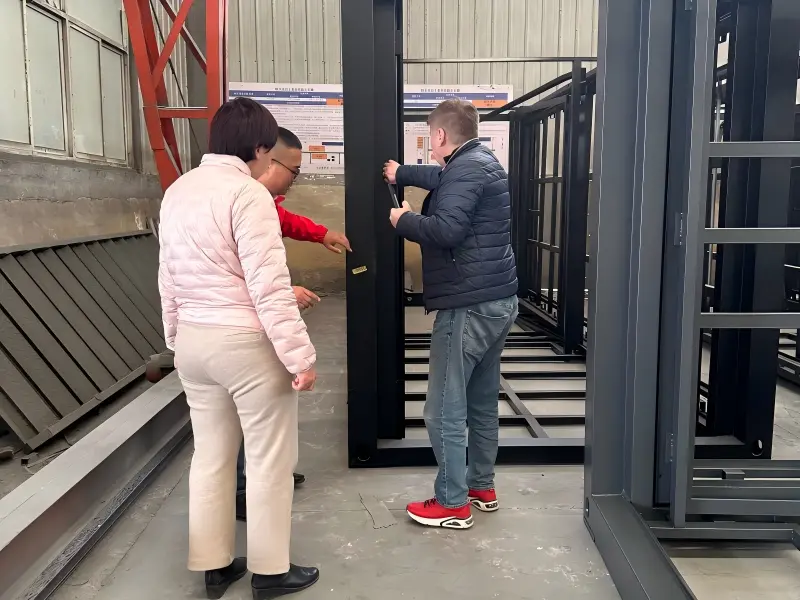
Material quality directly affects safety, durability, comfort, and maintenance.
Buyers should confirm:
- steel frame configuration
- anti-rust treatment
- wall panel type
- insulation requirement
- roof system
- floor system
- doors and windows
- bathroom wall and floor treatment
- waterproofing and sealing details
- electrical components
- plumbing parts
- accessories included in the shipment
Do not compare container houses only by photos. Two units may look similar but have different frame structure, wall panels, insulation, waterproofing, and accessories.
For safety-related concerns, buyers can also review whether container houses are safe before confirming the order.
Evaluate Customization Ability
A reliable container house manufacturer should be able to support reasonable customization, but not every request is suitable for production.
Common customization items include:
- size
- layout
- bedroom arrangement
- bathroom position
- kitchen layout
- doors and windows
- wall panel type
- interior finish
- electrical standard
- plumbing layout
- exterior color
- furniture options
- office or dormitory configuration
Good customization should be based on structure, transport, installation, and daily use.
Buyers should avoid unnecessary customization that increases cost, delays production, or makes maintenance difficult.
A professional manufacturer should explain whether a customization request is practical, not simply say “yes” to every change.
Check Export Packing and Loading Experience
For overseas buyers, packing and loading are critical.
A reliable manufacturer should provide or confirm:
- packing method
- packing dimensions
- loading quantity
- packing list
- loading photos
- gross weight if needed
- container type
- destination port
- EXW or FOB quotation term
- shipping-agent coordination
This is especially important for expandable and folding container houses because packing size and loading plan can affect total delivery cost.
Buyers should review the container house shipping guide before comparing quotations from different manufacturers.
Sinopala currently mainly provides EXW and FOB quotations.
Under EXW terms, the buyer or buyer’s agent usually arranges pickup from the factory and handles export, ocean freight, customs clearance, destination port charges, local delivery, and site unloading.
Under FOB terms, the supplier usually delivers the goods to the agreed port in China according to the FOB arrangement. The buyer or buyer’s shipping agent usually handles ocean freight, destination port charges, customs clearance, local delivery, and site unloading.
Confirm Installation Support Before Ordering
Even if a container house is designed for easier installation, buyers still need installation planning.
A reliable manufacturer should provide practical installation support such as:
- installation manual
- installation video if available
- basic tool or accessory list
- layout drawing
- foundation suggestion
- unloading guidance
- connection instructions
- remote technical communication if needed
Buyers should also prepare:
- level foundation
- truck access
- crane or forklift if required
- local workers
- tools
- water supply
- electrical connection
- drainage or sewage connection
The full project timeline may be longer than simple unit setup. For example, unloading, positioning, opening, fixing, sealing, utility connection, inspection, and cleaning all need to be considered.
For site work planning, buyers can review container house installation cost before confirming the total budget.
Ask for Production and Loading Records
For B2B export orders, production records can reduce misunderstanding.
Useful records may include:
- confirmed drawings
- signed configuration sheet
- production photos
- finished product photos
- packing photos
- loading photos
- packing list
- accessory list
- installation documents
- after-sales contact record
These records help buyers check whether the goods match the order before shipment.
They are also useful if the buyer needs to guide local installation workers after the units arrive.
Be Careful with Very Low Prices
A very low price does not always mean better value.
Low quotations may exclude:
- bathroom
- kitchen
- furniture
- upgraded wall panels
- electrical system
- plumbing system
- installation accessories
- packing details
- loading photos
- shipping cost
- local delivery
- foundation
- unloading
- utility connection
Buyers should compare the full configuration, not only the unit price.
Many sourcing problems come from unclear quotations, missing specifications, or comparing different product levels as if they were the same.
These issues are similar to common mistakes when buying container houses from China.
Check Communication Quality
Communication quality is often a sign of order execution quality.
A reliable manufacturer should be able to explain:
- product differences
- size options
- layout limitations
- material choices
- customization feasibility
- packing method
- EXW / FOB responsibility
- installation requirements
- lead time
- what is included and excluded
If the supplier only replies with a price and avoids technical details, buyers should be cautious.
For international projects, clear communication before payment is more important than a fast quotation.
Manufacturer vs Trading Company
Some buyers ask whether they should work with a manufacturer or a trading company.
A direct manufacturer may provide better control over production, drawings, materials, customization, packing, and loading records.
A trading company may be useful when buyers need multiple product categories or sourcing coordination.
The right choice depends on project complexity, communication needs, order size, inspection requirement, and after-sales support.
For a detailed comparison, buyers can review the article about container house supplier vs trading company.
This article focuses on how to evaluate a manufacturer’s reliability, not only whether the company is a factory or a trader.
What a Reliable Container House Manufacturer Should Provide
Before placing an order, buyers should ask whether the manufacturer can provide:
- product recommendation based on use
- layout drawing
- configuration sheet
- material description
- quotation with clear included items
- EXW or FOB term
- packing information
- loading plan
- production photos if needed
- finished product photos
- loading photos
- installation guidance
- after-sales communication support
The more clearly these items are confirmed before production, the lower the risk after delivery.
Conclusion
Choosing a reliable container house manufacturer is not only about finding the lowest price.
For overseas B2B buyers, the better approach is to check whether the manufacturer can support project analysis, drawings, configuration confirmation, material explanation, production control, packing, loading, EXW / FOB coordination, installation guidance, and after-sales communication.
A reliable manufacturer should help buyers reduce sourcing risk before the order is placed.
The final decision should be based on product fit, factory capability, specification clarity, export experience, communication quality, and total project responsibility.
Need Help Choosing a Container House Manufacturer?
If you are planning a container house project, Sinopala can help review your requirements before quotation.
To recommend a suitable product and configuration, please share:
- intended use
- project country or destination port
- required size: 10ft, 20ft, 30ft, 40ft, or other available size
- estimated quantity
- number of users
- layout requirements
- bathroom, kitchen, office, bedroom, toilet, or shower needs
- wall panel and insulation requirements
- preferred trade term: EXW or FOB
- whether you already have a shipping agent
- site access and unloading conditions
- foundation and utility connection plan
Contact Sinopala:
WhatsApp: +86 150 1103 0786
Email: info@sinopala.com
Website: www.sinopala.com