Introduction
Container houses are now widely used in workforce accommodation, construction camps, site offices, temporary housing, remote project facilities, portable toilets, showers, and modular accommodation projects.
But they are not a perfect solution for every project.
For overseas buyers, the real question is not simply whether container houses are “good” or “bad.” The better question is whether they match the project location, use duration, site condition, labor availability, budget structure, shipping plan, and installation requirements.
A container house can help reduce some site work and improve project organization, but buyers still need to check layout, insulation, foundation, unloading, electrical connection, plumbing, drainage, local regulations, and EXW / FOB responsibility before ordering.
This guide explains the main advantages and disadvantages of container houses from a practical project point of view.
What Is a Container House?
A container house is a modular building unit designed for accommodation, office, storage, toilet, shower, camp, or temporary facility use.
Depending on the product type, a container house may be supplied as an expandable container house, folding container house, modular container house, flat pack container unit, or container house toilet.
Common sizes include 10ft, 20ft, 30ft, and 40ft options. The right size depends on the intended use, number of users, layout, bathroom or kitchen needs, and site conditions.
Before comparing advantages and disadvantages, buyers should first confirm the actual use. A 20ft site office, a 40ft accommodation unit, a portable toilet block, and a mining camp dormitory should not be judged by the same standard.
Advantage 1: More Factory-Prepared Work
One major advantage of container houses is that more work can be prepared before the unit reaches the site.
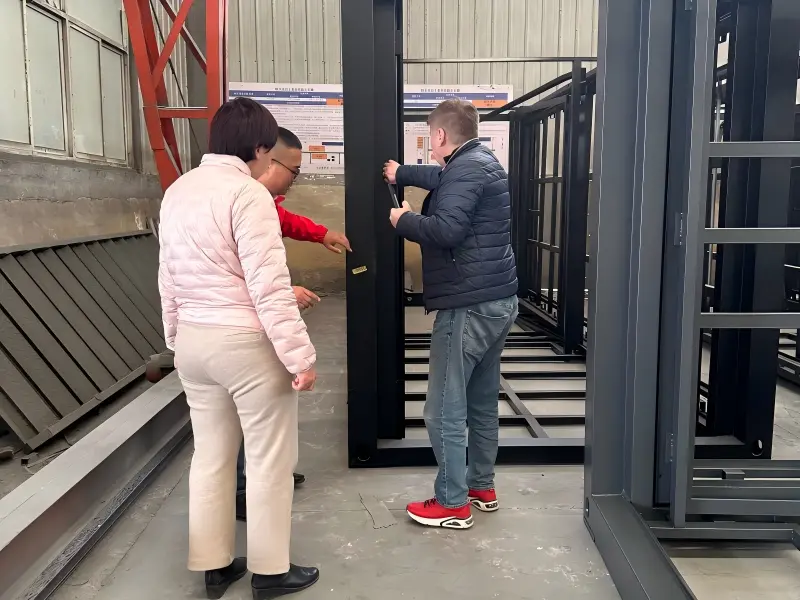
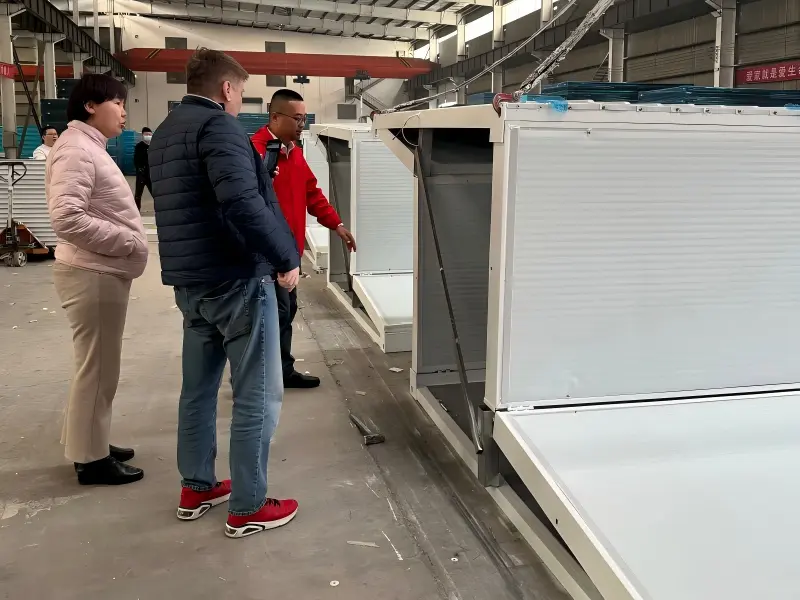
Depending on the model and configuration, the factory may prepare the steel frame, wall panels, roof, floor, doors, windows, electrical routes, bathroom area, and some interior parts before shipment.
This can reduce some uncertainty from local site construction.
For project buyers, this is useful when:
- local labor is expensive
- the site is remote
- the schedule is tight
- repeated units are needed
- the buyer wants clearer production and packing control
- the project requires dormitories, offices, toilets, showers, or support facilities
However, factory preparation does not mean the site needs no work. Buyers still need to plan foundation, unloading, lifting equipment, local connection, water supply, drainage, electrical work, and installation support.
These items are closely connected with container house installation cost, especially when the project includes bathrooms, kitchens, toilets, showers, or multiple units.
Advantage 2: Flexible Use for Different Project Types
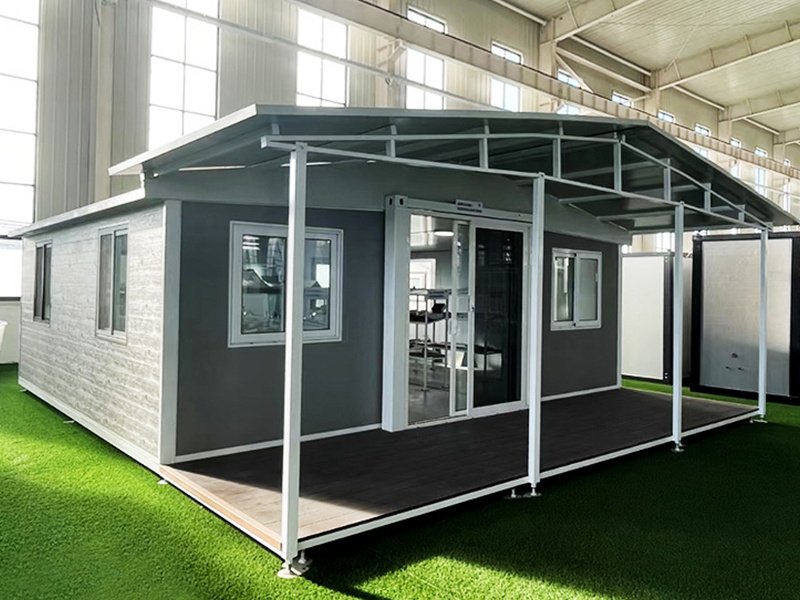
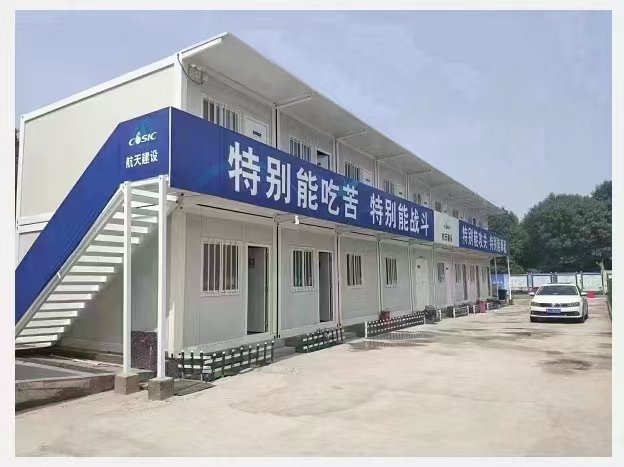

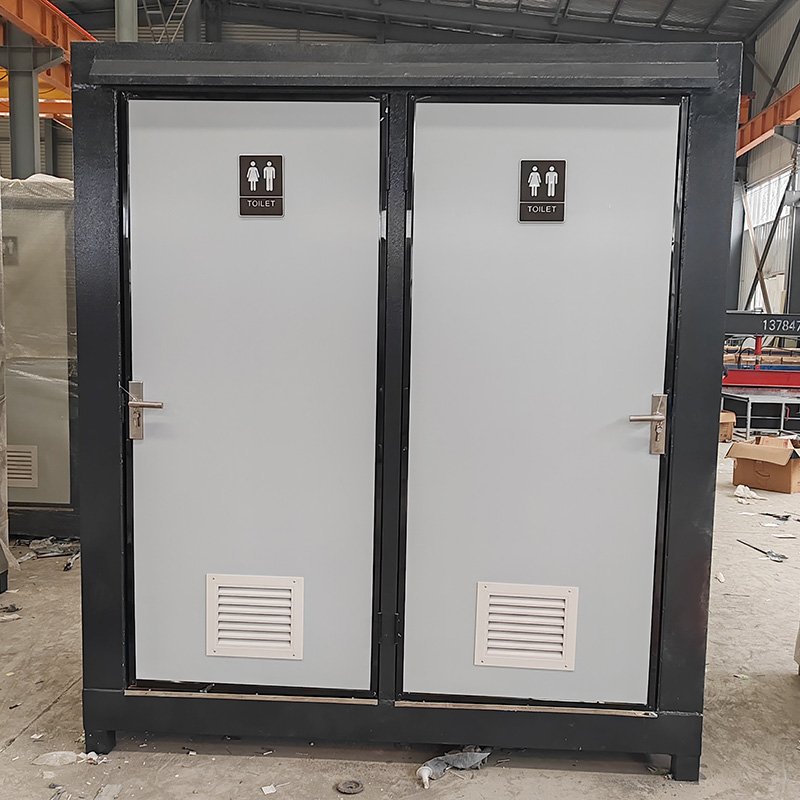
Container houses can be used in many project scenarios.
Common applications include:
- worker accommodation
- construction site offices
- mining camps
- temporary dormitories
- farm accommodation
- emergency support housing
- portable toilets and showers
- temporary sales offices
- rental units
- remote project facilities
- storage or support rooms
This flexibility is one reason many contractors and project owners consider container houses.
For example, expandable container houses may be suitable when buyers need more usable interior space after unfolding. Folding container houses may be useful when compact transport and repeated deployment are important. Modular container houses can be used for camp layouts, dormitories, offices, and project-based facilities. Container house toilets are often used as support units for camps, construction sites, farms, and mining projects.
Product selection should be based on real project use, not only appearance.
Advantage 3: Easier Project Organization
Container houses can make project organization easier when the buyer needs repeatable units.
For a camp or accommodation project, buyers may use the same unit type repeatedly for dormitories, offices, toilets, showers, kitchens, or support areas. This makes layout planning, packing, unloading, and installation management easier than building every room from zero on site.
This is especially useful for:
- construction companies
- mining contractors
- project developers
- rental operators
- government or emergency facilities
- industrial site operators
Buyers should still confirm the full site plan before ordering. Several units placed together need enough space for walking paths, drainage, electrical connection, access roads, fire separation if required locally, maintenance access, and future movement.
Advantage 4: Suitable for Temporary and Semi-Permanent Projects
Container houses are often practical for temporary or semi-permanent use.
This includes:
- leased land projects
- construction sites
- mining or energy projects
- seasonal accommodation
- temporary offices
- project camps
- temporary commercial use
For these projects, buyers often care about whether the units can be moved, reused, expanded, or adjusted later.
Mobility can be an advantage, but it should be planned before production. Buyers should confirm lifting points, transport access, opening direction, structural condition, road limits, and whether the unit is designed for repeated movement.
A container house is not automatically movable in every situation. The actual relocation possibility depends on product type, site condition, installation method, and how the unit is used.
Advantage 5: Clearer Export and Packing Planning
For overseas buyers, packing and shipping are important parts of the project.
Container houses are usually designed with export packing in mind. Before shipment, buyers can ask for packing dimensions, loading quantity, packing list, loading photos, and installation guidance.
This helps buyers coordinate with their shipping agent and prepare for unloading.
The container house shipping plan should be reviewed together with product type, size, quantity, packing method, destination port, EXW or FOB quotation terms, and whether the buyer already has a shipping agent.
Sinopala currently mainly provides EXW and FOB quotations. Under these terms, ocean freight, customs clearance, destination port charges, and local delivery are usually arranged by the buyer or the buyer’s shipping agent.
Advantage 6: Practical Layout Options
Container houses can support different layouts depending on size and product type.
A 10ft unit may be used as a small office, guard room, toilet unit, or compact support space. A 20ft unit may work for office, dormitory, small accommodation, toilet, or shower use. A 30ft or 40ft unit can provide more space for bedrooms, living areas, bathrooms, kitchens, or project accommodation.
For living or accommodation use, buyers should confirm:
- number of users
- bedroom requirement
- bathroom layout
- kitchen or kitchenette requirement
- door and window position
- ventilation
- electrical points
- plumbing route
- furniture space
- storage area
- walking space
For buyers planning accommodation or rental use, container house for living requirements should be reviewed carefully before production, especially insulation, ventilation, bathroom details, electrical preparation, and drainage.
Disadvantage 1: Space Is Limited by Unit Size
Container houses are modular units, so the interior space is affected by the product size and structure.
A basic unit may feel compact if the buyer expects the same space as a traditional building. This is especially important for long-term living, family accommodation, rental units, or projects with multiple users in one unit.
Expandable models can provide more usable interior space after unfolding, but they still need proper layout planning. Folding and modular units may be better for transport or repeated deployment, but the usable interior layout must still match the project.
Before ordering, buyers should not only ask for external dimensions. They should check the internal layout, room function, furniture position, bathroom size, and walking space.
Disadvantage 2: Insulation and Ventilation Must Be Planned
Container houses can be comfortable, but comfort depends heavily on wall panels, insulation, roof design, window position, sealing, and ventilation.
A unit used in a hot, cold, humid, coastal, desert, or high-wind environment may need different configuration.
Buyers should confirm:
- wall panel type
- panel thickness
- insulation material
- roof insulation
- door and window sealing
- ventilation plan
- air-conditioning preparation
- bathroom and kitchen ventilation
- local climate conditions
Poor insulation or ventilation can affect user comfort and energy use. For dormitories, offices, rental units, or living spaces, this should be confirmed before production, not after arrival.
Disadvantage 3: Site Preparation Is Still Required
Some buyers think container houses can be placed anywhere without preparation. This is a mistake.
Even if the unit is factory-prepared, the site still needs planning.
Buyers should confirm:
- foundation levelness
- ground bearing condition
- truck access
- unloading space
- crane or forklift availability
- local workers
- water supply
- drainage
- electrical connection
- local contractor support if needed
If the unit includes a bathroom, toilet, shower, or kitchen, drainage and plumbing should be planned early. Wet-area details are one of the most common causes of later installation problems.
Disadvantage 4: Local Regulations May Limit Use
Container houses may be accepted in some markets but restricted in others.
Before ordering, buyers should check local requirements for:
- zoning
- building permits
- temporary structure rules
- fire requirements
- electrical standards
- plumbing standards
- foundation requirements
- wind or structural requirements
- occupancy approval
The supplier can provide product information, drawings, specifications, and export support, but local approval is usually handled by the buyer or local professionals.
Buyers should not assume that a container house can automatically be used as a permanent residence in every country or city.
Disadvantage 5: Shipping and Local Delivery Need Coordination
For overseas projects, shipping is not only about sea freight.
The buyer also needs to consider customs clearance, destination port charges, local trucking, site access, unloading equipment, and the final delivery route.
Under EXW or FOB terms, the buyer or buyer’s shipping agent usually manages these steps after the agreed export point.
Common issues include:
- destination port not confirmed
- no shipping agent arranged
- local road access too narrow
- no crane or forklift on site
- unloading space not prepared
- local delivery cost not included
- customs clearance responsibility unclear
These problems are also part of hidden container house costs that buyers should review before confirming the order.
Disadvantage 6: Quality Varies Between Suppliers
Not all container houses are made to the same standard.
Two products may look similar in photos but differ in frame structure, wall panel material, sealing, flooring, door and window quality, bathroom waterproofing, anti-rust treatment, packing method, and installation guidance.
Before placing an order, buyers should ask for:
- drawings
- material specifications
- layout confirmation
- packing dimensions
- loading quantity
- production photos if available
- loading photos before shipment
- installation guidance
- EXW or FOB quotation details
Many problems are common mistakes when buying container houses from China, especially when buyers only compare price and do not confirm specifications, packing details, installation guidance, and trade terms before production.
How to Reduce the Disadvantages
Most container house disadvantages can be reduced with proper planning.
Before confirming an order, buyers should:
- define the intended use clearly
- choose the right product type
- confirm 10ft / 20ft / 30ft / 40ft size requirements
- check layout and room function
- confirm insulation and wall panel requirements
- confirm bathroom, toilet, shower, or kitchen details
- check electrical and plumbing requirements
- confirm packing and loading information
- prepare foundation and unloading plan
- clarify EXW or FOB responsibility
- ask for drawings, specifications, packing list, and loading photos
These steps do not guarantee that every project will be simple, but they help reduce avoidable problems.
Are Container Houses Worth It?
Container houses can be worth considering when the project needs flexible, factory-prepared, movable, or repeatable building units.
They are often suitable for:
- construction camps
- workforce accommodation
- mining projects
- site offices
- temporary housing
- portable toilets and showers
- rental units
- emergency support facilities
- remote project housing
They may not be suitable when the project needs a permanent high-rise structure, complex architectural design, strict local approval for permanent residential use, or a fully traditional building appearance.
For B2B buyers, the decision should be based on project conditions, not only product price.
Final Decision Checklist
Before choosing container houses, buyers should ask:
- What is the intended use?
- How many people will use the unit?
- Is the project temporary, semi-permanent, or permanent?
- What size is required: 10ft, 20ft, 30ft, or 40ft?
- Is the site remote or easy to access?
- Is local labor available?
- Are bathroom, toilet, shower, or kitchen functions required?
- What wall panel and insulation are needed?
- Who will arrange ocean freight, customs clearance, and local delivery?
- Who will handle foundation, unloading, and utility connection?
- Does the supplier provide drawings, specifications, packing list, and loading photos?
This checklist is more useful than simply asking whether container houses are good or bad.
Conclusion
Container houses have clear advantages, including factory preparation, flexible use, easier project organization, practical layouts, and suitability for temporary or semi-permanent projects.
They also have limitations, including space constraints, insulation requirements, site preparation, local regulation checks, shipping coordination, and supplier quality differences.
For overseas buyers, the right decision depends on project use, site condition, local labor, climate, installation plan, shipping responsibility, and long-term operation.
A container house is not the best answer for every building, but it can be a practical solution when the project conditions match the product.
Need Help Comparing Container House Options?
If you are comparing container house options for accommodation, site offices, camps, toilets, showers, rental units, or project facilities, Sinopala can help review the basic requirements before quotation.
To recommend a suitable solution, please share:
- intended use
- project location or destination port
- required size: 10ft, 20ft, 30ft, or 40ft
- estimated quantity
- layout requirements
- bathroom, kitchen, office, dormitory, toilet, or shower needs
- expected project duration
- preferred trade term: EXW or FOB
- whether you already have a shipping agent
Contact Sinopala:
WhatsApp: +86 150 1103 0786
Email: info@sinopala.com
Website: www.sinopala.com