Introduction
Expandable container houses are widely used for accommodation, site offices, rental units, worker housing, farm housing, temporary living spaces, and remote project facilities. Because the structure can be transported in a compact form and expanded after arriving on site, many overseas buyers consider it when they need more usable interior space than a standard compact unit.
Before placing an order, buyers usually have questions about size, layout, price, shipping, installation, bathroom and kitchen options, insulation, lifespan, local regulations, and EXW / FOB trade terms.
This FAQ answers common questions from a practical B2B purchasing point of view, so buyers can prepare clearer information before requesting a quotation.
What Is an Expandable Container House?
An expandable container house is a modular building unit that can be transported in a compact form and expanded after delivery.
Depending on the model and configuration, it may include a steel frame, wall panels, roof, floor, doors, windows, electrical routes, bathroom area, kitchen area, interior fittings, and optional furniture.
After unfolding, the unit provides more usable interior space than its transport form. This makes expandable container houses suitable for accommodation, office-living layouts, rental units, site housing, temporary housing, and project-based modular buildings.
However, buyers should confirm the actual layout, opening direction, wall panel requirement, bathroom position, foundation condition, and site clearance before ordering.
What Sizes Are Available?
Expandable container houses are commonly discussed in 20ft and 40ft options, but some suppliers may also provide 10ft, 30ft, or customized project sizes depending on production capability and design.
For most buyers, size selection should be based on:
- intended use
- number of users
- bedroom requirement
- bathroom or kitchen needs
- furniture layout
- site space
- destination transport conditions
- installation equipment
- budget range
A 20ft expandable container house may be suitable for compact living, office-living use, rental accommodation, or temporary housing. A 40ft expandable container house usually gives more flexibility for bedrooms, living area, bathroom, kitchen, and storage.
For buyers comparing different layout options, the expandable container house size guide can help review dimensions and space planning before confirming the final quotation.
How Much Does an Expandable Container House Cost?
As a general factory price reference, many expandable container house models may fall roughly in the following ranges:
- basic or economy configurations: around USD 3,000–6,000 per unit
- standard living or office configurations: around USD 6,000–10,000 per unit
- larger or customized layouts with bathroom, kitchen, upgraded wall panels, furniture, or special requirements: USD 10,000+ per unit
These figures are only reference ranges. The final price depends on size, wall panel thickness, layout, bathroom and kitchen configuration, electrical system, interior finish, quantity, packing method, and EXW or FOB quotation term.
Buyers should be careful with very simple online prices because they may not include bathroom, kitchen, furniture, shipping, customs clearance, local delivery, foundation, installation, or utility connection.
For a more complete cost review, buyers can refer to the expandable container house price guide before comparing quotations from different suppliers.
Does the Price Include Shipping?
Usually, the product quotation and shipping cost should be checked separately.
Sinopala currently mainly provides EXW and FOB quotations.
Under EXW terms, the buyer or buyer’s agent usually arranges pickup from the factory and handles export, shipping, customs clearance, destination port charges, local delivery, and site unloading.
Under FOB terms, the supplier usually delivers the goods to the agreed port in China according to the FOB arrangement, while the buyer or buyer’s shipping agent usually handles ocean freight, destination port charges, customs clearance, local delivery, and site unloading.
Before comparing prices, buyers should confirm:
- quotation term: EXW or FOB
- destination port
- whether a shipping agent is arranged
- packing dimensions
- loading plan
- estimated quantity
- local delivery responsibility
- unloading method at destination
The container house shipping guide should be reviewed when buyers compare overseas delivery cost and responsibility.
How Are Expandable Container Houses Shipped?
Expandable container houses are usually shipped in a compact transport form. The exact packing method depends on the model, size, configuration, and order quantity.
Before shipment, buyers should ask the supplier for:
- packing dimensions
- loading quantity
- packing list
- loading photos
- gross weight if needed
- destination port information
- installation guidance
- export documents required for the shipment
Shipping should be planned before order confirmation, not after production is finished.
For overseas projects, the buyer should also prepare for customs clearance, destination port charges, local trucking, road access, unloading space, and crane or forklift availability.
How Long Does Installation Take?
As a general reference, a standard expandable container house may be unfolded and basically positioned within around 2–4 hours when the foundation is ready, unloading equipment is available, and workers are familiar with the installation steps.
However, this does not mean the whole project is completed within 2–4 hours. Full installation time may also include foundation preparation, crane or forklift arrangement, leveling, sealing checks, electrical connection, plumbing and drainage connection, bathroom or kitchen setup, inspection, and cleaning.
For multiple units or projects with bathrooms, kitchens, utility connections, or difficult site access, buyers should review the installation plan together with the supplier before confirming the schedule.
Buyers should review container house installation cost and site preparation requirements before confirming the project schedule.
Do Expandable Container Houses Need a Foundation?
Yes. A stable and level foundation is recommended.
Common foundation options may include:
- concrete slab
- concrete blocks
- strip foundation
- steel base frame
- other local foundation solutions approved by the project engineer
The right foundation depends on soil condition, local climate, project duration, unit quantity, drainage, wind requirements, and local regulations.
Buyers should not place the unit directly on unstable ground. Poor foundation preparation may affect doors, windows, wall alignment, drainage, structure, and long-term use.
Can Expandable Container Houses Include Bathroom and Kitchen?
Yes, bathroom and kitchen functions can be planned, but they must be confirmed before production.
For bathrooms, buyers should confirm:
- toilet position
- shower position
- drainage outlet
- water inlet
- waterproof flooring
- wall panel protection
- ventilation
- hot water preparation
- maintenance access
For kitchens, buyers should confirm:
- sink position
- cabinet layout
- countertop length
- electrical socket position
- water inlet and drainage
- ventilation or exhaust
- appliance space
- wall protection behind cooking area
Bathroom and kitchen areas are technical parts of the unit. They should not be treated only as decoration. If the buyer needs a complete living layout, the container house interior design plan should be confirmed before production.
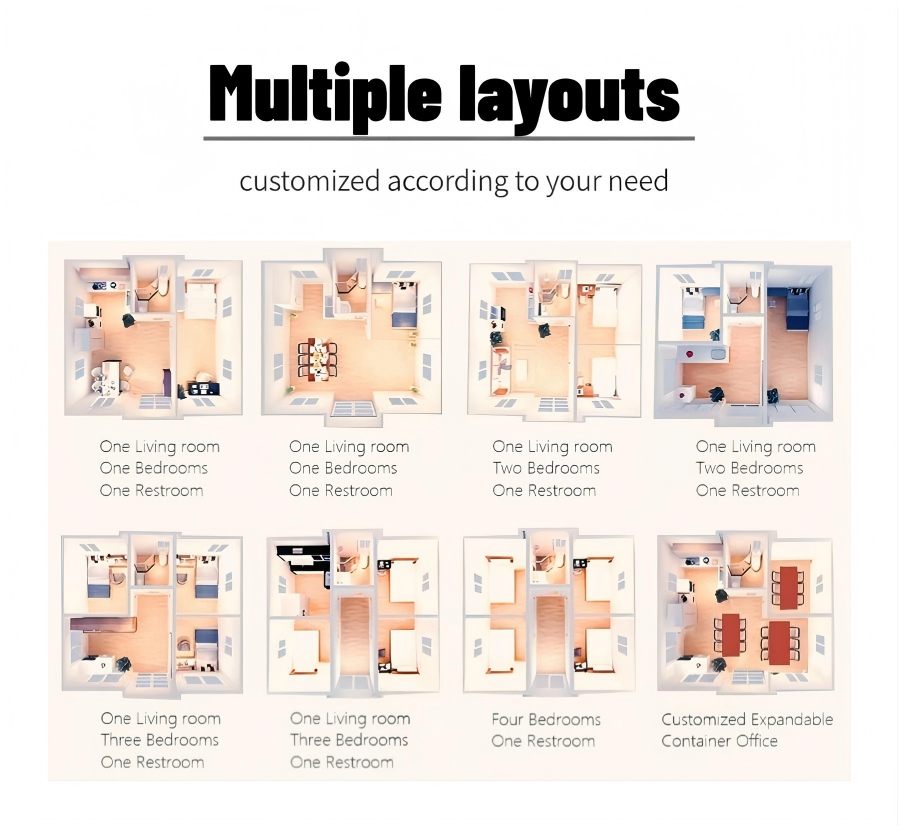
Can the Layout Be Customized?
Yes, layout customization is possible within the limits of the product structure.
Common layout options may include:
- bedroom
- living area
- bathroom
- kitchen or kitchenette
- office area
- storage
- windows and doors
- furniture position
- lighting and socket points
- air-conditioning position
However, not every layout shown in a rendering is suitable for production, shipping, unfolding, installation, or long-term use.
Before confirming a custom layout, buyers should check:
- opening direction
- wall position
- bathroom location
- utility route
- furniture size
- door swing direction
- window position
- site clearance
- maintenance access
For layout planning, expandable container house floor plans should be reviewed together with real project use, not only appearance.
Are Expandable Container Houses Safe?
Expandable container houses can be safe when they are properly designed, produced, transported, installed, and maintained.
Safety depends on:
- frame structure
- wall panel quality
- connection parts
- roof and floor system
- installation method
- foundation condition
- wind and weather exposure
- local regulations
- electrical and plumbing work
- maintenance quality
Buyers should ask the supplier for drawings, specifications, material details, installation guidance, and relevant product information before order confirmation.
For projects in high-wind, coastal, cold, hot, humid, or remote areas, buyers should communicate local conditions clearly before production.
How Long Do Expandable Container Houses Last?
As a general reference, many expandable container houses can be used for around 10–20 years under normal use and maintenance conditions. With better materials, proper anti-rust treatment, good waterproofing, suitable installation, and regular maintenance, some higher-quality units may last 20 years or longer.
However, buyers should not treat lifespan as a fixed guarantee. A unit used in a dry inland area may perform differently from one used in a coastal, humid, rainy, or high-temperature environment.
To improve long-term performance, buyers should pay attention to anti-rust protection, roof and wall sealing, drainage, foundation stability, bathroom waterproofing, ventilation, regular inspection, repainting or repair when needed, door and window sealing, and electrical safety.
The container house maintenance guide can help buyers understand the main maintenance points after installation.
Can Expandable Container Houses Be Moved Later?
Expandable container houses may be movable, but mobility should not be assumed automatically.
Whether a unit can be relocated depends on:
- product structure
- installation method
- foundation type
- lifting points
- site access
- road conditions
- unit condition after use
- whether repeated relocation was considered during design
If the buyer plans to move the unit later, this should be discussed before ordering. The supplier can then review whether the product type and configuration are suitable for that use.
For project camps, rental operators, or temporary facilities, relocation planning should be part of the early design discussion.
What Are Expandable Container Houses Used For?
Expandable container houses are commonly used for:
- temporary accommodation
- rental units
- worker housing
- construction site offices
- farm housing
- remote project accommodation
- emergency support housing
- site office with living function
- temporary commercial spaces
- modular housing projects
They are especially useful when buyers need more usable interior space than a compact unit and want factory-prepared modular construction.
For mining, construction, or camp projects, expandable units may be combined with toilets, showers, kitchens, offices, and support facilities.
Are Expandable Container Houses Suitable for Residential Use?
Expandable container houses can be used for living-related applications when the layout, insulation, ventilation, bathroom, kitchen, electrical system, and site work are properly planned.
However, local regulations are very important.
Some markets may allow temporary housing, camp accommodation, rental units, or accessory use, while others may restrict permanent residential use.
Before ordering, buyers should check:
- zoning rules
- building permit requirements
- temporary structure rules
- utility connection rules
- fire safety requirements
- wind or structural requirements
- occupancy approval
The supplier can provide drawings, specifications, and product information, but local approval is usually handled by the buyer or local professionals.
What Should Buyers Confirm Before Ordering?
Before requesting a quotation, buyers should prepare:
- intended use
- project country or destination port
- required size: 20ft, 40ft, or other size
- estimated quantity
- number of users
- layout requirement
- bathroom, kitchen, office, bedroom, toilet, or shower needs
- wall panel and insulation requirement
- electrical standard if required
- plumbing and drainage requirements
- expected project duration
- preferred trade term: EXW or FOB
- whether a shipping agent is arranged
- site access and unloading condition
This information helps the supplier recommend a more suitable model and avoid incomplete quotations.
What Documents or Information Should a Supplier Provide?
Before production or shipment, buyers can ask the supplier for:
- quotation with configuration details
- product drawings
- layout confirmation
- material specifications
- packing dimensions
- loading plan
- packing list
- production photos if available
- loading photos before shipment
- installation guidance
- basic maintenance advice
This helps reduce misunderstanding and makes the order easier to manage.
Conclusion
Expandable container houses can be a practical option for overseas buyers who need modular accommodation, site offices, rental units, temporary housing, or project-based living spaces.
The key is to confirm the right information before ordering: size, layout, configuration, bathroom and kitchen needs, wall panels, shipping term, destination port, installation condition, and local approval requirements.
A good expandable container house project is not decided by product photos or the lowest price only. It depends on clear requirements, suitable design, reliable production, realistic shipping planning, and proper site preparation.
Need Answers for Your Expandable Container House Project?
If you are planning an expandable container house project, Sinopala can help review your basic requirements before quotation.
To recommend a suitable solution, please share:
- intended use
- project country or destination port
- required size: 20ft, 40ft, or other size
- estimated quantity
- number of users
- layout requirements
- bathroom, kitchen, office, bedroom, toilet, or shower needs
- wall panel and insulation requirements
- preferred trade term: EXW or FOB
- whether you already have a shipping agent
- site access and unloading conditions
Contact Sinopala:
WhatsApp: +86 150 1103 0786
Email: info@sinopala.com
Website: www.sinopala.com