Introduction
Flat pack container houses and expandable container houses are both common options for modular building projects, but they are designed for different project needs.
A flat pack container house is usually delivered as separated or partially assembled components that require more on-site assembly. An expandable container house is usually delivered as a more complete unit that can be unfolded and prepared for use faster.
This difference affects labor requirements, installation time, shipping volume, site preparation, and total project cost.
For overseas buyers, the better choice is not always the cheaper unit price. It depends on your project quantity, local labor conditions, installation capability, destination port, site readiness, and expected project duration.
This guide compares flat pack vs expandable container house from a practical buyer’s perspective, so you can choose the right product before requesting a quotation.
1. Main Difference: On-Site Assembly vs Pre-Assembled Expansion
The main difference is the level of assembly before delivery.
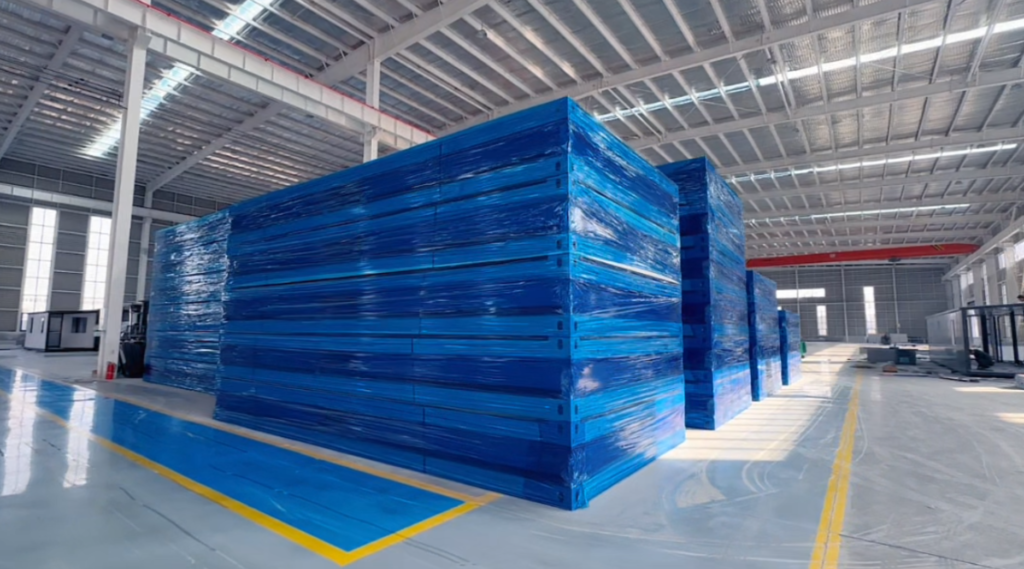
Flat pack container houses usually require more on-site assembly. Panels, frames, roof parts, floor systems, doors, windows, and interior components may need to be assembled or connected after arrival.
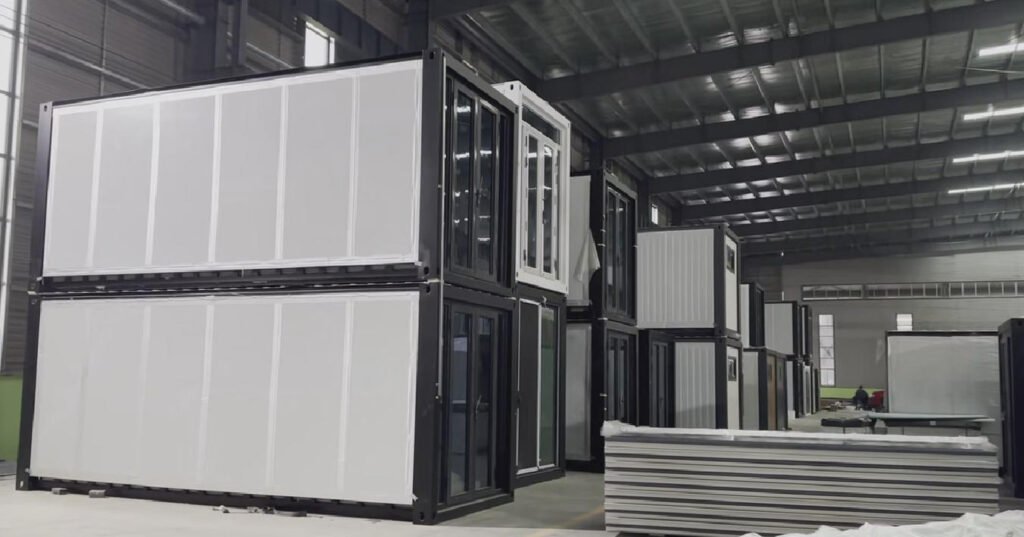
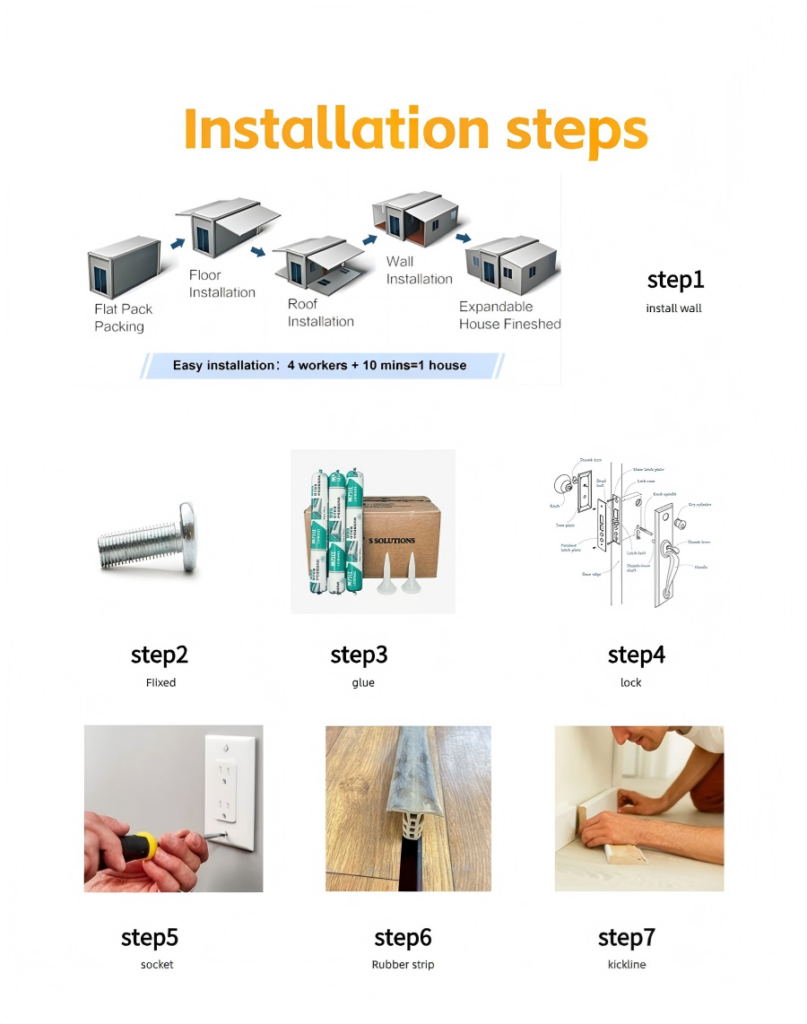
Expandable container houses are usually more pre-assembled before shipment. After arrival, the unit is unfolded, leveled, locked, checked, and connected to local utilities according to the project requirement.
In simple terms:
- flat pack container houses focus more on compact transport and flexible project assembly
- expandable container houses focus more on faster setup and more complete interior space after expansion
This difference affects shipping, labor, installation management, site preparation, and total project cost.
2. Cost Difference: Unit Price vs Total Project Cost
Flat pack container houses may look more affordable at the unit-price level because they usually require more on-site assembly and may use a more compact packing method.
Expandable container houses may have a higher initial product cost, but they can reduce some on-site assembly work and provide more usable interior space after expansion.
When comparing cost, buyers should not only compare the factory unit price. They should also compare:
- product configuration
- packing method
- loading quantity
- local labor cost
- installation complexity
- lifting equipment requirement
- foundation or base condition
- utility connection work
- project timeline
A lower unit price may not mean a lower total project cost if the buyer needs more labor, longer installation time, more site management, or higher local contractor costs.
The right comparison should include both product price and project execution cost.
3. Shipping and Loading Considerations
Shipping and loading are important when comparing flat pack and expandable container houses.
Flat pack container houses are usually designed to reduce shipping volume through separated or compact packing. This may help improve loading efficiency for some projects.
Expandable container houses are more pre-assembled, so they may require more shipping volume than flat pack systems, depending on the size, configuration, and final loading plan.
Before choosing either type, buyers should confirm:
- packed size
- loading quantity per container
- destination port
- EXW or FOB quotation term
- whether a shipping agent is available
- unloading equipment at destination
- local delivery conditions after arrival
A better loading plan may reduce the average logistics cost per unit, but the result depends on product size, configuration, packing method, shipping route, and order quantity.
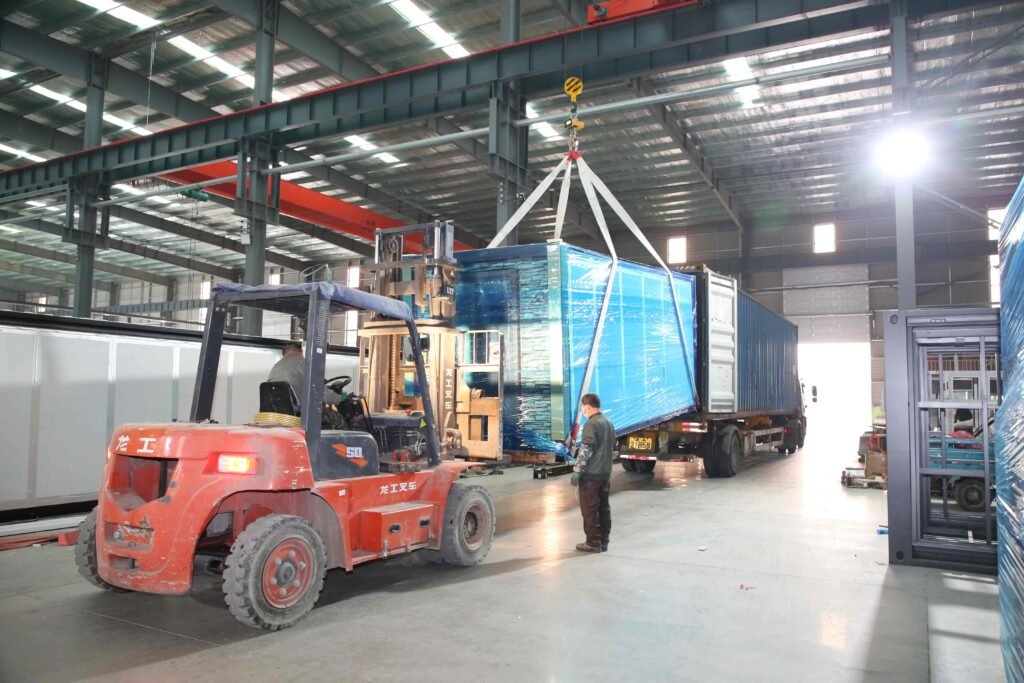
For detailed packing and freight planning, read our Container House Shipping Guide: Cost, Packing and Delivery.
4. Installation and Labor Requirements
Installation is one of the biggest differences between flat pack and expandable container houses.
Flat pack container houses usually require more on-site assembly. This may include structural assembly, roof and wall panel connection, door and window installation, interior work, sealing, and utility connection.
Expandable container houses are usually designed to reduce on-site assembly work. However, they still require proper unloading, leveling, unfolding, locking, inspection, and local utility connection.
Possible installation-related factors include:
- local workers
- skilled assembly labor
- crane or forklift availability
- tools and equipment
- foundation or base preparation
- site access
- weather conditions
- electricity and plumbing connection
Flat pack may be suitable when local labor is available and the project team can manage assembly quality. Expandable container houses may be more suitable when the buyer wants faster site setup and less on-site assembly work.
For a detailed installation budget explanation, read our Container House Installation Cost guide.
5. Project Speed and Site Readiness
Project speed depends on more than product design.
Expandable container houses may support faster setup because much of the structure is already assembled before delivery. This can help when the project has a tight timeline or limited local assembly capacity.
Flat pack container houses may take more time on site because more components need to be assembled, checked, sealed, and connected.
However, the final project speed also depends on:
- site preparation
- foundation readiness
- local labor availability
- equipment availability
- weather conditions
- project management
- utility connection work
- inspection requirements, if applicable
Buyers should not judge project speed only by the product opening method. A ready site and a clear installation plan are often more important than the product type alone.
6. Use Case Comparison
Flat pack container houses may be suitable when:
- shipping volume is a major concern
- local labor is available
- the buyer can manage on-site assembly
- the project has enough installation time
- large-quantity supply is required
- the site is fixed for longer-term use
Expandable container houses may be suitable when:
- faster setup is important
- local labor is limited or expensive
- the buyer wants more pre-assembled structure
- the project needs a more complete interior layout
- the units may be reused on different sites
- the project requires living space, office space, farm housing, or temporary accommodation with better comfort
For construction camps, worker accommodation, site offices, farm housing, and temporary housing projects, the right choice depends on total budget, site conditions, project schedule, and local installation capacity.
7. Total Cost Decision Framework
Instead of asking which product is always cheaper, buyers should ask which product reduces the total project cost for their specific situation.
Choose flat pack container houses when the project is more sensitive to shipping volume and the buyer has enough local assembly capacity.
Choose expandable container houses when the project is more sensitive to installation speed, site labor, interior comfort, and faster use after arrival.
A practical comparison should include:
- factory unit price
- packing and loading method
- shipping cost per unit
- local labor cost
- installation time
- equipment rental
- foundation or site preparation
- utility connection
- maintenance and reuse plan
There is no guaranteed ROI answer for every project. The better choice depends on the buyer’s site conditions, project duration, budget, and execution capability.
8. Common Mistakes When Comparing Both Types
Common buyer mistakes include:
- only comparing the unit price
- ignoring local labor cost
- not checking installation complexity
- forgetting shipping and loading differences
- not confirming EXW or FOB terms
- not preparing the site before delivery
- choosing flat pack without assembly capability
- choosing expandable without checking loading and site access
- not confirming wall panel thickness, insulation, and configuration
- not comparing total project cost before payment
A good comparison should include product type, size, configuration, packing method, loading plan, installation labor, site condition, destination port, and intended use.
To avoid more sourcing mistakes, read Top 5 Mistakes When Buying Container Houses from China.
Conclusion
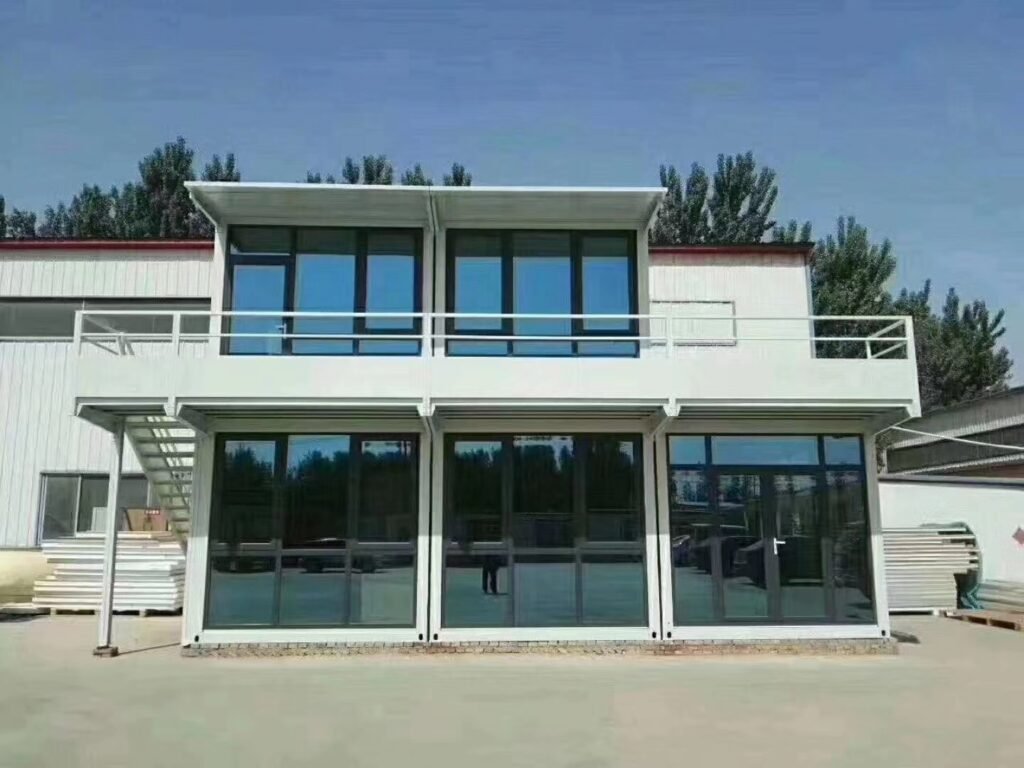
Flat pack and expandable container houses are not simply cheaper or more expensive versions of the same product. They solve different project problems.
Flat pack container houses may be more suitable when the buyer wants compact shipping, has local assembly capacity, and can manage more on-site installation work.
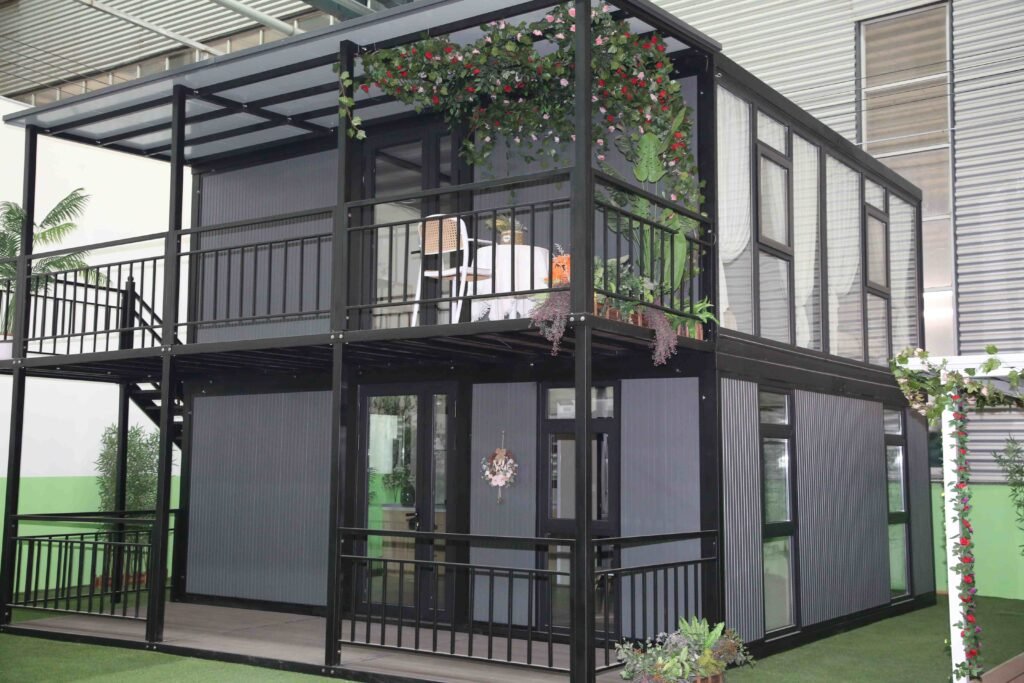
Expandable container houses may be more suitable when the buyer wants faster setup, less on-site assembly, better interior space, and a more complete unit after arrival.
The best choice depends on product configuration, quantity, loading plan, shipping route, local labor cost, site readiness, installation conditions, and project duration.
Before choosing, buyers should compare total project cost instead of only comparing the unit price.
Get a Project-Specific Recommendation
If you are not sure whether a flat pack container house or expandable container house is better for your project, please send us:
product type you are considering
required size: 10ft, 20ft, 30ft, or 40ft if applicable
quantity
intended use
project duration
layout or configuration requirements
destination port
preferred trade term: EXW or FOB
whether you already have a shipping agent
whether local assembly labor is available
Sinopala can help compare the product options, loading plan, installation requirements, possible cost factors, and suitable quotation based on your project details.
WhatsApp: +86 150 1103 0786
Email: info@sinopala.com
Website: www.sinopala.com