Introduction
One of the most common questions buyers ask before purchasing a folding house is: how long does a folding house last?
There is no single fixed answer. The lifespan of a folding house depends on the steel frame, wall panels, roof system, sealing quality, installation method, foundation, climate, maintenance, and how frequently the unit is moved or reused.
For overseas buyers, lifespan should not be judged only by product photos or a simple year number. A folding house used as a short-term construction site office may face different conditions from one used as worker accommodation, a dormitory unit, a farm support room, or a temporary project building.
This guide explains the main factors that affect folding house lifespan and how buyers can improve durability through correct product selection, installation, and maintenance.
What Is a Folding House?
A folding house is a modular building designed to be transported in a compact form and opened or unfolded on site.
Depending on the model, a folding house may include:
- steel frame
- wall panels
- roof and floor system
- folding or hinged structure
- doors and windows
- electrical routes
- optional bathroom or shower system
- optional kitchen or interior finish
For buyers still comparing product types, the article about what a folding house is can help explain the basic structure before evaluating lifespan.
General Lifespan of Folding Houses
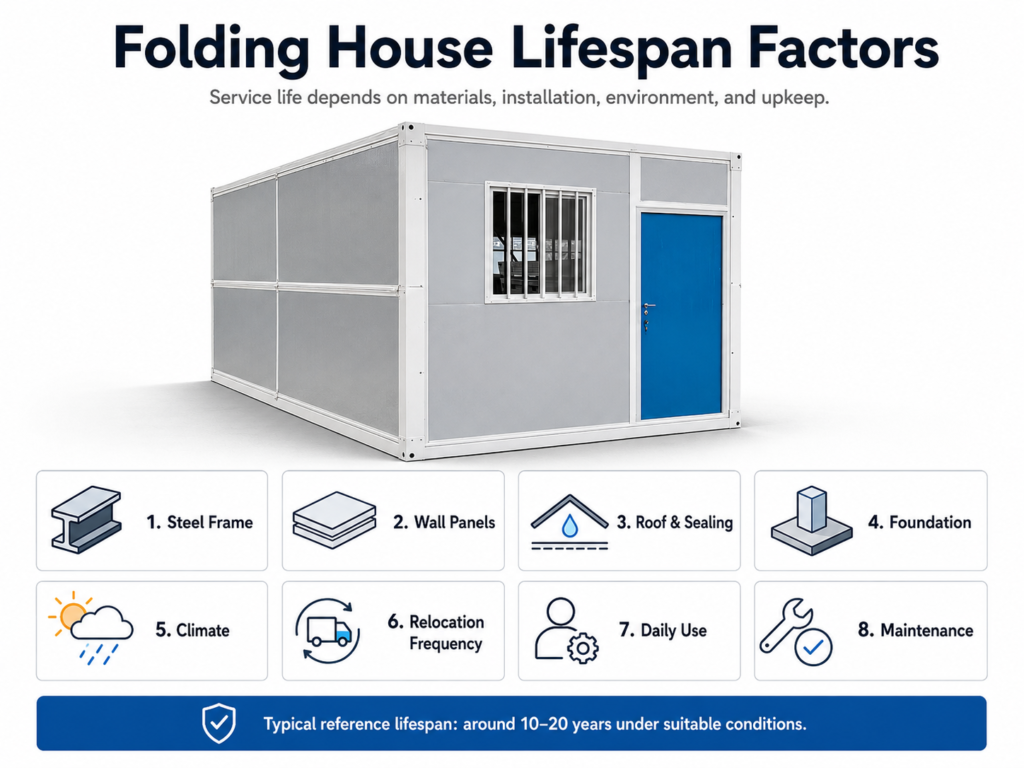
As a general reference, a folding house may last around 10–20 years or longer under suitable conditions.
However, this is not a fixed guarantee.
The actual service life depends on:
- material quality
- steel frame thickness and anti-rust treatment
- wall panel type
- roof and waterproofing condition
- installation quality
- foundation stability
- climate and site environment
- drainage condition
- maintenance frequency
- relocation frequency
- intensity of daily use
A folding house used in a dry inland project site with proper foundation and regular maintenance may perform very differently from one used in a coastal, humid, high-rainfall, or frequently relocated project.
Factor 1: Steel Frame and Anti-Rust Treatment
The steel frame is one of the most important factors affecting folding house durability.
Buyers should confirm:
- steel frame design
- steel thickness if provided by the supplier
- welding quality
- anti-rust treatment
- roof and floor structure
- hinge and folding connection points
- base frame protection
- exposed metal parts
For folding houses, connection points and folding mechanisms are especially important because they affect both installation and long-term stability.
If the unit is used in coastal, humid, rainy, or industrial environments, corrosion protection becomes more important.
For a deeper understanding of the frame, hinge, wall, and roof system, buyers can review the folding container house structure guide before ordering.
Factor 2: Wall Panels and Insulation
Wall panels affect comfort, durability, fire performance, and maintenance.
Common wall panel options may include:
- EPS sandwich panels
- rock wool sandwich panels
- PU or other insulated panels
- customized wall panel systems depending on project requirements
Different environments may require different panel choices.
Buyers should confirm:
- wall panel type
- panel thickness
- insulation material
- fire-resistance requirement if applicable
- moisture resistance
- interior surface material
- bathroom wall treatment if included
- roof insulation and sealing method
A folding house used for basic storage or short-term site office use may not need the same panel configuration as worker accommodation, dormitory housing, or long-term living units.
Factor 3: Roof, Waterproofing, and Sealing
Roof and sealing quality directly affect lifespan.
The most common long-term problems usually come from water leakage, poor drainage, loose joints, damaged sealant, or roof edge deterioration.
Buyers should pay attention to:
- roof joint sealing
- wall panel joints
- corner connections
- door and window frames
- base frame sealing
- bathroom waterproofing if included
- drainage direction
- roof maintenance access
Even a strong structure can have problems if water enters through joints or weak sealing areas.
For humid, rainy, snowy, or coastal areas, buyers should plan regular sealing checks and maintenance.
Factor 4: Foundation and Installation Quality
A folding house needs a stable and level foundation.
Poor installation can reduce service life, even if the product itself is well manufactured.
Before installation, buyers should confirm:
- level ground
- suitable foundation points
- drainage around the unit
- anchor method if required
- unloading equipment
- installation tools
- site access
- local labor arrangement
- utility connection plan
Uneven ground may cause door misalignment, wall panel stress, roof joint issues, or water drainage problems.
For buyers planning site work, container house installation cost should be reviewed together with product price because foundation, unloading, labor, water, power, and drainage can affect total project performance.
Factor 5: Climate and Site Environment
The environment strongly affects folding house lifespan.
Different sites create different risks:
- coastal areas may increase corrosion risk
- high humidity may affect panels, sealing, and metal parts
- heavy rainfall requires better drainage and waterproofing
- snow areas require roof and drainage checks
- hot climates may require better insulation and ventilation
- windy areas may require stronger anchoring and site planning
- dusty or industrial areas may require more frequent cleaning
Buyers should not choose materials based only on the lowest price.
The product configuration should match the project country, climate, intended use, and expected project duration.
Factor 6: Frequency of Relocation
Folding houses are often selected because they can be transported and reused in different project locations.
However, frequent relocation can affect lifespan if the unit is not handled properly.
Each relocation may involve:
- lifting
- truck transport
- unfolding
- folding again
- bolt and connector checks
- sealant checks
- door and window alignment checks
- floor and wall inspection
If a folding house will be moved many times, buyers should pay more attention to frame strength, folding mechanism, packing protection, lifting method, and spare parts.
A unit that is installed once and maintained in one location may have different durability from a unit that is repeatedly moved between construction sites.
Factor 7: Daily Use Intensity
How the house is used also matters.
A folding house used as a small office usually faces lower wear than a worker dormitory with many users.
High-use applications may include:
- worker accommodation
- student dormitory
- site camp housing
- emergency housing
- public restroom or shower unit
- rental unit
- project office with frequent daily traffic
For high-use projects, buyers should consider stronger flooring, better doors and locks, easier-to-clean surfaces, better ventilation, and more regular maintenance.
Maintenance Tips to Extend Folding House Lifespan
Regular maintenance can help extend service life and reduce repair costs.
Important maintenance tasks include:
- check roof joints and sealant
- inspect wall panel connections
- clean drainage areas
- check door and window frames
- inspect exposed metal parts for rust
- check bolts and connectors
- keep the foundation stable and level
- inspect bathroom waterproofing if included
- check electrical and plumbing points
- clean exterior walls regularly
- repair small damage early
For coastal or humid areas, rust checks should be more frequent.
For rainy or snowy areas, roof and drainage checks are especially important.
Suggested Maintenance Schedule
A practical maintenance schedule may include:
- basic visual inspection every few months
- roof and sealing check before and after rainy seasons
- drainage cleaning when needed
- rust inspection in humid or coastal environments
- door, window, and lock inspection during daily use
- electrical and plumbing checks by qualified local workers
- full inspection before relocation
- full inspection after relocation and reinstallation
This schedule should be adjusted based on climate, project use, and local site conditions.
Common Problems That Shorten Lifespan
Common problems include:
- poor foundation preparation
- uneven installation
- weak drainage
- ignored roof leakage
- damaged wall panels not repaired
- poor rust protection
- wrong material choice for climate
- frequent relocation without inspection
- overloaded use
- unqualified electrical or plumbing connection
- no maintenance record
Many of these problems are preventable if the buyer confirms product configuration, site preparation, installation, and maintenance requirements before ordering.
For buyers sourcing from overseas suppliers, these issues are also related to common mistakes when buying container houses from China.
How to Choose a More Durable Folding House
Before purchasing, buyers should ask the supplier to confirm:
- product model
- intended use
- steel frame details
- wall panel type
- roof and floor system
- anti-rust treatment
- door and window specification
- bathroom or kitchen configuration if needed
- waterproofing and sealing details
- packing method
- installation manual or video
- spare parts support
- EXW or FOB trade term
- whether loading photos can be provided
A reliable supplier should not only quote a price. The supplier should help buyers choose a configuration that fits the project environment and expected use.
For supplier evaluation, buyers can review how to choose a reliable container house manufacturer before placing an order.
Folding House Lifespan vs Container House Lifespan
Folding houses are one type of container-based modular building.
Compared with some fixed modular container houses, folding houses have additional folding mechanisms and connection points. These parts help improve transport efficiency and site setup flexibility, but they also require correct installation and periodic inspection.
Therefore, folding house lifespan should be judged by:
- frame quality
- folding structure
- connection points
- sealing quality
- installation method
- maintenance
- relocation frequency
For broader container housing service life topics, buyers can also review the guide on how long container houses last.
Conclusion
A folding house may last around 10–20 years or longer under suitable conditions, but the actual lifespan depends on product configuration, materials, installation, climate, maintenance, and use intensity.
Buyers should not treat lifespan as a fixed promise. A well-selected and well-maintained folding house can provide reliable service for worker accommodation, site offices, dormitories, farm support rooms, temporary housing, and project camps.
The best way to improve durability is to choose suitable materials, prepare the foundation correctly, follow installation guidance, check sealing and drainage, protect steel parts from corrosion, and maintain records throughout the project.
Need Help Choosing a Durable Folding House?
If you are planning a folding house or folding container house project, Sinopala can help review your requirements before quotation.
You can also view our folding container house product category to compare available models and project options.
To recommend a suitable configuration, please share:
- intended use
- project country or destination port
- expected project duration
- required size
- estimated quantity
- number of users
- local climate conditions
- bathroom, shower, kitchen, office, bedroom, or dormitory needs
- wall panel and insulation requirements
- site access and unloading conditions
- foundation and utility connection plan
- preferred trade term: EXW or FOB
- whether you already have a shipping agent
Contact Sinopala:
WhatsApp: +86 150 1103 0786
Email: info@sinopala.com
Website: www.sinopala.com