Introduction
When overseas buyers compare container houses and prefab buildings, they often start with the same question:
Which one is better for my project?
In practice, this question cannot be answered only by looking at the product photo or unit price. A temporary worker camp, a mining site office, a portable toilet block, a small accommodation unit, and a long-term school building all have different requirements.
The real decision depends on several project conditions: how long the building will be used, whether the site is remote, how much local labor is available, whether the unit may need to be moved later, and who will handle unloading, installation, utilities, and local delivery.
From an export supplier’s point of view, many problems happen because buyers compare the two systems too simply. They may only ask for the cheapest price, but forget to confirm foundation, lifting equipment, packing method, wall panel configuration, bathroom layout, destination port, or EXW / FOB responsibility.
This guide explains the difference between container houses and prefab buildings from a practical project perspective, especially for buyers planning accommodation, offices, camps, toilets, showers, or other modular facilities.
Core Difference: Factory-Prepared Unit vs Site-Assembled Building
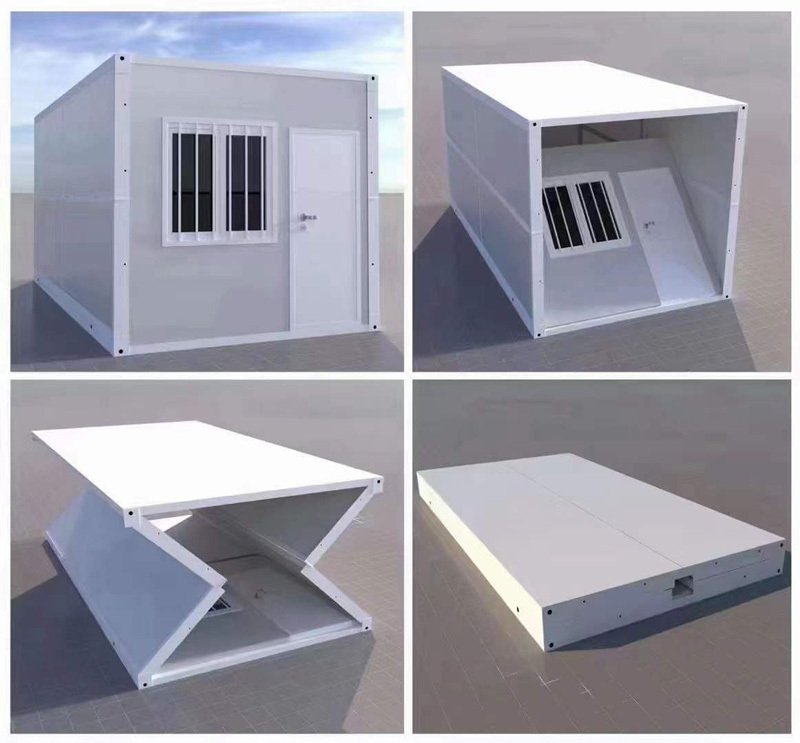
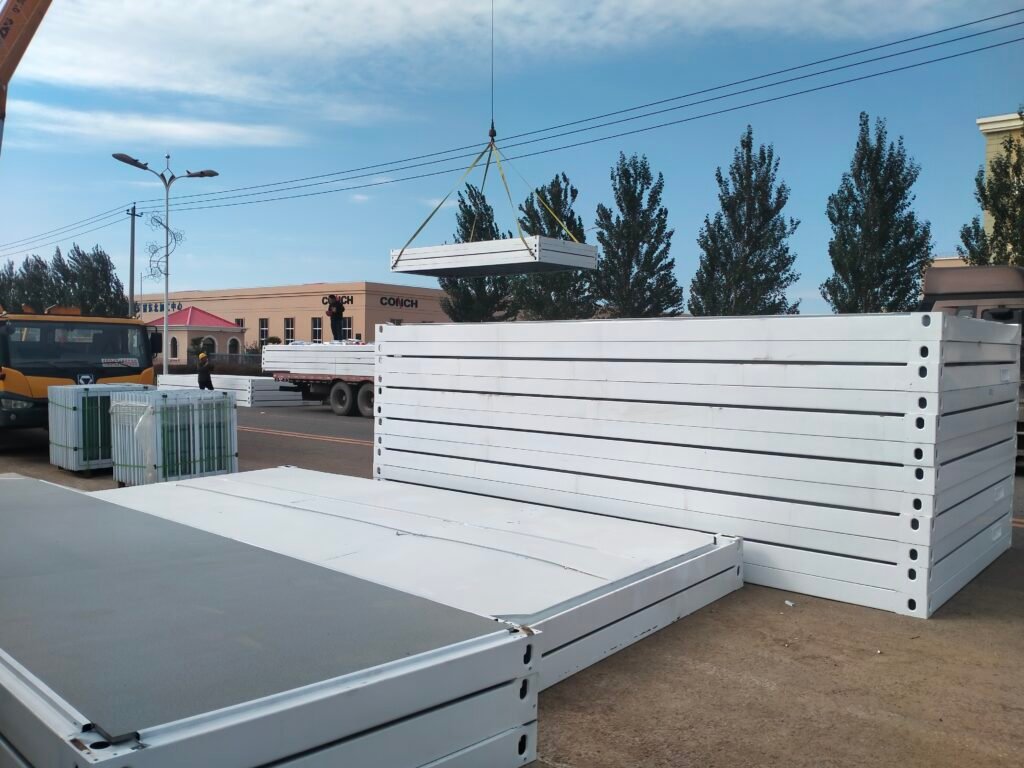
The main difference is not the name. It is how much work is completed before the product reaches the site.
A container house is usually supplied as a more integrated modular unit. For example, in many 20ft or 40ft container house projects, the steel frame, wall panels, roof, floor, doors, windows, and part of the electrical route can be prepared in the factory before shipment. Depending on the model, the unit may arrive as an expandable, folding, or modular structure.
A prefab building is usually closer to a frame-and-panel system. The frames, panels, roof parts, fasteners, and accessories are shipped to the site and then assembled by local workers. This gives flexibility for some fixed buildings, but it also increases the buyer’s dependence on local labor and installation management.
This difference affects the whole project:
- how much local labor is needed
- how complicated the installation is
- how easy it is to control site quality
- how suitable the building is for remote locations
- whether the structure can be moved or reused later
For a remote site with limited labor, a more factory-prepared container house may reduce on-site work. For a fixed project with enough local contractors and construction time, a prefab building may also be suitable.
If the buyer wants to understand the broader difference between modular building systems and prefabricated construction methods, it is useful to compare modular vs prefabricated buildings before choosing a specific product type.
Basic Comparison
| Comparison Point | Container House | Prefab Building |
|---|---|---|
| Delivery form | More integrated modular unit | Frame and panel system |
| Site work | Usually less assembly work | Usually more assembly work |
| Common sizes | 10ft, 20ft, 30ft, 40ft options are common | Usually planned by building area |
| Mobility | Better for temporary or movable projects | Better for fixed projects |
| Typical uses | Camps, dormitories, site offices, toilets, showers | Schools, offices, larger fixed buildings |
| Main risk | Configuration, packing, shipping, unloading | Local assembly quality and site management |
For buyers who are still comparing container-based systems, the difference between flat pack and expandable container houses is also worth reviewing before choosing a final structure.
Cost Structure: The Quotation Is More Than the Product Price
A simple unit price is not enough for a real project decision.
For container houses, the quotation depends on product type, size, quantity, layout, wall panel type, insulation requirement, bathroom or kitchen configuration, doors and windows, electrical preparation, packing method, and destination port.
For example, a 20ft accommodation unit with a bathroom is not the same quotation as a 20ft open-plan office unit. A 40ft unit with bedrooms, kitchen, bathroom, plumbing, and stronger interior configuration also needs a different cost review.
For prefab buildings, buyers need to calculate not only the material cost but also local assembly labor, foundation, roof installation, waterproofing, sealing, finishing work, tools, and site management.
This is why two projects with similar floor area can have very different final budgets.
Before giving a more accurate quotation, Sinopala usually needs buyers to confirm:
- product type
- 10ft / 20ft / 30ft / 40ft size requirement
- quantity
- layout drawing or room function
- wall panel and insulation requirement
- bathroom, kitchen, toilet, or shower needs
- destination port
- EXW or FOB trade term
When comparing quotations, buyers should also pay attention to hidden container house costs such as unloading, foundation preparation, local labor, utility connection, and configuration changes.
Installation: The Site Condition Matters More Than Many Buyers Expect
Container houses are often easier to manage on site because more work can be completed in the factory. This is useful for remote projects, mining camps, construction sites, or areas where local labor is expensive or difficult to organize.
But a container house is not something buyers should order without site preparation.
Before shipment, the buyer should check whether the site has:
- level foundation or prepared support points
- truck access
- enough lifting space
- crane or forklift availability
- local workers for unloading and positioning
- water supply and drainage plan
- electrical connection plan
- local contractor for final connection if needed
If the unit includes a bathroom, toilet, shower, or kitchen, drainage and plumbing should be checked before installation. These details are often more important than the product photo.
Prefab buildings usually require more on-site work. This can be fine for fixed projects, but the buyer needs a reliable local team to handle frame assembly, panel installation, roof connection, waterproofing, interior finishing, and utility connection.
These site conditions are closely connected with container house installation cost, especially when the project includes bathroom, kitchen, toilet, shower, or office functions.
Labor: A Key Difference in Overseas Projects
Labor is one of the biggest differences between container houses and prefab buildings.
For container houses, many parts are already prepared before shipment, so the local team mainly focuses on unloading, positioning, expansion or unfolding if applicable, fixing, sealing checks, and utility connection.
For prefab buildings, more work must be completed locally. The buyer may need workers for structure assembly, wall panel installation, roof work, sealing, flooring, interior finishing, and electrical or plumbing coordination.
This does not mean prefab buildings are not good. It means they need stronger local installation ability.
For buyers in high-labor-cost regions, islands, mining areas, or remote project sites, this difference can affect the real project cost, installation schedule, and site management pressure.
Durability: Check the Details, Not Just the Category Name
Both container houses and prefab buildings can be used for serious projects, but durability depends on details.
For container houses, buyers should check:
- steel frame structure
- wall panel material
- insulation thickness if required
- roof waterproofing
- floor structure
- door and window sealing
- bathroom waterproofing
- anti-rust treatment
- maintenance requirements
For prefab buildings, buyers should check:
- frame connection method
- wall panel material
- roof system
- sealing between panels
- foundation connection
- local installation quality
A building used in a dry inland area is different from one used near the coast, in a tropical climate, in a mining site, or in a high-humidity environment. The same product may perform differently if installation and maintenance are not handled properly.
For more information, you can read: How Long Do Container Houses Last? Lifespan, Maintenance & ROI Explained.
Mobility and Reuse
Mobility is one reason many buyers choose container houses.
For construction camps, mining projects, temporary offices, worker dormitories, emergency facilities, and portable toilets, the project location may change. In these situations, container houses can be more practical than a fully fixed prefab building.
However, relocation should be planned before ordering, not after installation.
Buyers should confirm:
- whether the unit is suitable for repeated movement
- whether lifting points are clear
- whether the structure can handle relocation
- whether road access allows transport
- whether interior parts need protection before moving
- whether doors, windows, and panels need checking after relocation
Prefab buildings are usually more suitable for fixed locations. Once assembled, moving them may require dismantling, replacement materials, and more labor.
Best Use Cases for Container Houses
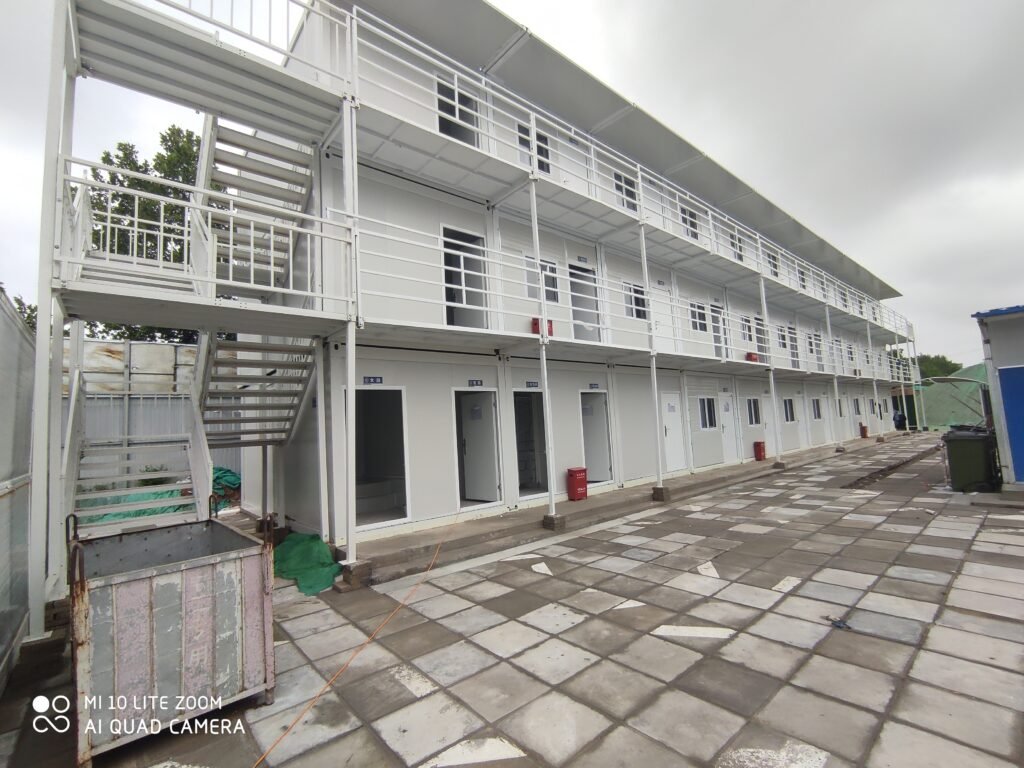
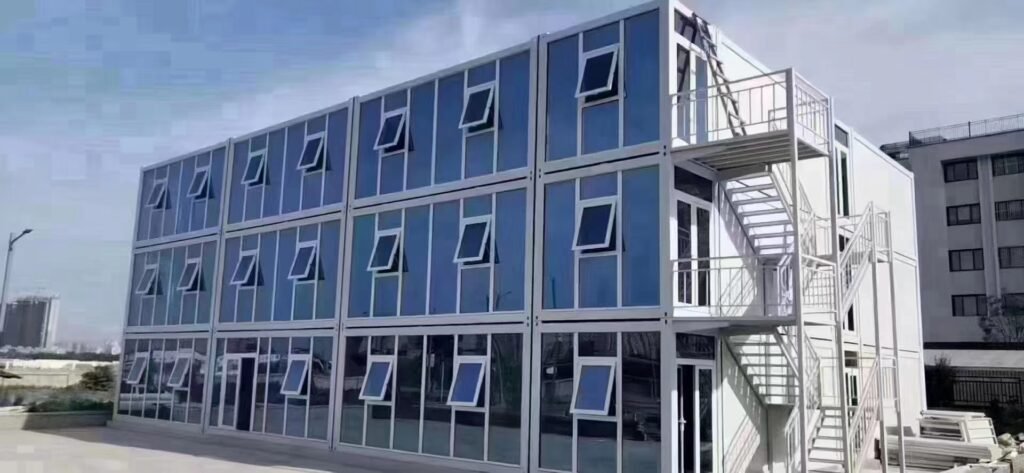
Container houses are usually suitable for project-based use, such as:
- workforce accommodation
- mining camps
- construction site offices
- temporary dormitories
- remote project housing
- portable toilets and showers
- temporary commercial spaces
- support facilities for industrial sites
For these projects, buyers usually care about very practical questions:
- Can the units be shipped efficiently?
- Can the site unload them?
- Can the layout include bedrooms, bathrooms, offices, toilets, or kitchens?
- Can the supplier provide drawings and packing information?
- Can the units be moved later if the project changes?
For container-based projects, buyers can compare expandable container houses, folding container houses, modular container houses, and container house toilets according to site use and layout requirements.
Best Use Cases for Prefab Buildings
Prefab buildings are usually more suitable for fixed projects, such as:
- schools
- offices
- public facilities
- long-term housing
- larger commercial buildings
- urban or suburban developments
These projects usually have more time for local construction and more local labor available.
Prefab buildings can provide flexible layouts for larger fixed structures. But buyers should be prepared for more site assembly, more local contractor involvement, and more installation management.
If the building will stay in one place for a long time and the local team can manage construction properly, prefab buildings can be a practical option.
Shipping and Export Points Buyers Should Check
For overseas buyers, shipping is not a small detail. It directly affects cost, timing, and project planning.
Container houses are usually designed with packing and loading in mind, but the shipping plan still depends on the model, size, quantity, layout, and packing method.
Prefab buildings may be shipped as frames, panels, roof parts, fasteners, and accessories. This can be flexible, but it also means the packing list and installation sequence must be clear.
Before shipment, buyers should ask the supplier for:
- product specifications
- layout drawings
- packing dimensions
- loading quantity
- packing list
- loading photos
- installation drawings or guidance
- EXW or FOB quotation terms
Sinopala currently mainly provides EXW and FOB quotations. Under these terms, ocean freight, customs clearance, destination port charges, and local delivery are usually arranged by the buyer or the buyer’s shipping agent.
For overseas orders, the container house shipping plan should be checked together with packing dimensions, loading quantity, destination port, EXW or FOB terms, and whether the buyer already has a shipping agent.
How to Choose Based on Project Duration
Project duration is often a better decision point than price alone.
If the project is temporary, remote, mobile, or semi-permanent, container houses are usually easier to manage.
If the project is fixed, long-term, and supported by local labor and contractors, prefab buildings may be suitable.
Before choosing, buyers should ask:
- Will the building stay in one location permanently?
- Will the unit need to be moved later?
- Is the site remote or easy to access?
- Is local labor easy to arrange?
- Is the project mainly for accommodation, office, toilet, shower, or kitchen use?
- Who will handle unloading and installation?
- Who will arrange ocean freight, customs clearance, and local delivery?
- Does the supplier provide drawings, packing details, and loading photos?
These questions are more useful than simply asking which system is cheaper.
Common Buyer Mistakes
Many mistakes happen before production starts.
Common problems include:
- choosing prefab buildings for remote sites without enough local labor
- choosing container houses without confirming layout and configuration
- ignoring bathroom, toilet, shower, or kitchen details
- forgetting foundation and unloading conditions
- not confirming EXW or FOB responsibility
- assuming the supplier handles customs clearance or local delivery
- not checking packing list and loading photos before shipment
- not asking for installation drawings or guidance
For buyers sourcing from China, these points should be confirmed before order confirmation, not after the goods are ready.
Many problems come from common mistakes when buying container houses from China, especially when buyers do not confirm drawings, specifications, packing details, installation guidance, and trade terms before production.
Final Decision Framework
Choose container houses when:
- the project is temporary, mobile, or semi-permanent
- the site is remote
- local labor is limited or expensive
- easier site management is important
- the buyer needs dormitories, offices, toilets, showers, or camp facilities
- the building may need to be relocated later
- the buyer wants more factory-prepared work before shipment
Choose prefab buildings when:
- the project is fixed and long-term
- the buyer has enough local installation labor
- the site has enough construction time
- the building requires a larger permanent layout
- local contractors can manage assembly and finishing work
- local regulations require a specific permanent building system
There is no single best choice for every project. The right answer depends on site conditions, labor, use purpose, shipping plan, and how the building will be managed after arrival.
Conclusion
Container houses and prefab buildings are both useful building systems, but they solve different project problems.
Container houses are often more suitable for temporary, mobile, remote, semi-permanent, or project-based use. They are especially useful when the buyer wants more factory-prepared work and less complicated site assembly.
Prefab buildings are often more suitable for fixed projects where the buyer has enough construction time, local labor, and permanent building planning.
Before making a decision, buyers should compare the full project situation: product configuration, site condition, labor availability, shipping term, unloading plan, installation responsibility, and future relocation needs.
Need Help Choosing the Right Container House Type?
If you are comparing container houses and prefab buildings for an overseas project, Sinopala can help review the basic project requirements before quotation.
To recommend a suitable option, please share:
- intended use
- project location or destination port
- required size: 10ft, 20ft, 30ft, or 40ft
- estimated quantity
- layout requirements
- bathroom, kitchen, office, dormitory, toilet, or shower needs
- expected project duration
- preferred trade term: EXW or FOB
- whether you already have a shipping agent
Contact Sinopala:
WhatsApp: +86 150 1103 0786
Email: info@sinopala.com
Website: www.sinopala.com